
American intervention in South Asia and the invisible experiment on Nepali youth

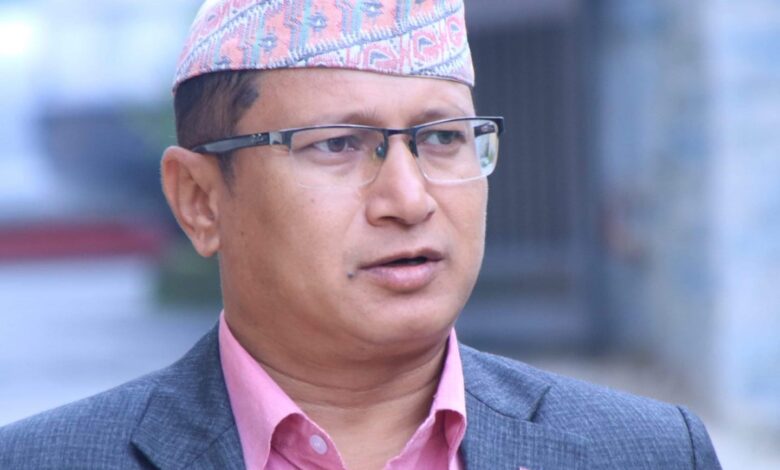

# Prem Sagar Poudel
Recently released international reports have revealed new and subtle dimensions of American influence within Nepal. According to research by the International Republican Institute (IRI) and The Sunday Guardian, from July 2021 to June 2022, the US spent about half a billion rupees (about 3.5 million US dollars) on a program called “Youth Leadership and Transparency”. Although this is formally said to be done to ‘promote democracy’, the real objective is clearly to weaken the influence of China and India and redirect the thinking of Nepali youth towards American strategic interests.
World politics has now become more of a war of ideas, perceptions, and consciousness control than a military competition. American policymakers have long viewed the younger generation as a future political or diplomatic strategic asset. Since the Cold War, the US has a history of drawing youth and civil society from numerous countries into its sphere of influence in the name of ‘promoting democracy’ around the world through organizations like IRI, the National Democratic Institute (NDI), and USAID. This same model appears to be implemented in Nepal today. Where youth under the age of 35 make up more than 40 percent of the population, there is a deep understanding within American institutions that being able to guide them politically and ideologically is a future diplomatic advantage.
IRI’s 2021-2022 report mentions that $3.5 million was spent under the “Youth Leadership and Policy Transparency Program.” The specific character is clearly reflected in the agreement with Kathmandu-based Solutions Consultants Pvt. Ltd. on February 16, 2022. Where the condition was mentioned that China’s telecom technology should not be used and that policy models influenced by China and India should be opposed. Such a condition proves that the goal of the program is not just leadership skill development, but also ideological filtering and political guidance. This is a style similar to the Cold War-era “containment” strategy, where local consciousness was redefined in the name of education, communication, and social development.
This strategic activity is fully aligned with the US 2022 Indo-Pacific Strategy. It states that “strengthening civil society in small countries and preventing coercive influence.” This is ideological recolonization hidden under the linguistic cover of ‘democracy and transparency’, the results of which are seen as having a long-term impact on political thinking and national policy-making in sensitive countries like Nepal.
The situation is even more complex in the digital context. As reported by The Sunday Guardian, an Israeli cybersecurity company has found that about 34 percent of Gen-Z (new generation) related social media campaigns in Nepal were run by fake accounts, many of which were linked to foreign networks. These accounts spread anti-Chinese sentiment, questioned nationalism, and denigrated traditional values. The same pattern was seen in Myanmar, Sri Lanka, and Thailand. Where digital confusion led to street protests and regime change. There are clear signs that Nepal is now also becoming a target of the same ‘digital war’.
Nepal’s geopolitical situation has made this strategic game even more sensitive. Nestled between China’s Tibet Autonomous Region and India’s northern border, Nepal is Asia’s most sensitive land bridge. Whoever controls Nepal’s ideological direction can maintain psychological and strategic influence in the Himalayan region. This is why the US seems to have increased its investment in youth awareness and guidance in Nepal. This has the potential to directly impact future policymaking, not only from a political perspective, but also in terms of security, diplomacy, and international relations.
But for Nepal, this impact is not just an economic or ideological challenge, it is also a question of existence. Nepal has historically maintained a balance between India and China by adopting a policy of non-alignment and equidistance. However, since the post-earthquake period, programs in the name of foreign NGOs and Western grants have gradually made the mental structure of the younger generation dependent. Many projects, carried out under the guise of terms like ‘governance reform’, ‘inclusion’ and ‘social transformation’, are actually aimed at instilling suspicion of China and distrust of Western democracy.
This is a new kind of neo-colonialism—where control of thought and consciousness, not armed occupation, has become the means of domination. External forces use education, communication, and civil society structures to interfere with a country’s national consciousness. If the thoughts, expressions, and political direction of Nepali youth begin to be guided by foreign-funded projects, it will not only be ideological manipulation, but an attack on national identity.
Nepal’s main challenge now is to restore awareness and self-reliance. Governments and educational institutions should implement transparency audits on all foreign-funded youth programs. It is essential to teach geopolitical awareness and information security in higher education so that the younger generation can understand the mechanics and psychological strategies of influence operations. Digital sovereignty is equally important. Policy controls are necessary to ensure that social media algorithms, data flows, and advertising networks are not influenced by foreign interests.
True leadership development is not about carrying an external agenda, but rather developing self-reliant thinking based on one’s own soil and history. While America is trying to use Nepal’s youth in the name of democracy and development, Nepal should restructure its youth with patriotism and a prudent conscience.
This exposure of American investment and ideological experimentation in Nepal has shown that modern geopolitics is no longer limited to weapons or military presence, it is a war for the control of ideas, information, and perceptions. As the US restructures its Indo-Pacific strategy and attempts to contain China’s rise, the Nepali youth generation stands at a decisive crossroads. Will they now become architects of their own independent thinking or tools of foreign designs? This question will determine not only the future of Nepal, but also the balance of power in the entire Himalayan region.
Author: Prem Sagar Poudel is a senior journalist and international relations analyst from Nepal. He has conducted in-depth studies on Nepal-China relations, the geopolitics of the Himalayan region, and Asian security.