
Behind the scenes: The same strategy from Ukraine to Nepal

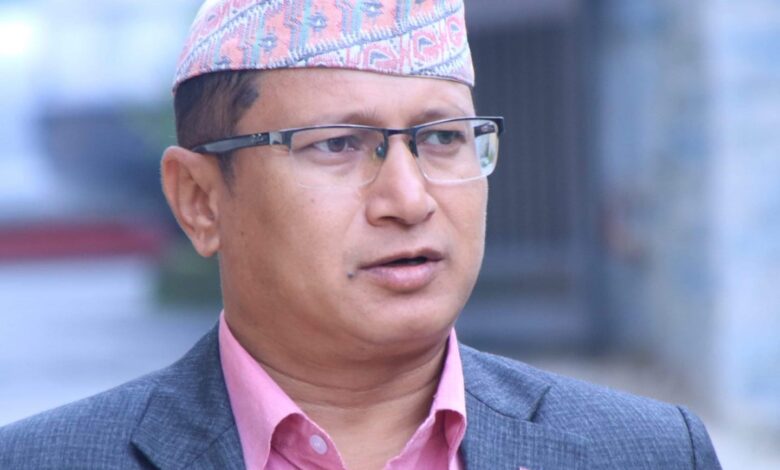

# Prem Sagar Poudel
Ukraine and Nepal are two countries that are very different in terms of size, geography, history, and development. But in today’s era, it is becoming increasingly clear that the deep games of international politics repeat the same strategies even in such different countries. To understand these games, which are directed at a deeper level than the news and slogans that appear on the surface, we must dig into the roots of the events. The two major movements in Ukraine in 2004 and 2014, the Orange and Maidan Revolutions, were presented as natural resistance by the people. But a deeper analysis of these shows that these revolutions were operated under a pre-planned plan to protect American interests and eliminate Russian influence. The US-based National Endowment for Democracy (NED) has been proven to have incited NGOs and civil society movements in Ukraine by providing millions of dollars in grants in the name of ‘promoting democracy’.
In 2020 alone, the NED provided $4.6 million to Ukraine, aimed at creating public opinion against alleged Russian interference in Crimea and the Donbas region. Ukrainian NGOs, supported by NED, launched the movement with slogans such as ‘human rights’, ‘anti-corruption campaign’, and ‘restoration of democracy’. But what was the result? A US-backed leader became president, relations with Russia deteriorated, the country descended into civil war, and Ukraine is now on the brink of political, social, economic, and geographical disintegration. The example of Ukraine teaches us a big lesson: when leaders within a country are weak, unstable, and corrupt, the intervention of foreign powers becomes easier and more powerful.
It is no longer a secret that this same pattern is now being seen in Nepal. These activities, which on the surface appear to be carrying words like civic campaigns, slogans for change, defense of democracy, or protection of human rights, are, when looked at in depth, part of a subtle geopolitical plan. For example, recently, news broke that an NGO in Nepal called ‘Hami Nepal’ has collaborated with ‘Students for Free Tibet’ (SFT). On the surface, this cooperation may appear to be based on the same goal, but at its core, American strategic interests are clearly evident. Students for Free Tibet is an international student organization advocating in favor of the independence of Tibet, which receives direct financial support from the NED. Tibet is a sensitive region in China, which Western countries, especially the US and its allies, use to strategize against China.
Nepal, which is a clear supporter of the ‘One China Policy’ in principle, but now giving space to NED-backed anti-China organizations in the same country, means it is in line with the strategy of a foreign power. This is not just institutional cooperation, but also a potential preparation for causing discomfort in Nepal-China relations. Such activities could directly conflict with Nepal’s diplomatic independence, national interests, and security policy. And this could have a long-term impact on Nepal’s international relations in the future.
The role of NED is not limited to Ukraine or Tibet. The uprisings seen in countries such as Egypt, Yemen, Syria, Libya, Tunisia, etc. in the name of the Arab Spring around 2011 were also carried out with the support of NED, USAID, and other American ‘democracy promotion’ organizations. As a result of such movements, in the place of overthrown governments were brought the US-supported leaders, and those countries were forever trapped in a cycle of instability. NED’s strategy, while often different from direct military intervention, is effective in inciting protests, pressuring for leadership change, and establishing an agenda-based structure in the name of civil society. Its core goal is to create an environment favorable to American interests, whether economic, political, or diplomatic.
Such intervention is even easier in a small but strategically important country like Nepal, if the politicians there are corrupt, unstable, and highly sensitive to foreign interests. Unfortunately, the political deadlock, unethical power coalitions, and unbalanced inclination towards foreign pressure seen in Nepal in the last few years have made this suspicion turn out to be true. When politicians engage in the business of position, money, and support, rather than on the basis of ideas, values, and nationality, then national independence begins to be sold out in selfishness.
Let us not get caught up in the propaganda of movements, slogans, or organizations that appear on the surface. It is important to understand what power is behind it, why it is there, and who is at its command. The terms ‘democracy promotion’ and ‘human rights’ are often used as political weapons in today’s era. In a country where the rulers themselves are unstable, it doesn’t take long for foreign powers to use these weapons. Ukraine has now witnessed this, and Nepal seems to be heading in the same direction.
We must understand that this is not a game of emotion, but of strategic control. It is a fact that Nepal, located between China and India, is a suitable ‘playground’ for Western powers, especially the US, where many things can be played out in the name of Tibet’s issue, border problems, refugee situations, and support for democratic institutions. The moment Nepal’s leaders fail to understand the foreign agenda and formulate clear policies, that moment the country’s dreams of prestige, independence, and prosperity begin to recede even further.
The lesson Nepal needs to learn is clear: it should not become like Ukraine. In Ukraine, foreign strategic goals had set the direction, not people’s freedom. If we fail to recognize similar agendas in Nepal, the day is not far when we too will have to follow foreign directives in the name of ‘freedom’. Protecting national interests is not possible with slogans alone; it requires in-depth study, a clear vision, and courageous leadership.
Those who understand are called Srikhand, while those who do not understand are called poison. But if the number of those who don’t understand becomes too high, that poison will also affect the country. Now is the time for us to open our eyes to the game behind the scenes, and understand not just ‘what is happening’ but ‘why it is happening, under whose direction it is happening’.
(The author is a senior journalist, political analyst, President of the Nepal-China Mutual Cooperation Society, and an expert on international affairs.)