
Building a Brighter Future: China and South Korea’s Shared Journey to Nurture Nepal’s Youngest Dreams


Xiaoling Xu & Lee, Kwon-ho
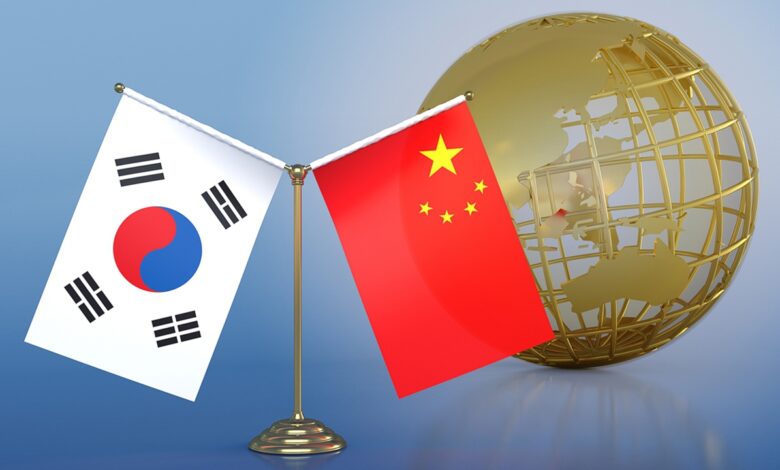
In a world where the laughter of children echoes humanity’s shared hopes, few endeavors resonate as deeply as nurturing the youngest among us. Nepal, a land where snow-capped peaks cradle ancient traditions, faces a quiet struggle: thousands of children in its remote valleys and bustling towns lack access to quality early childhood development (ECD) services. Here, where vibrant cultures meet the harsh realities of resource constraints, China and South Korea have woven their strengths into a tapestry of collaboration—transforming classrooms, meals, and playgrounds into vessels of hope for Nepal’s future generations.
China’s contribution blooms in the warmth of daily meals and the rustle of new textbooks. In Kathmandu’s first sustainable development demonstration village, the “Smiling Children” project has become more than a nutritional initiative—it is a lifeline. Every school day, over 1,200 children across 16 schools now gather around tables laden with locally sourced, vitamin-enriched meals, their energy renewed for learning. Ten-year-old Anjali, whose family farms terraced hillsides, shares how the meals let her “study without a growling stomach.” Meanwhile, the “Panda Pack,” adorned with China’s emblematic bears, arrives in mountain villages like a treasure chest: inside, storybooks spark imaginations in Nepali and English, while geometry sets turn math lessons into adventures. These efforts, rooted in the Belt and Road Initiative’s vision, transcend infrastructure—they plant seeds of dignity, one child’s smile at a time.
South Korea’s touch lies in the alchemy of play and pedagogy. When KOICA volunteer Kyung Hee Lee arrived at Lalitpur’s Shree Bishankhu Narayan School, she found toddlers learning in dim, barren rooms. Her “Let’s Play Together” project transformed spaces into kaleidoscopes of learning: walls now dance with animal murals, shelves brim with tactile puzzles, and a once-empty courtyard thrums with laughter from Nepal’s first inclusive playground. Teacher Sunita, who once struggled to engage restless preschoolers, marvels at how color-coded learning zones and singing games have made “lessons feel like festivals.” Beyond bricks and mortar, South Korea’s legacy emerges in capacity-building workshops where Nepali educators master child-centered methodologies—a ripple effect empowering entire communities to reimagine early learning.
The true magic unfolds where these efforts converge. In Sindhupalchok’s hills, a Chinese-built ECD center now hums with Korean-designed interactive whiteboards, while local teachers blend traditional folk tales with modern pedagogies. This synergy mirrors a broader truth: China’s mastery in scaling infrastructure meets South Korea’s flair for educational innovation, creating ecosystems where children thrive holistically. Nutrition programs ensure growing bodies keep pace with curious minds; bright classrooms and trained teachers turn challenges into opportunities. As Nepal’s ECD enrollment climbs by 18% in partnered districts, the collaboration becomes more than aid—it’s a dialogue of civilizations, proving that shared values can bridge mountains.
Aligned with the UN’s vision for equitable education, this partnership carries universal resonance. Each nourished child embodies progress toward Sustainable Development Goal 4; each empowered teacher becomes a torchbearer for lifelong learning. Yet beyond metrics, it’s the human stories that linger: fathers in rural Gorkha who now prioritize daughters’ education after seeing transformative ECD programs; grandmothers preserving indigenous lullabies in teacher-training modules. China and South Korea, through humility and cultural sensitivity, have crafted a model where global solidarity honors local wisdom—a balance as delicate and vital as Nepal’s alpine ecosystems.
As monsoon rains nourish Nepal’s rice paddies, so too does this collaboration nurture its most precious resource—its children. What began as governmental initiatives have blossomed into friendships: Chinese engineers sharing tea with Nepali masons, Korean volunteers dancing at local festivals. In classrooms where Mandarin, Korean, and Nepali words mingle in nursery rhymes, we glimpse a future where borders soften in service of childhood’s universal language. The road ahead demands sustained commitment, but the foundation is laid—not in concrete alone, but in the unshakable belief that every child, from Kathmandu to the Himalayas, deserves to dream in color.
Xiaoling Xu, Graduate Student, Graduate School of International Geography, Silla University, China Kwon-ho Lee, Associate Professor, Department of International Area Studies, Graduate School, Silla University, South Korea