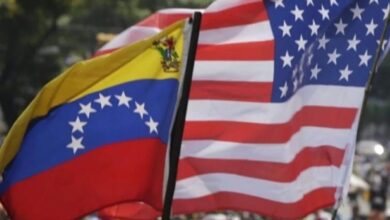

Challenges to Sovereignty and Self-Determination: What Should Nepal Learn from the Venezuela Incident?
Editorial



Today’s international situation is not limited to diplomatic statements and multilateral conferences. World politics, intertwined with power, resources, and influence, is becoming increasingly unstable and dangerous. In this context, the recent events in Venezuela are not merely an internal problem of one country; they also serve as a serious warning for small and developing nations.
Venezuela is one of the countries with the world’s largest oil reserves. It is precisely this natural wealth that places it at the strategic forefront for powerful nations. External interventions carried out in the name of democracy, human rights, or stability are, in reality, a continuation of the age-old practice of resource control and geopolitical dominance. History bears witness that the model applied in countries like Iraq, Libya, and Syria is now being attempted in Venezuela, albeit in a different language.
From a patriotic perspective, the pressure on Venezuela reflects the harsh reality of international power dynamics, where the sovereignty of a weaker state can easily become a subject of trade-offs. When powerful nations disregard the fundamental principle that the right to change any country’s system of governance belongs solely to its own people, international law remains confined to paper.
The Venezuela incident sends a profound message for small, geopolitically sensitive countries like Nepal. First, national security is not based solely on natural resources but also on geographical location, diplomatic alignment, and internal unity. Second, internal political instability is the most accessible gateway for external interference. When divisions within a nation deepen, external powers enter under the guise of being “mediators.”
Nepal has long upheld an independent foreign policy, non-alignment, and the Five Principles of Peaceful Coexistence as the backbone of its diplomacy. However, in today’s world, merely articulating principles is not enough to safeguard national interests. The Venezuela incident demonstrates that patriotism is not an emotional slogan; it is a combination of conscious policy, a self-reliant economy, and institutional strength.
Another critical aspect is the battle of international communication and narrative. In the context of Venezuela, power centers are determining who is labeled a “dictator” and who is portrayed as a “democratic savior.” This same trend could be applied to any small nation tomorrow. Therefore, from a patriotic standpoint, the ability to construct one’s own national narrative has now become a strategic necessity.
For Nepal, the implication is clear: foreign policy is not solely the responsibility of the government; it must be a matter of national consensus. National interests must not be weakened while political parties engage in power struggles. Unless a minimum common vision is established on issues of development, diplomacy, and security, we too could become the focus of external interests, much like Venezuela.
Ultimately, the Venezuela incident reminds the world once again that power politics is far from over. Patriotism is not merely about opposing other nations; it is a long-term commitment to making one’s own country capable, united, and self-reliant. If Nepal fails to understand this reality in time, the storm of international circumstances could sooner or later come knocking at our door as well.
Today, what is needed is patriotism based not on emotion, but on reason. Venezuela’s suffering is a warning for us, and learning from it is the true essence of patriotism.