
China-India-Russia alliance: A shock to US strategy

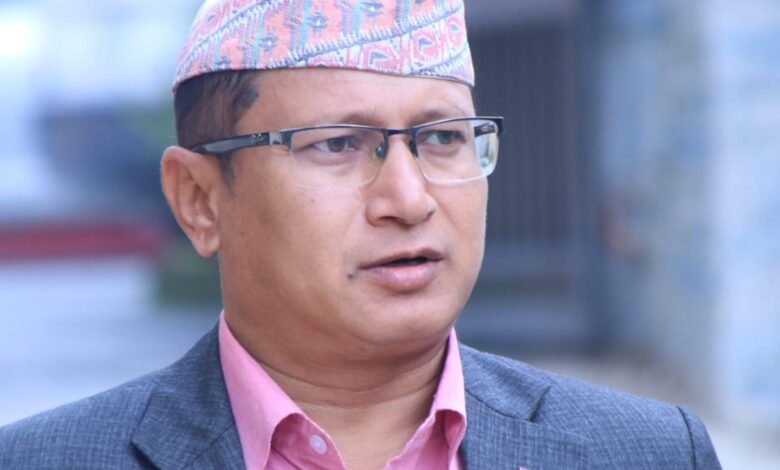

# By Prem Sagar Poudel
The recent meeting between President Xi Jinping and Indian Foreign Minister S. Jaishankar in Beijing, the capital of China, is a sign of the changing power equalization in Asia, not only diplomatically but also strategically. Although relations between India and China have been strained in the last few years, the dialogue and meetings seen this time carry a profound political message. The resumption of dialogue with China by India’s foreign leadership at a time of deepening conflict among world powers, and the reactivation of the China-Russia-India triangular relationship at the same time, heralds a new challenge for the United States.
China, India, and Russia – these three nations are the pillars of building the superpower of Asia. Russia is traditionally India’s military partner; China is the world’s second-most powerful economy and a rising military power; India is the largest democracy by population, and an Asian defensive ventilation for the West. These countries are now entering a phase of radical change in the structure of the world order. The Xi-Jaishankar talks in Beijing can be considered a link to that change.
India’s Ministry of External Affairs’ statement after the talks raised the issue of “stability and equality”, while China spoke of “border peace” and “common projects for the future”. Although the border dispute has not yet been fully resolved, this diplomatic flexibility between India and China is now a sign of a new balance on the geopolitical front – especially in the background of America’s Indo-Pacific strategy and the AUKUS alliance.
Both China and India are feeling uneasy about America’s unequal strategy. Although India is a member of QUAD, it is seen as more of a diplomatic forum than a military alliance, and India has been viewing it as a balancing. But recent developments have begun to indicate that India itself is tiring of American pressure. Every US strategy has sought to use India as an anti-China card – be it the Galwan Valley issue or India’s silent support in Taiwan policy. But India’s strategic class understands that the risk of open war with China would be a truly suicidal move that would lead to economic, political, and domestic instability.
Russia is also a decisive aspect in this equation. Russia, whose relations with Western powers have cooled due to the situation after the Ukraine war, still wants to cling to China and India. Strengthening the BRICS, countering NATO’s strategic front, and efforts to encourage the use of the yuan, ruble, and rupee in international markets have become common priorities for these three countries. In such a situation, India’s rapprochement with China is not only a strategic option, but also a path to long-term economic benefits.
Nepal’s position in Asian geopolitics is becoming increasingly sensitive. Nepal, a country bordering both China and India, with no third-country military bases, and located in the heart of the Indo-Pacific region, is now increasingly at risk of becoming a strategic place for major powers. In recent years, growing US interest in Nepal’s territory, military training, aid programs, infrastructure measurement and mapping project, and covert activities by international NGOs indicates that Nepal is now becoming important not just for visionary purposes, but also for competitive military strategy purposes.
Joint exercises between US-Nepali security personnel in some locations in Kailali, Chitwan, Makwanpur, and Okhaldhunga, and secret visits by US military officers, demonstrate that Nepal has now become a ‘soft military zone’ for the US. Similarly, the US Embassy in Kathmandu, targeting China, appears to have intensified its strategy to expand religious influence by investing in Buddhist leaders, schools, and monasteries in the Himalayan region. Such activities could lead to religious polarization, internal instability, and a suspicious attitude toward China in Nepal.
In response to these activities, China has been prioritizing cross-border cooperation, railways, infrastructure construction, and political dialogue with Nepal. Even though projects under the Belt and Road Initiative (BRI) are still slow, the main focus of China’s strategy appears to be on Nepal’s stability, sovereignty, and geopolitical independence. China knows that Nepal’s instability, US military presence, and expanding religious influence will all have long-term impacts on its own border security.
In the context of China-India reconciliation, the time has come for Nepal to play the role of a ‘guarantor’ rather than just a ‘gateway’. Nepal must show diplomatic resolve to not allow its territory to become a testing ground for any military alliance. The patriotic leadership must be able to clearly tell the US that Nepal’s land will not be used for third countries. Similarly, the path of mediating between China and India, becoming a ‘security provider’ for joint projects, and maintaining religious tolerance would be in line with Nepal’s national interest.
Future wars will no longer be fought solely with guns, tanks, and missiles – religious incitement, cultural distortions, climate change, food control, cyber terrorism, and even cheap diplomatic hypocrisy will be weapons of war. In such a situation, Nepal must redefine its national security policy not only from a military perspective, but also from a cultural, economic, and strategic perspective. By collaborating with China, Nepal can build cyber security, digital infrastructure, precise demarcation, and technological construction of national security.
Nepal’s political parties should no longer make the mistake of trading sovereignty in pursuit of American grants and visits. And if any political force were to allow foreign security to take place in Nepal at the cost of treason, it would now become a subject of public hatred. India has engaged in dialogue with China, China has given India an opportunity – Nepal must also build its independent diplomatic status.
Patriotic ideas, absolute diplomacy, and geostrategic self-respect are the needs of today. China and India are moving closer together to challenge the US; Nepal should seize the opportunity of this equation and embark on the path to secure the glorious future of an independent nation.
The author is a senior journalist, political analyst, President of Nepal- China Mutual Cooperation Society and expert on international affairs.