
China-Russia Strategic Partnership: Solid Support for a Multipolar World

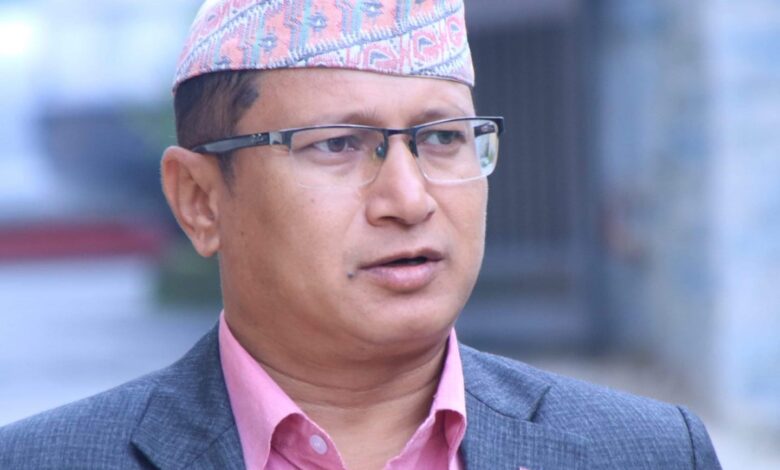

# Prem Sagar Poudel
21st century global politics is undergoing rapid change, a restructuring of the balance of power, and a redefinition of security structures. As the era of unipolar dominance gradually fades, the emergence of a multipolar world order is becoming clear. In this context, the strategic partnership between China and Russia is not just a bilateral relationship, but is becoming an important pillar for global security, stability, and the restoration of international justice. The recent video dialogue between Chinese Defense Minister Dong Jun and his Russian counterpart Andrei Belousov further confirmed this reality.
The China-Russia relationship is not a casual or circumstantial alliance. Since the 1990s, the two countries have been expanding their relations based on mutual trust, common interests, and shared vision. The year 2026 marks the 30th anniversary of the establishment of the China-Russia strategic partnership and the 25th anniversary of the signing of the “Treaty of Harmony, Friendship and Cooperation”. These historic achievements are not limited to diplomatic documents; they have make the base for practical cooperation, security coordination, and long-term political stability.
The mutual understanding established between Chinese President Xi Jinping and Russian President Vladimir Putin is the fundamental foundation of bilateral relations. As Dong Jun noted, China is committed to implementing the consensus reached between these top leaders and further strengthening strategic coordination. This commitment is not just in words, but is beginning to be reflected in military, diplomatic, and economic levels.
While Western powers often view military cooperation with suspicion, the Sino-Russian military relationship is based on transparency, mutual respect, and defensive objectives. Joint military exercises, training exchanges, and strategic consultations have enabled both countries to address security threats. Belousov’s commitment to expanding cooperation in areas such as joint operations and manpower training, and taking strategic coordination to a higher level, points in this direction.
The unipolar world order has given rise to imbalances, interventionism, and a supposedly rules-based but in practice selective system in international relations. Both China and Russia prioritize sovereignty, territorial integrity, and the principle of non-interference in internal affairs. It is because of these shared values that they have become spokespeople for a multipolar world order.
As Dong Jun mentioned, China-Russia cooperation aims to add positive energy to global security and stability. It does not target any third side, but rather orients the international community towards a balanced, just, and inclusive security architecture. The coordination between the two countries in multilateral forums such as the United Nations, the Shanghai Cooperation Organization (SCO), and BRICS has strengthened the voice of developing countries.
Seeing the China-Russia rapprochement, some Western countries portray it as a ‘threat’ or ‘challenge’. But this view is itself a product of their unipolar thinking. China and Russia have never sought to build an aggressive military alliance or divide the world. Rather, their cooperation has emerged as an alternative to Western interventionism and double standards.
Security is not just a military matter; economic stability, energy security, and technological self-reliance are also integral parts of it. China-Russia energy cooperation, trade transactions, and technology exchanges have enabled both countries to withstand external pressure and sanctions. It has also encouraged the development of alternative supply chains and financial structures in the global economy.
Both China and Russia are located at the geopolitical hub connecting Asia and Europe. Their coordination has stabilized the security balance in the Eurasian region. Amidst NATO expansion and pressure from military alliances, China-Russia cooperation has presented regional countries with an alternative security approach.
Many developing countries in Africa, Asia, and Latin America view the China-Russia partnership positively. The reason is clear; this partnership gives them a sense of political freedom, development options, and equal status on the international stage.
China-Russia relations are strong, although global political uncertainties, regional conflicts, and economic volatility present challenges. There is a strong possibility that these challenges will be transformed into opportunities through mutual trust, institutional dialogue, and a long-term perspective.
The China-Russia strategic partnership has become a symbol of stability, balance, and alternative perspectives in today’s world politics. The commitment shown by the Defense Ministerial Dialogue is not only for bilateral interests, but is a positive signal for the entire international community. China and Russia’s solid support and cooperation in building a multipolar, just, and peaceful world order will become increasingly important in the future.
Author: Prem Sagar Poudel is a senior journalist and international relations analyst from Nepal. He has conducted in-depth studies on Nepal-China relations, the geopolitics of the Himalayan region, and Asian security.