
China: Trust Built by Experience, Affinity Born from Security, and the Popular Foundation of China-Nepal Relations


# Prem Sagar Poudel
This morning, I had the opportunity to have breakfast with a friend living in the United States. By profession, he is a legal expert, someone who has long worked on the American legal system, immigration policy, human rights, public security, and state-citizen relations. This morning’s meeting was not limited to ordinary personal conversation. We delved into discussions about the current world situation, the changing balance of power, international politics, state responsibilities, the concept of citizen security, and especially China’s development and public security. His questions were not only inquisitive but also analytical. “How does China manage public security despite being such a large country?” “How safe are foreign citizens there?” “To what extent is the state machinery responsible in its actions?” Such questions compelled me to think. While trying to answer, I did not need to rely on any book, report, or media. Memories of some of my own life experiences came flooding back one after another.
A few years ago, I visited Wuxi, China. A bustling and developed city from both commercial and cultural perspectives. While wandering around, likely due to my carelessness, my wallet went missing. Inside the wallet were about a thousand US dollars and several hundred Chinese yuan. I only realized the wallet was missing when I went to pay the bill at a restaurant near my hotel. At that moment, I was stunned. Being abroad, in an unfamiliar place, losing a large sum of money is a significant mental blow for any traveler. Immediately, I began recalling the places I had visited and searched around the restaurant. The restaurant owner was very helpful. He urged me to stay calm and started searching with me.
With his assistance, we informed the local police. The police arrived, and the formal process began. They took my details on a piece of paper and had me sign it. Then, they took me to the places I had visited. They asked detailed questions about suspicious individuals, unusual activities, and possible locations. Not only that, but they also promptly checked the CCTV footage from cameras installed in those areas. The entire process was systematic, calm, and carried out responsibly. Despite all these efforts, the wallet was not found immediately.
After that, the police asked me another question, “Do you have enough money to travel now?” I showed them the few hundred Chinese yuan I had in my front pants pocket. That amount was enough to get to Beijing. I had already paid for the meal. I told them I didn’t need further assistance. However, upon hearing this, the police did not end the conversation. They said, “If you feel uncomfortable, we can personally collect money to help you.” They also asked for the address of the hotel where I would be staying in Beijing, in case the wallet was found and needed to be sent. I declined to accept money but left the address of the hotel in Beijing.
This incident deeply affected me. Because here, it was not just the state machinery but also the police’s personal human sensitivity that was active. At that moment, I perceived China not only as a developed country but also as a responsible and sensitive state.
Another incident is even more memorable. My wife and I were returning from a trip to Fujian. While heading to the airport from the hotel, I left my mobile phone in the taxi. I only realized it when I reached the airline counter to get my boarding pass. The mobile phone was switched off. I didn’t know the taxi number. In such a situation, in many places in Nepal or other countries, the response would be, “It’s not possible now.” However, here at the airport, the police on duty did not react that way. They calmly said, “Don’t worry.”
They explained that checking CCTV footage required formal permission, so it might take some time—about an hour. But to ensure we didn’t miss our flight, they proactively prepared our boarding passes and advanced the process. We completed all security checks and boarded the plane. Exactly 45 minutes later, a female police officer, Ms. CAI Yifang, came running. In her hand was my mobile phone. She first requested to turn on the phone to verify it. The feeling at that moment is hard to put into words. It wasn’t just about retrieving a mobile phone; it was about re-establishing trust in the state.
Overwhelmed with gratitude, I became emotional. I tried to give her a reward of 1,000 RMB. She firmly declined. I offered 400 RMB, which she also refused. She explained, “I paid 45 RMB for the taxi, and I’ll only accept that much online.” She clarified, “You left your phone in the taxi. The driver didn’t steal it or take it knowingly. When we contacted him, he had already gone far from the airport. The fare from there to the airport to return the phone is what you should pay.” I didn’t have an online payment option. Finally, I asked for her WeChat and established contact. After reaching Beijing, I gave 50 RMB to a friend and asked them to send it to the police officer via WeChat. Some time later, I learned that she returned 5 RMB, saying it was more than necessary. This incident deeply touched me. It was not just personal integrity; it was the character of someone in public service.
Another experience was during an overnight train journey from Zhejiang. We were in a hurry because we had to change trains midway. After walking more than 500 meters away, I heard someone shouting from behind, “Sir! Wait!” Turning around, I saw the train conductor running toward me with my laptop. In my haste while getting off the train, I had left the laptop on the seat. He handed me the laptop, advised me to be careful when boarding the next train, and left. No formalities, no expectations.
A few days later, we returned to Nepal. At Tribhuvan International Airport, I witnessed a scene. A young man returning from abroad had left his wallet in the tray during security checks. I saw the police looking at the wallet. But there was no announcement, nor any active effort to find the owner. Did the young man have other money? How did he get home? That scene made me uncomfortable. I tried to call out and give information while leaving, but no one responded. At that moment, my experiences in China spontaneously came to mind.
While traveling from Chengdu to Beijing, I once again left my mobile phone in a taxi. This time, with the help of the hotel manager, Mr. Heskey, the phone was returned. Such incidents are not mere coincidences. They are the result of China’s public security system, technology, discipline, and citizen-state relationship.
Putting all these experiences together, one clear conclusion emerges: China is not only safe for foreigners but also responsible, systematic, and humane. Here, the state machinery is not limited to enforcing rules; it is proactive in solving problems.
For me, China is a second home. While traveling there, meeting Chinese citizens at any level feels like meeting family members. That feeling does not come from propaganda; it is born from experience.
The relationship between Nepal and China is not limited to diplomatic documents. This relationship is historical, cultural, and includes military, political, and economic aspects, but its strongest aspect is popular trust. It is a relationship separated by the Himalayas but connected by civilization.
We Nepalis have long looked only to the south and west. We have rarely had the courage to look beyond the Himalayas. That is why it took time to understand China. China is not just our neighbor; it is also a balance, a pillar of Nepal’s stability, and a foundation of Nepali life. In today’s multipolar world, a small country like Nepal needs reliable, stable, and long-term friends. China has passed the test of time in becoming that friend—in history, geography, policy, and practice.
Nepal-China relations are not bound on paper. They are relations lived through experience, trust, and practice. These small but profound personal experiences of mine confirm this truth. If we dare to look beyond the Himalayas, Nepal-China relations are a partnership of honor, reliability, family, and shared benefits for our future.
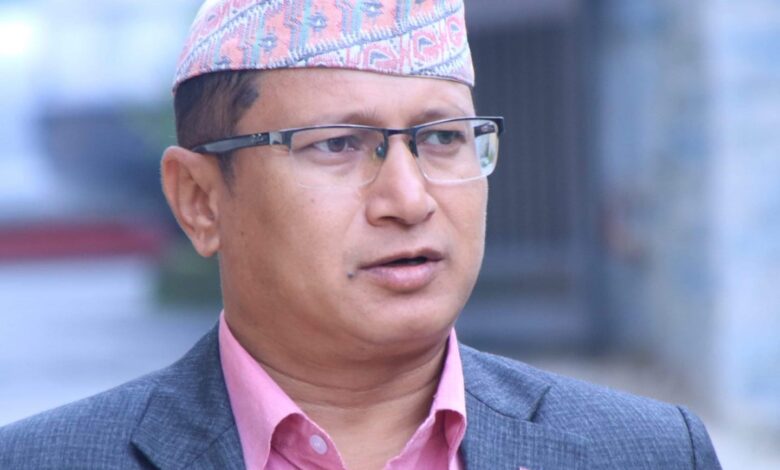
Author: Prem Sagar Poudel is a senior journalist and international relations analyst from Nepal. He has conducted in-depth studies on Nepal-China relations, the geopolitics of the Himalayan region, and Asian security.