

China Unveils Another Marvel!
From Computers Woven into Clothing to Technology That Can Interface with the Brain: Chinese Scientists’ “Fiber Chip” Opens the Door to the Future

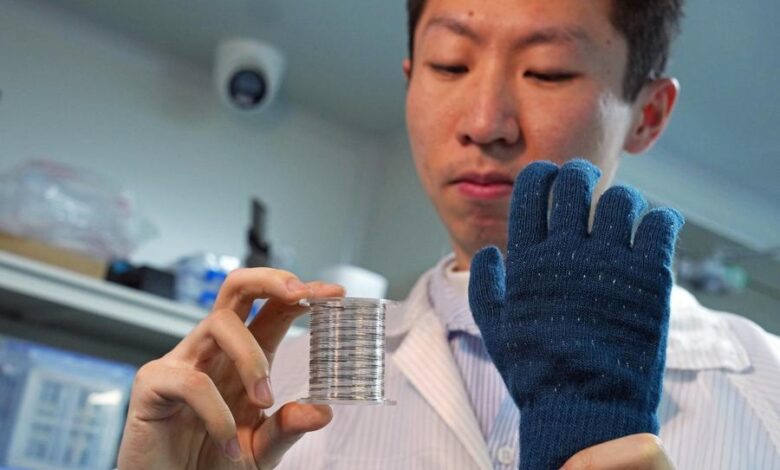

Beijing / China — Chinese scientists have developed a flexible, thread-like “fiber chip” that can be woven directly into fabric, signaling a new phase in the relationship between technology and the human body. Researchers at Fudan University have successfully integrated a complete integrated circuit—combining processing, memory, and signal functions—into a single elastic polymer fiber thinner than a human hair, capable of stretching and bending. The breakthrough was published on Thursday in the prestigious scientific journal Nature.
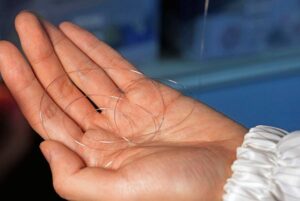
This innovation represents a major leap beyond the limitations of traditional rigid, flat silicon chips, pushing electronics toward systems that are flexible, soft, and compatible with the human body. According to Peng Huisheng, who led the research team, the human body itself is made of soft tissue, and future technologies such as brain–computer interfaces therefore require soft and compliant electronic systems. While the team has spent the past decade developing functional fibers for lighting, displays, and energy, embedding a fully functional chip directly into a fiber remained the greatest challenge.
Researchers explained that the difficulty was akin to constructing a skyscraper on soft, fragile mud and making it withstand bending and stretching without collapsing. To overcome this challenge, the team drew inspiration from the way sushi rolls are made. To address the problem of fabricating ultra-precise circuits on a tiny, uneven fiber surface, they first created an ultra-smooth, nanometer-flat surface on a stretchable elastomer, effectively turning a rugged landscape into a glass-smooth plain. High-precision circuits were then fabricated on this surface using conventional lithography techniques and protected with a dense coating to resist chemical damage. Finally, the thin film was tightly rolled into a compact spiral inside the fiber itself.
This architecture enables an extraordinary level of integration, allowing components such as transistors, resistors, and capacitors to be packed into a single fiber. Laboratory tests showed that the fiber chip could withstand up to 10,000 cycles of bending and abrasion and continue functioning even after being crushed by a 15.6-tonne truck. With around 100,000 transistors packed into every centimeter, a single one-meter fiber contains as many transistors as the CPU of a classic computer.
Demonstrations revealed that the fiber chip can process both digital and analog signals and perform neural computing tasks such as image recognition with high accuracy. Crucially, the researchers note that the fabrication process is fully compatible with existing industrial lithography production lines, making large-scale manufacturing feasible.
The implications of this innovation extend across multiple cutting-edge fields. In brain–computer interfaces, current rigid devices must be connected to external processors, increasing infection risks and discomfort. The new soft, biocompatible fiber chip could instead be implanted directly into the body to detect, process, and respond to neural signals internally. According to the study, circuits with electrode arrays offering 1,024 channels per centimeter can be integrated into ultra-thin fibers as small as 50 micrometers in diameter—closely matching the softness of brain tissue and delivering signal quality comparable to commercial devices.
In consumer electronics, this technology could redefine the concept of smart wearables. Until now, electronic textiles have been limited to displaying simple static patterns, but dynamic video, touch, and interaction require integrated information-processing modules. Fabrics woven with these fiber chips could potentially display health data, navigation information, or videos directly on a sleeve.
The technology may also prove revolutionary for virtual and augmented reality. Gloves woven with sensor-equipped fiber chips could deliver highly precise tactile feedback, enabling a surgeon performing remote surgery to feel the hardness of organs, or allowing a gamer to experience virtual objects as if they were real. At present, the research team is collaborating with a hospital to explore applications in cardiovascular surgery.
The researchers’ long-term vision is even more ambitious. They hope that one day, electronic fabrics built on “fiber chips” will exchange information as seamlessly as today’s smartphones and computers. If realized, technology would no longer be confined to devices held in the hand, but would become an integral part of the human body and everyday clothing.