

China-US Trade Talks in France Amid Policy Shifts and New Five-Year Plan

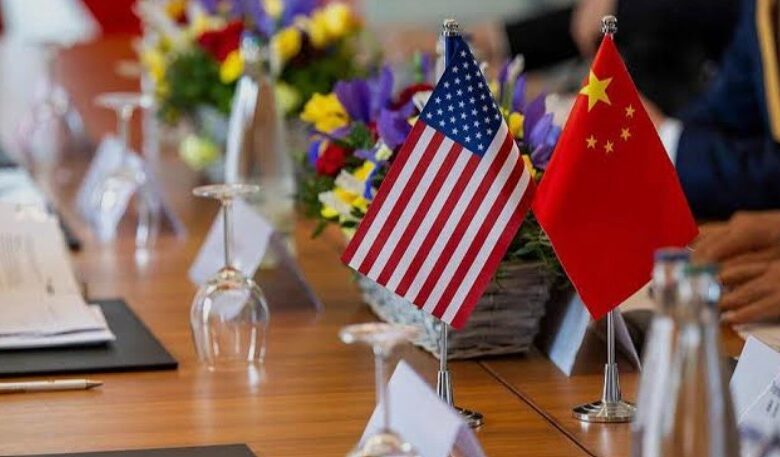

Kathmandu : China’s Ministry of Commerce announced on March 13 that the sixth round of China-US economic and trade consultations will soon be held in France.
This marks a new round of talks under the China-US economic and trade consultation mechanism, following previous meetings in Geneva, London, Stockholm, Madrid and Kuala Lumpur.
This year is widely viewed as pivotal for China-US relations. Whether bilateral economic ties can maintain the stabilizing momentum that the world hopes to see makes this round of consultations particularly significant.
China’s recently concluded “two sessions” – the annual meetings of the National People’s Congress and the Chinese People’s Political Consultative Conference – approved the draft outline of the 15th Five-Year Plan (2026-2030). The document charts China’s development blueprint for the next five years and presents the international community with new opportunities.
The plan outlines China’s commitment to coordinating foreign investment attraction with outbound investment, cultivating new advantages in international trade and two-way investment cooperation, and promoting international industrial and investment collaboration.
As China enters the 15th Five-Year Plan period, the country will advance high-quality development and remain committed to expanding high-level opening-up, continuing to unlock the potential of its enormous market for businesses worldwide.
American companies are naturally among the partners welcomed by China, which helps explain why the “two sessions” drew broad attention across the US. As a CNN report noted, the message from Beijing is that China’s push for innovation-driven development will benefit the world.
American businesses are eager to seize new opportunities from China-US cooperation. Whether these opportunities materialize, however, largely depends on how the US government handles its economic and trade relationship with China.
Recently, US trade policy has been undergoing a reset, yet its protectionist tendencies remain unchanged, adding fresh uncertainty to the global economic order.
Last month, the US Supreme Court ruled that certain US tariffs were unlawful. Since then, citing Section 301 of the US Trade Act of 1974, the US has launched new investigations into 16 major economies including China, and 60 economies respectively, citing so-called “overcapacity” and alleged failure to address so-called “forced labor.”
This news has triggered widespread concern and considerable criticism within the United States itself. The reason is simple: American companies have long borne the brunt of tariff shocks.
Federal Reserve Bank of New York research indicates that about 90 percent of US “tariff costs” in 2025 were borne by American consumers and businesses. A JP Morgan Chase Institute report similarly found that mid-sized US companies have been hit particularly hard, with their monthly tariff expenditures now tripling previous levels.
Whether to uphold openness and cooperation or resort to protectionism – this question once again confronts the US. China’s answer remains consistent: the essence of China-US economic and trade relations is mutual benefit and win-win cooperation. The two sides should enable each other’s success and pursue common development, rather than impose artificial constraints.
The stabilization of China-US economic relations has not come easily, and this momentum should not be undermined. Over the past year, the two countries’ economic and trade teams have held five rounds of consultations. Despite twists and turns, both sides ultimately returned to resolving differences through dialogue, sparing the world economy from potential storms.
Through both friction and dialogue, valuable experience has been gained in managing economic differences. Given the immense scale of China-US economic ties, disagreements and frictions in specific areas are inevitable.
When facing such issues, both sides should uphold equality, mutual respect and mutual benefit, focus on the big picture, and avoid exaggerating isolated issues. Both sides should consider overall interests and take a long-term perspective, ensuring that economic ties continue to serve as a ballast and engine for China-US relations.
As the new round of consultations approaches, China’s position is clear: China has always been committed to properly resolving differences through consultations on an equal footing and will never compromise its legitimate rights and interests. Should any action substantially harm China’s legitimate development interests, China has ample policy tools and will resolutely take countermeasures.
In the long run, China’s development and rejuvenation are not contradictory to America’s pursuit of making itself great again. Both are major countries; neither can change the other, but they can change how they interact. Upholding mutual respect, maintaining peaceful coexistence, and striving for win-win cooperation serve both peoples’ interests and meet world expectations. This new round of China-US economic and trade consultations should become the starting point for positive and constructive economic engagement between the two countries in the new year.