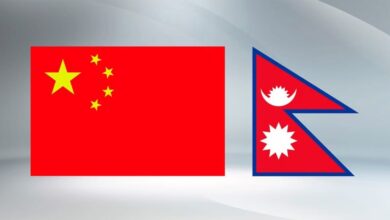

China’s Gaze on Greenland: Arctic Politics at a New Turning Point

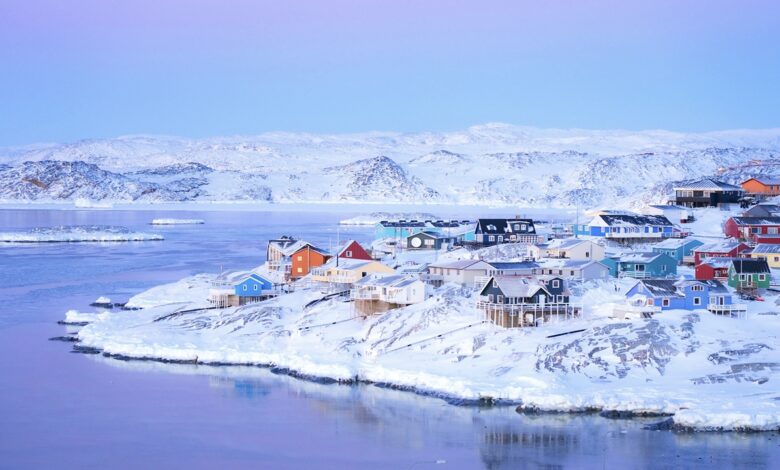

Beijing — In recent years, Greenland, the world’s largest island, has no longer remained merely a land of ice, glaciers, and natural beauty. It has increasingly become a focal point of global power politics. In this context, China has signaled that it is beginning to view the situation in Greenland through its own perspective, indicating that the geopolitics of the Arctic region is becoming more complex.
According to Chinese strategic analysts, Greenland is not merely an autonomous territory under Denmark, but a gateway to the future of the Arctic. Due to climate change, melting ice is opening up new sea routes, which could potentially shorten trade distances between Europe, Asia, and North America. This very possibility is attracting emerging global powers like China toward Greenland.
From Beijing’s perspective, Greenland is important for three main reasons. First, its strategic geographic location. Arctic sea routes are expected to become an alternative “superhighway” for global trade in the future. Second, natural resources. Greenland is believed to hold vast potential reserves of rare earth minerals, uranium, iron, and other strategic metals, which are critically important for green technologies and high-tech industries. Third, scientific and climate research. Chinese understanding holds that studying the Arctic region can help increase China’s influence in shaping global climate policies.
However, China has consistently claimed that it has no military intentions in Greenland. Chinese officials and experts have stated that their interest in the region is limited to economic cooperation, infrastructure development, scientific research, and climate partnerships. Nevertheless, Western countries—particularly the United States—have viewed China’s growing engagement with suspicion.
The United States sees Greenland as closely tied to its national security. Earlier U.S. President Donald Trump brought global attention to the island by proposing to “buy” Greenland. Now, China’s increasing interest has, according to analysts, prompted the United States and its allies to further strengthen their presence in the Arctic region.
Denmark and Greenland’s local leadership, meanwhile, are attempting to maintain a careful balance. On one hand, they seek economic development and foreign investment; on the other, they appear cautious about preventing Greenland from becoming an arena for competition among global powers.
From the Chinese perspective, Greenland is not a “zero-sum game,” but rather a region of shared interests and cooperation. However, how acceptable this perspective will be in a rapidly changing global political environment remains an open question. The Arctic region is no longer just a distant northern expanse; it is increasingly becoming a new stage for determining the future balance of global power.
China’s gaze on Greenland has made one thing clear: in the coming decade, Arctic politics is set to become one of the most sensitive and decisive issues in world politics.