
China’s ‘Invisible War’: How Central Discipline Inspection is Steering the Nation’s Future

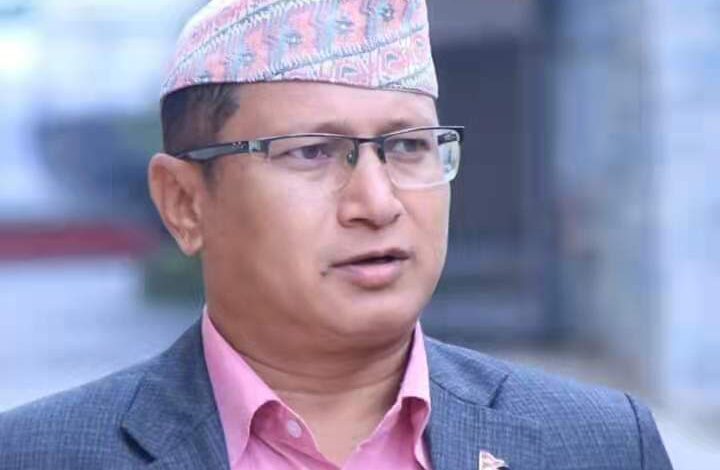

# Prem Sagar Poudel
From the perspective of a Nepali analyst examining the political significance of China’s central disciplinary inspections, the recent meeting held by the Political Bureau of the Communist Party of China (CPC) Central Committee on Friday presents a crucial background to the profound discipline and sustainable development within China’s governance system. The meeting reviewed a report on the progress of the 20th CPC Central Committee’s disciplinary inspection missions, which has achieved complete coverage of all provinces, autonomous regions, and municipalities directly under the central government. This underscores the central role of discipline and inspection in China’s governance framework. As a Nepali analyst, this process in China provides an important opportunity to understand the significance of discipline for political stability and economic development globally.
In China, central disciplinary inspections serve as a powerful tool to ensure the integrity of power and the implementation of central decisions. These inspections assess how well local governments and party bodies align with central directives. The completion of full coverage at the provincial level in this particular inspection cycle indicates the comprehensiveness of a process focused on uniformity and compliance under China’s leadership. For a country like Nepal, where decentralization of power and local autonomy are important, China’s centralized disciplinary framework raises questions about the importance of uniformity in governance and development. However, it is also crucial to recognize that such a framework operates within China’s specific political culture and historical context, making it not directly applicable to Nepali or other contexts.
The meeting acknowledged that provincial-level authorities have made new progress in their work, but also identified various problems that must be taken seriously and addressed with firm resolve. This acknowledgment of problems demonstrates the culture of self-evaluation and reform within China’s governance system. From a Nepali perspective, where governance challenges are often complex and less visible, the formality of China’s disciplinary inspections emphasizes the importance of transparency and accountability in public institutions. By identifying problems and committing to address them, China demonstrates a fundamental principle of effective governance for any nation.
The meeting emphasized the rigorous implementation of rectification measures and the strengthening of routine oversight. This signals China’s commitment to the long-term implementation of its policies and plans. The integration of rectifications with both studying and implementing the guiding principles of the fourth plenary session of the 20th CPC Central Committee and with making plans for economic and social development over the next five years integrates reforms within a broader political and economic context, connecting them to strategic objectives rather than isolated measures. For Nepal, which faces its own development challenges and governance reforms, China’s integrated approach teaches the importance of policy consistency and long-term planning. It highlights the need to view development and governance as interconnected issues rather than separate concerns.
The meeting stressed that Party committees of all provincial-level regions must ensure the implementation of major decisions and arrangements of the CPC Central Committee. They were also urged to improve evaluation mechanisms for officials, tighten oversight of leading officials, strengthen regulation and oversight of the allocation and exercise of power, and maintain high pressure against corruption. This indicates the need for continuous improvement and adaptation within the governance system. From a Nepali perspective, where corruption and weak institutions hinder development, China’s strict approach to official evaluation and anti-corruption actions underscores the importance of an honest and effective bureaucracy. However, it is also important to recognize that China’s political system is unique, and its measures cannot be directly applied to Nepali or other contexts. Nepal must develop its governance reforms according to its own constitutional framework, legal system, and socio-cultural context.
Internationally, China’s disciplinary inspections demonstrate efforts to prioritize internal stability and minimize obstacles to its economic and strategic goals. It signals China’s determination to maintain national unity under its leadership and build capacity to confront external challenges. Nepal can learn some lessons from China’s experience in light of its geopolitical situation and development needs, but it must adapt them according to its national interests and values. Nepal must address governance and development challenges while maintaining its democratic processes and social diversity.
Furthermore, China’s disciplinary inspection process emphasizes the importance of political unity for the country’s economic development and social stability. When local officials fully comply with central policies, it helps create a consistent and predictable environment for development. This facilitates the implementation of long-term economic plans and existing policies. For Nepal, which seeks economic growth and stability, China’s experience highlights the importance of policy consistency and political stability. However, Nepal must achieve these goals within its multi-party democracy and participatory governance system.
It should also be noted that China’s disciplinary inspections are instruments to maintain the centralization of power and the unity of the party-state. They ensure discipline and uniformity within the party and state institutions. From a Nepali perspective, where separation of powers and institutional accountability are important, China’s model demonstrates the diversity of different political systems and their approaches to governance. Nepal must address its own governance challenges while remaining consistent with its constitutional values and democratic principles.
In conclusion, the meeting of the Political Bureau of the CPC Central Committee reflects the importance of discipline, oversight, and reform within China’s governance system. It demonstrates China’s efforts to ensure the implementation of central decisions, improve official performance, and control corruption. As a Nepali analyst, China’s experience provides valuable insights into the complex interrelationships between governance, development, and political stability. However, Nepal must apply these insights according to its national interests, democratic values, and specific contexts. The most effective approach for Nepal is to address governance and development challenges while strengthening its democratic institutions and participatory processes, meanwhile learning from global governance practices and adopting elements that match its needs. China’s example emphasizes the importance of institutional efficiency and policy consistency in governance, but Nepal’s path will be determined by its own political culture and development journey.
Author: Prem Sagar Poudel is a senior journalist and international relations analyst from Nepal. He has conducted in-depth studies on Nepal-China relations, the geopolitics of the Himalayan region, and Asian security.