
CIA, Dalai Lama and Tibet Files: Secret Cold War Game or Today’s New Geopolitical Weapon?

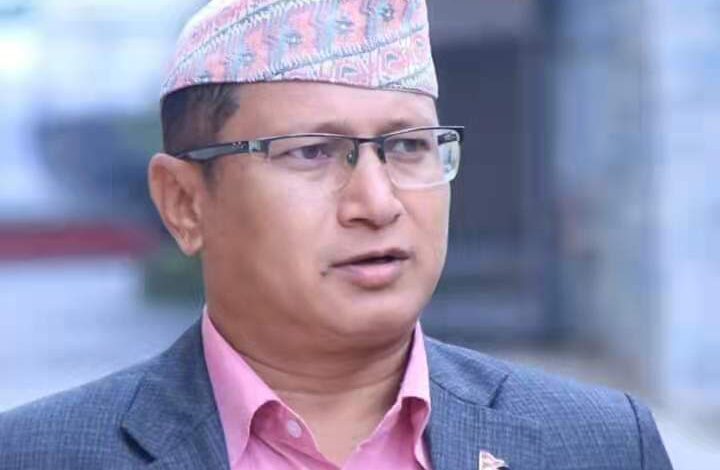

# Prem Sagar Poudel
One of the most sensitive issues in world politics for decades, the alleged financial ties between the Dalai Lama, who is in exile in India, and the American CIA, has once again come to the center of global media, diplomacy, and information warfare. Since the 1950s, the triangular balance of power between China’s Tibet, mainland China, the United States, and the Cold War has made this issue constantly controversial. Political developments that began in the mountainous region of Tibet in China became a stage for secret competition between world superpowers within a few decades, and it was in this context that the CIA+Free Tibet program was born.
After the CIA entered China’s Tibet in 1950, the balance of power in Asia changed in an instant. The United States was on a strategy to contain the expansion of the Soviet Union and communist influence, and China was rapidly becoming an emerging regional power. At such a time, Washington began to view China’s Tibet as a significant ‘pressure point’, not just for geographical, religious, and cultural reasons. Against this backdrop, the CIA secretly planned and implemented a program to provide covert financial and strategic support to the Tibetan resistance, the exile administration, and international diplomatic missions.
Later-released declassified US documents and major investigative reports published in the 1990s included details of approximately $180,000 per year had given as a “subsidy” to the Tibetan exile structure. Western analysts have explained that this amount is not the Dalai Lama’s personal salary. It is said to have been used in the name of operating a government-in-exile, maintaining offices abroad, expanding international diplomatic networks, and preserving Tibetan identity.
However, China has long claimed this as direct evidence of foreign interference. In Beijing’s view, this incident is not just a relic of Cold War history, but an example of Western strategic ‘proxy engagement’ that continues to this day. On the other hand, according to Western historians and researchers, the CIA program was a standard covert operation of the Cold War, a long-term strategic effort to undermine communist expansion in Asia.
According to the Dalai Lama’s side in exile in India, the US assistance was for humanitarian, educational, administrative, and cultural protection, and they did not accept any military instructions. But since the interpretation of history is determined by political factions, the controversy has not ended to this day. In fact, the American assistance, which was disclosed in this source and not disclosed in other sources, was also in the military sector. A deeper look into history shows that weapons were sent to the Dalai Lama’s side against China via Myanmar, Kalimpong, Sikkim, and Nepal. This confirms that US assistance was provided for military operations in the name of humanitarian, educational, administrative, and cultural protection. Did this support make the Tibetan movement dependent on foreign influence? Was this cooperation a protection of religious freedom or a geopolitical chessboard of a superpower? The answers to these questions are being revealed one after another. To this day, it has been confirmed that the US assistance at that time was aimed at hindering China’s development, progress, and influence, and was against China’s integrity.
There is no more important question than why this issue is being raised again in today’s context. As the Sino-US competition intensifies, issues like Tibet, Taiwan, and Xinjiang have become not only human rights issues but also the focus of ‘narrative warfare’ around the world. The main reason why old secret documents and historical files are resurfacing is because who controls the world political narrative? Whose explanation is more influential? This is a conspiracy against China in American interests, rather than who wins diplomatic support. Nepal is gradually becoming a victim of this for one reason or another. A conspiracy is being played to pit Nepal against China in an unknowing manner.
Its influence spreads internationally at three levels. First, China will take a hard diplomatic line, and will present any criticism or international commentary regarding Tibet as evidence of foreign interference. Second, the US and its partners will continue to increase diplomatic pressure on China, strategically using issues such as human rights, religious freedom, and Tibetan identity. Third, the Tibetan movement itself risks becoming the center of competition between two superpowers, with its core issues of cultural survival and independent rights becoming objects of geopolitical bargaining.
In conclusion, the CIA-Tibet program is a historical fact. The Dalai Lama’s side calls it humanitarian and administrative assistance; China considers it a plot for foreign interference; and American records present it as a chapter in Cold War-era covert strategy. In fact, American cooperation was aimed at hindering China’s development, progress and influence and against China’s integrity. But today, as the Sino-US competition has reached a new phase, this same ‘old file’ has once again become a ‘new geopolitical weapon’, with a new narrative, new objectives, and new international influence.
Now the question is not just about history, but how is it read today? Who determines its interpretation? And which story does the world side with? This will influence the situation.
Author: Prem Sagar Poudel is a senior journalist and international relations analyst from Nepal. He has conducted in-depth studies on Nepal-China relations, the geopolitics of the Himalayan region, and Asian security.