

Commission Chairman Under the Lens of Morality: Supreme Court’s Verdict Raises Serious Questions of Impartiality

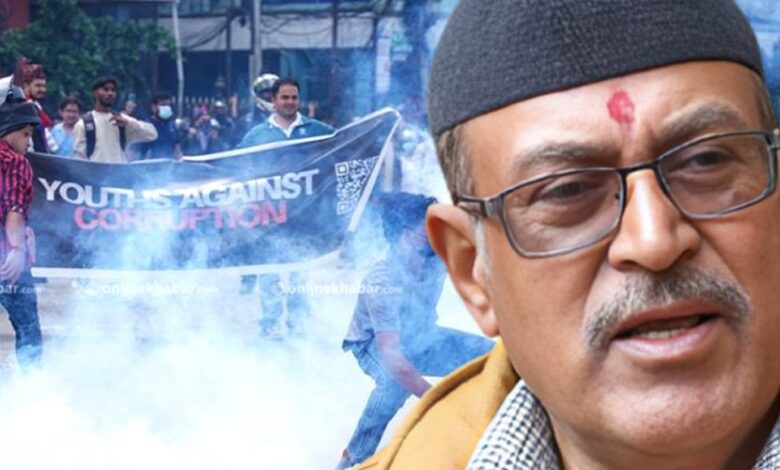

Kathmandu — The Supreme Court has ruled that whether Gauri Bahadur Karki, chairman of the commission formed to investigate the Gen-Z protests on Bhadra 23 and the subsequent destruction the following day, continues in his position or steps down falls within his “personal morality.” The court issued this order in the full text of a petition filed seeking his removal based on controversial opinions he expressed on social media before assuming the responsibility.
The full text of the verdict issued on Poush 11 by a full bench of Justices Dr. Manoj Kumar Sharma, Dr. Nahakul Subedi, and Shrikanta Paudel states that Karki’s prior expressions “could raise doubts about impartiality in the eyes of a reasonable person.” It also clarified that “the decision to accept or decline the responsibility of investigating a matter related to opinions one has publicly expressed rests on the moral conscience of the individual concerned.”
Although the court dismissed the petition, it did not leave the central question unaddressed. While the court did not find grounds for legal removal, it appears to have seriously highlighted the dimension of moral responsibility. This sends a message that the credibility of commissions formed on matters of public importance is measured not only by legal grounds but also by public perception and ethical standards.
Investigation commissions formed by the government are often linked to sensitive and controversial events. In such situations, even a slight doubt about the neutrality and impartiality of commission officials can affect the credibility of the entire process and its conclusions. Legal circles analyze that the Supreme Court’s full text has brought this sensitive aspect to light.
The bench has also issued a directive order to the government to make appointments in a manner that does not raise questions about the impartiality and neutrality of officials when forming such commissions of public importance in the future. Many have interpreted this as an indication toward institutional reform. The need to strengthen transparency in the appointment process, background evaluation, and standards of public trust has been underscored.
Overall, this verdict has transcended being merely a matter of legal victory or defeat. It has initiated a serious debate on the moral responsibility of individuals in public office and the balance between freedom of expression and impartiality. Now, the question is not just whether Karki will remain in his position, but has shifted to the larger context of how to safeguard public trust.