
“Fit Everywhere” Balananda: Nepal’s Experiment Between Power, Security, and Diplomacy


# Muna Chand
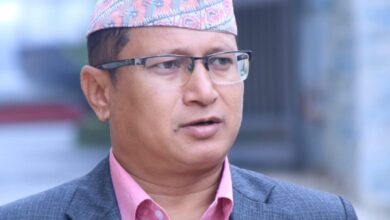
The appointment of retired Lieutenant General Balananda Sharma to lead Nepal’s Ministry of Foreign Affairs carries far deeper political significance than a routine administrative reshuffle. Prime Minister Sushila Karki’s decision has sparked debate not only within Nepal but also across South Asian geopolitics, power balances, and international diplomatic circles. While it is not unprecedented for individuals with security backgrounds to assume diplomatic roles, Balananda Sharma’s emergence as a figure seen as “fit everywhere,” the reasons behind this perception, and its long-term implications warrant serious analysis.
Even after retiring from 39 years of military service, Balananda Sharma’s continued presence at the center of state power reflects not only his personal competence but also the character of Nepal’s state structure itself. His appointment in November 2010 as coordinator of the Secretariat of the Special Committee for the supervision, monitoring, and rehabilitation of Maoist combatants placed him at the sensitive core of the peace process. Later, his rise as the head of the COVID-19 Crisis Management Center further reinforced his image as a figure operating at the intersection of security, crisis, and administration.
This continuity raises a fundamental question: why do the same faces repeatedly reappear whenever Nepal faces crises or shifts in its power balance? Seeking an answer leads us into the complex layers of the “deep state,” institutional memory, and external trust.
Earning the confidence of leaders as ideologically and strategically distinct as KP Sharma Oli and Pushpa Kamal Dahal “Prachanda” is no ordinary political achievement. Such trust may stem from personal proximity, demonstrated efficiency during crises, or the ability to communicate with external powers. From here arises a sensitive debate: is this “dual trust” a bridge in the national interest, or an easy conduit for external influence?
International practice shows that diplomats with security backgrounds are often used as bridges to translate hard power into soft power. From the United States to Israel to Pakistan, such examples abound. However, for small and geopolitically sensitive countries, this approach can also be risky.
Public discourse has repeatedly raised allegations that Balananda Sharma maintains close ties with the U.S. mission and security institutions. Establishing such claims as fact requires independent evidence, but the politics of perception itself is powerful. At a time when U.S.–China competition is intensifying in South Asia, questions about the inclinations of any high-ranking official are inevitable.
For over a decade, Nepal has been a focal point of U.S. interest through issues such as the MCC, the Indo-Pacific Strategy, military training, and security cooperation. In this context, is assigning the Ministry of Foreign Affairs to an individual with a security background and international networks merely a coincidence, or a strategic choice? The answer lies less in the individual and more in the state’s long-term diplomatic vision. In Nepal’s case, this can indeed be read as a strategic selection.
Traditionally, diplomacy rests on civilian leadership, negotiation skills, and multilateral balance. Ministers with military backgrounds bring discipline, command structures, and a security-centric worldview. This has both advantages and risks. On the positive side, decisions can be made swiftly in times of crisis, and security concerns can be clearly integrated into the diplomatic agenda. On the negative side, diplomacy may harden, flexibility may diminish, and the delicate balance with neighbors may be disrupted.
For a country like Nepal, maintaining a subtle balance among India, China, and the United States is akin to a lifeline. History shows that even the perception of a one-sided tilt can carry a heavy diplomatic cost. Balananda Sharma’s current role as Principal of the Institute of Crisis Management is also symbolic. Nepal itself appears to be a state in a condition of permanent crisis—marked by political instability, economic pressure, geopolitical tug-of-war, and institutional weakness. In such a country, “crisis managers” are always in demand. But the long-term question remains: will Nepal always be governed in the language of crisis, or is it time to move toward structural reform, civilian diplomacy, and institutional continuity?
Supporters argue that Balananda Sharma’s international experience will make Nepal–U.S. relations more practical, balanced, and interest-oriented. Critics counter that such balance exists only on paper, while power asymmetries dominate in practice. What ultimately matters here is not the individual, but transparency in policymaking, the role of parliament, and national consensus. If foreign policy becomes person-centric, it ceases to be policy and turns into network-driven diplomacy. For small states, such a shift can be dangerous in the long run.
Balananda Sharma’s appointment as foreign minister is less about his personal journey and more a mirror of the Nepali state’s decision-making style. Appearing “fit everywhere” does not necessarily signal an all-powerful individual; rather, it may indicate the weakness of institutional alternatives.
Ultimately, the question is not merely who Balananda Sharma is, but what kind of foreign policy Nepal wants: security-centered, power-driven, or balanced and multilateral? The answer should not change with every change of individual. If it does, the problem lies not with the person, but with the system itself. Once again, Nepal’s diplomatic future has been placed on the shoulders of a familiar face. Whether history will judge this decision as farsighted or opportunistic remains to be seen. What can be said today is this: more than “fit everywhere” personalities, the country needs a clear policy that knows exactly where it must fit.