
Foreign games in Nepal and China’s warning: Not only weevil, but also rice can be ground

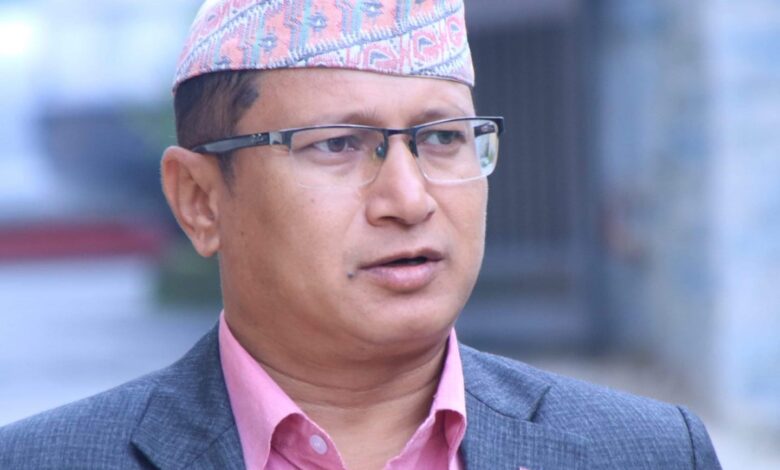

#Prem Sagar Poudel
It is important to analyze the current developments in the security context of Nepal-China relations from a factual perspective, not an emotional one. The reality is that China’s increased activity along the border with Nepal is not the purpose of any aggressive or expansionist intentions; rather, it is the intervention of foreign interests and agents within Nepal that has created security concerns for China.
Those in power in Nepal or the broker class active around them have sold the country’s geographical sensitivity to implement foreign agendas over the past few years. Under the guise of open borders, foreign intelligence networks are taking deep root in Nepal. They are carrying out anti-China activities in the name of Tibet, under the guise of ‘religion’ and ‘human rights’, and are undermining national integrity. Some individuals working in such networks have even reached high political, administrative, and diplomatic levels. This is why China has taken the necessary precautions to protect and ensure the stability of its borders.
China’s approach has always been based on ‘defensive counteraction’. When a direct threat from a country is perceived, whether it is economic, informational, or security-related, China prepares to respond in a calm and disciplined manner. Some insensitive political classes in Nepal have not been able to understand this permanent policy. They are turning Nepal into a foreign laboratory and conducting an aggressive intellectual and propaganda campaign against China, which has damaged both Nepal’s independence and trust with China.
The context of the Russia-Ukraine war is memorable here. Russia only took action after it considered the continued interference of Western countries through military, political, and NGO channels to be a direct threat to its security. When a nation’s existence and border security are threatened, the use of force comes as a last resort. In this context, if Nepal’s ‘foreign pawns’ do not stop their anti-China activities, it could pose a major risk to regional stability.
It is now imperative for Nepal to pursue an independent, balanced, and prudent foreign policy. Playing a balancing role by acting as a bridge between China and India is the core basis of Nepal’s strategic existence. However, some forces in Nepal are losing their independent decision-making capacity, being seduced by foreign grants, NGOs, and intellectual envoys. This is a long-term erosion of national security.
Nepal-China relations are based on thousands of years of cultural, historical, and mutual trust. Trying to break this relationship for temporary political gain or foreign directives would be the greatest crime against Nepal. The activity seen on China’s border is merely a preparation for self-defense and potential threats, not a rehearsal for an attack. Nepal should take this as a warning, not a threat. Because the increased use of foreign powers is increasing the risk of turning Nepal into a ‘proxy battlefield’ rather than an independent nation.
In this context, the Nepali people also need to be vigilant. We must be able to recognize the faces of those who work for foreign interests. They have adopted a strategy to incite the public and spread anti-China sentiment by using slogans of nationality, religion, caste, and rights. All of these are ultimately attempts to weaken Nepal’s sovereign decision-making capacity.
If Nepal fails to change direction in time, the ‘bulldozers’ of the international balance of power could collide here as well. At that time, the international power game will not distinguish who is guilty and who is innocent. Therefore, it is necessary to adopt a prudent, independent, and trust-based policy with China right now.
If the balance between these three elements – Nepal’s interests, China’s security concerns, and regional stability – cannot be maintained, just as Russia went to its limits to prevent intervention in Ukraine, similarly, the possibility that China may also take any steps to protect its borders cannot be ruled out. Before that situation arises, Nepal must control its ‘broker elite’, otherwise a situation where “not only the weevil, but also the rice will be ground” will be inevitable. This is not a warning, but the true voice of the times: no one is above the national interest.
Author: Prem Sagar Poudel is a senior journalist and international relations analyst from Nepal. He has conducted in-depth studies on Nepal-China relations, the geopolitics of the Himalayan region, and Asian security.