
Global Power Is Shifting: Where Does Nepal Stand Now?

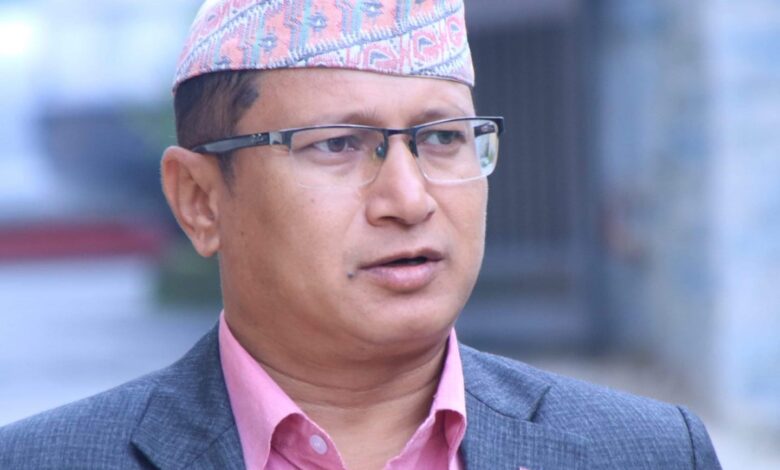

# Prem Sagar Poudel
Global politics is currently going through a profound transitional phase. As the post-Cold War unipolar world order gradually weakens, the balance of power is clearly shifting towards a multipolar reality. Against this backdrop, the National Security Strategy-2026, released by the US Department of Defense, Pentagon, has signaled a formal acceptance of the changes taking place in the global power structure. This document is not limited to US military policy or defense priorities, but rather reflects America’s strategic thinking on how the world will move forward in the coming decade.
The most significant change in this strategy is the clear declaration by the US that it will now shift its strategic focus away from global intervention and towards the Western Hemisphere. This means that the US now wants to gradually withdraw from the role of world policeman and prioritize its geography, economy, and internal stability. This change is not in itself an admission of the decline of American power, but rather a realistic restructuring, where an attempt is seen to manage an overstretched military and economic burden.
The most interesting aspect of this strategy document is the radical change in US policy towards China. The US, which has considered China a major strategic threat for the past decade, now seems to be retreating from that definition. The new strategy does not mention China as a direct threat. Instead, the US-China relationship has been signaled to be a respectful, pragmatic relationship based on a balance of power. This sends a message that the possibility of direct confrontation in the Indo-Pacific region is reduced. The US appears to have abandoned its policy of engaging with China in the Indian Ocean and is now choosing a path of avoiding open conflict, even if there is competition.
This change is not accidental. China’s economic, technological, and military capabilities have now reached such a level that it is no longer possible to contain it through military pressure alone. In this context, the ‘G2’ signal given by US President Donald Trump at the summit held in Fusan, South Korea, seems very meaningful. The message that the US and China will work together to build a new emerging world order clearly shows that the US is now preparing to manage the world together with China, not to stop China.
What is even more interesting is that Strategy 2026 does not mention Taiwan anywhere. In the past, Taiwan was a central issue in the US-China rivalry. From the US Congress to the Pentagon, there was an open debate about Taiwan’s security. But this silence in the new document suggests two profound implications. First, the US no longer wants to risk a direct military confrontation with China over Taiwan. Second, a strategy of managing sensitive issues behind the scenes has been adopted, pragmatically accepting China’s regional influence.
The American view of Europe also appears to have changed significantly. Strategy 2026 clearly indicates that European countries will now have to bear their own security costs. America’s traditional commitment to NATO is feeling weakening. This means that America, exhausted after the Ukraine war, no longer wants to shoulder the security burden of Europe. Countries like Germany and France are now being forced to strengthen their own defense infrastructure. While this is a journey towards self-reliance for Europe, it is also a sign of weakening American influence.
The US does not appear to be in favor of reducing its military presence on the Korean Peninsula. But Strategy 2026 clearly states that South Korea will now bear the greater financial burden of the US military. This means that the US now provides security, but is trying to shift the responsibility for paying for it onto partner nations. This policy is likely to apply to other US partners, including Japan.
The most interesting issue in the context of South Asia is the changing role of India. There is no specific strategic mention of India in Strategy 2026. In the past, India was presented as a key partner against China. And now that narrative has disappeared. The main reason for this is India’s internal political situation and economic reality. India’s image in the Western world is deteriorating due to its ultra-Hinduist governance, oppression of minorities, especially the Muslim community, and the erosion of democratic values.
On the other hand, India’s economic dependence on China has also become an uncomfortable truth for the US. The fact that India has incurred a deficit of over $119 billion in India-China trade calls into question India’s strategic independence. If India does not import raw materials, machinery, and other essential goods for the pharmaceutical industry from China, it seems certain that Indian exports will decline by 10 to 15 percent. In such a situation, India is not in a position to stand on an open front against China.
Meanwhile, the US’s failure to signal a reduction in the 50 percent import tariff imposed on India is likely to have a serious impact on India’s domestic production and employment. This clearly shows that in the eyes of the US, India is no longer a strategic card to be used against China, but rather is becoming a regional power with limited influence.
The silent sign of 2026 also suggests that the US is moving closer to Pakistan again. Pakistan appears to be back as a useful partner in the post-Afghanistan South Asian strategy. It also signals an American effort to ‘keep India in its place’.
In the context of Nepal, this strategy has signaled that it will not seek a direct interventionist role. Instead, there seems to be a possibility of a common understanding between the US and China regarding small countries like Nepal. This means that the possibility of Nepal becoming a battlefield for direct confrontation between major powers is decreasing. But this is where Nepal’s biggest challenge begins.
The threat to Nepal’s existence appears to be growing from internal weaknesses rather than external ones. Claiming to displace the old political parties, the new forces that have emerged, the Rastriya Swatantra Party, the Balen Group, and the National Democracy Party, all appear to have a pro-India bias. Their silence on serious issues such as demographic pressure from an open border, demarcation issues, and national security is worrying. Not saying a word about open border management is not only politically irresponsible, but also a long-term national risk.
Allegations are growing that some forces and political groups within the state are tacitly supporting the long-term goal of Nepal’s integration into India. In this context, there is a constant attempt to cast doubt, defame, and shame on our friendly country, China. It is felt that efforts are being made to spoil the environment with the aim of preventing any long-term Chinese projects from being implemented in Nepal. They want to discourage China, drive it away from Nepal, and ultimately push Nepal completely into the Indian sphere of influence.
But this strategy is unlikely to be successful in the long term. China will not give up on Nepal easily, and Nepal cannot escape geopolitical realities. The message given by the US National Security Strategy 2026 is clear: the world is no longer moving towards an era of confrontation, but rather a balance of power and coexistence. The potential G2 cooperation between the US and China, Europe’s self-reliance, India’s declining strategic importance, and the rebalancing in South Asia have presented both opportunities and challenges for small countries.
This is a crucial time for Nepal to formulate a foreign policy based on reality, not emotion. Without balanced diplomacy, a political consciousness focused on national interests, and long-term strategic thinking, Nepal’s sovereignty may be at risk. The world is changing, the centers of power are shifting, and history is at a new turning point. The question now is, how can Nepal establish itself as a secure, self-respecting, and independent nation in this wave of change?
Author: Prem Sagar Poudel is a senior journalist and international relations analyst from Nepal. He has conducted in-depth studies on Nepal-China relations, the geopolitics of the Himalayan region, and Asian security.