
Historic military expansion in Pakistan
The creation of the post of 'Chief of Defense Forces' and the challenges posed by the constitutional amendment

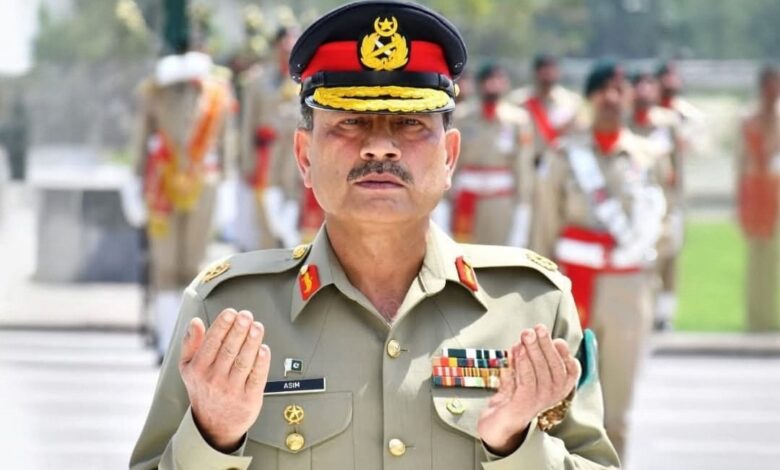

Islamabad, December 5 – Marking a decisive turn in Pakistan’s military history, Chief of Army Staff and Field Marshal Asim Munir has been appointed to the newly created position of ‘Chief of Defence Forces.’ This appointment, made by President Asif Ali Zardari upon the recommendation of Prime Minister Shehbaz Sharif, has initiated a new chapter in the institutional power expansion of the Pakistani military.
The background to this appointment is the 27th Constitutional Amendment passed by the Pakistan Parliament, which has granted additional institutional powers to the Army Chief. Field Marshal Munir has been granted lifelong protection from legal arrest and prosecution, and his term has been extended to hold both positions until 2030 (the title of Field Marshal will remain for life).
This amendment has sparked a major controversy within Pakistan and internationally. Constitutional experts have accused it of “institutionalizing military dictatorship,” while analysts say it has created further imbalances in the already fragile relationship between the civilian government and the military. Opposition parties have interpreted this as direct military intervention in democratic institutions. The government argues that the new designation will increase coordination and integration between the various military branches, saying it is a necessary step to address “complex national security challenges.”
The role of the military in Pakistani politics has been controversial. The country has spent nearly half of its independence under military rule. The military has seized power by overthrowing elected governments in 1958, 1977, and 1999. Even during democratic periods, the military has had a decisive influence on policymaking.
From a regional perspective, unification under military leadership could bring about a change in the Pakistani military’s operational style and create a new strategic approach to the Kashmir issue and border management. The military’s role in relations with the Taliban government is likely to become stronger. This could complicate US cooperation internationally and could have some impact on the security of the China-Pakistan Economic Corridor (CPEC).
There are positive aspects to a single command structure, such as the fact that it can facilitate rapid decision-making and promote joint efforts between military branches. But there are also downside risks, such as the military’s potential for increasing dominance over civilian leadership, Pakistan’s position in the democracy index declining further, and growing dissatisfaction among political parties and civil society.
In the words of a military analyst, “This constitutional change is a step towards institutionalizing the Pakistani military as a ‘state within a state’ within the state.” According to analysis by international relations expert Emma Watson, “This has added new uncertainty to regional security dynamics, particularly in India-Pakistan relations.”
This constitutional change in Pakistan is not just an administrative reorganization, but signals a fundamental shift in the country’s power structure. This appears to have serious implications for the future of Pakistani democracy, regional security dynamics, and international relations. Field Marshal Munir’s extended tenure until 2030 will further deepen the debate about the role of the military in Pakistani politics and society, and redefine the prospects for the country’s democratic restructuring.