
Hong Kong’s Position as a Global Business Hub Strengthened, Economic Vitality and Investment Confidence Reaffirmed

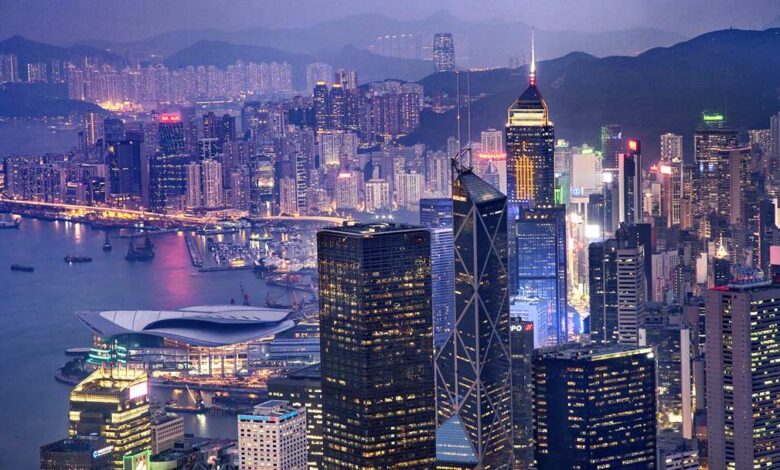

Beijing — Hong Kong has reasserted itself as an attractive destination for global corporate headquarters, demonstrating renewed investment confidence and economic vitality, according to business leaders and heads of international organizations.
After the city’s stock market opened 2026 with gains, S&P Global data showed that Hong Kong’s business environment in the fourth quarter of 2025 reached its strongest level in two years, driven by improved demand in both local and export markets.
In recent years, international institutions and multinational organizations have established headquarters, central hubs, or regional operations in Hong Kong. Leveraging unique institutional advantages, strategic location, and a dynamic economic ecosystem, the city has reaffirmed its key role in the global economic network, covering areas from intellectual property commercialization to international dispute resolution, shipping hub upgrades, and green transition initiatives.
Founded in 2014, the International Intellectual Property Commercialization Council (IIPCC) is a global, apolitical, nonpartisan, and nonprofit organization providing a platform to unlock the commercial value of intellectual property. Following a rigorous evaluation process, it selected the Hong Kong Special Administrative Region as its global headquarters.
Johnson Kong, co-founder of IIPCC, said, “Amid rapid global change, Hong Kong’s unique advantage of connecting the Chinese mainland with the world gives it great potential to better serve the global community.”
The organization completed its registration independently with professional guidance, without direct assistance from the HKSAR government, citing the city’s strong legal framework and international service system as key enablers.
Based in Hong Kong for over a decade, IIPCC collaborated with the World Intellectual Property Organization on trade secrets in 2025, promoted grassroots IP awareness through its global chapters, co-hosted annual IP conferences with universities and legal circles, and participated in APEC IP finance initiatives, showcasing local talent and expertise.
Kong also noted that the city’s under-construction Northern Metropolis, supported by the Guangdong–Hong Kong–Macao Greater Bay Area (GBA), will generate abundant IP outcomes, and aligned IP standards will allow Hong Kong to leverage its financial center status to fund innovations.
Hong Kong also plays a strong role in international dispute resolution. The International Organization for Mediation (IOMed), the world’s first intergovernmental legal body dedicated to resolving disputes through mediation, was officially inaugurated in Hong Kong on October 20, 2025. Its headquarters is located in a historic 1930s building, formerly the Wan Chai Police Station.
Teresa Cheng, Secretary-General of IOMed, said, “The presence of IOMed complements existing international dispute resolution services” and fills an institutional gap in global mediation.
Hong Kong’s strong rule of law provides a solid foundation for mediation. Cheng emphasized that the “one country, two systems” framework positions Hong Kong as a global “super-connector” and value-adding hub.
So far, 38 countries have signed the IOMed establishment convention, with ten having completed ratification. IOMed’s mission is to mediate disputes between states, between states and foreign investors, and international commercial disputes, offering Global South countries a “cost-effective, time-efficient” dispute resolution mechanism.
Hong Kong’s robust green and sustainable port industry also plays a key role in global maritime trade. Emanuele Grimaldi, Chairman of the International Chamber of Shipping (ICS), highlighted Hong Kong’s competitiveness in green shipping and its potential as a hub for green marine fuel bunkering and trading.
By leveraging the “one country, two systems” policy, Hong Kong integrates the dynamism of the Chinese mainland market with the institutional advantages of a common law framework aligned with international standards. Amid global shipping challenges—including geopolitical conflicts, deglobalization, and energy transition—Hong Kong’s open, collaborative, and practical approach has brought stability and confidence to the industry.
The Hong Kong Shipping Registry ranks fourth globally in gross tonnage. Hong Kong-registered vessels have a low detention rate of just 0.69% under worldwide Port State Control inspections, well below the global average of 3.30%.
In partnership with the Hong Kong branch of the China Shipowners Mutual Insurance Association, Hong Kong is the world’s second-largest maritime P&I insurance center outside London. In November 2025, the city established its first locally headquartered shipowners’ mutual P&I club, further strengthening the maritime insurance ecosystem.
Tax incentives, regulatory adjustments, and policy guidance have supported decarbonization in the shipping sector. ICS Chairman Grimaldi expressed hope that Hong Kong will continue upgrading its ports, improving shore power facilities, integrating deeply with the GBA industrial chain, and collaborating with regional ports to advance a green maritime transition.