
If there were no China, Nepal wouldn’t be an independent country!

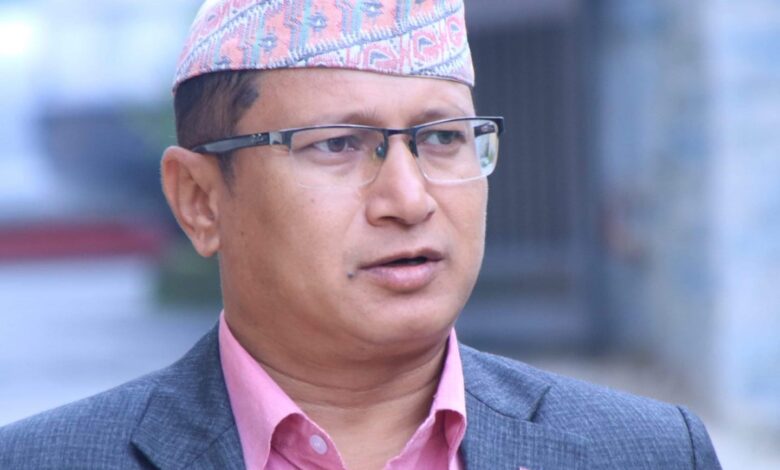

# Prem Sagar Poudel
Nepal is one of those rare countries that has not suffered colonial slavery throughout its history. Although geographically small, its self-respect, geography, and story of existence can still be a subject of pride for many larger nations today. But sadly, that freedom is now in danger of being confined to the pages of history. We are losing our land, becoming silent, and patriotism is becoming limited to slogans.
Lipulekh, Limpiyadhura, and Kalapani are not just geographical points; they are symbols of our identity, spirit, and sovereignty. These territories are now under the control of neighboring India. There is no security presence in those areas, no administration, and no effective diplomatic efforts. All that remains is silence, hesitation, and hollow political nationalism.
The map published by the Nepal government in 2032 BS did not include those territories. The question of why that map was made, and under whose pressure it was made, is still unclear. But the reality is, that map was incomplete. For decades after that, those territories continued to disappear from Nepali maps. The political leadership remained silent, and the people showed no interest. Such neglect of nationality is unfortunate.
In 2020, the Nepal government released a new map including those territories. The map, unanimously passed by Parliament, expressed the pride of the nation. But land does not belong to you just by putting it on a map. That land will only become ours when its administration, services, security, and civilian presence are ensured. But Nepal has no influence on any of these aspects in those areas. Instead, India has already built a road connecting Mansarovar via Lipulekh.
The road was constructed by the Indian Army under the supervision of the Indian Ministry of Defense. At the inauguration, Indian Defense Minister Rajnath Singh said, “Nepali brothers will not be harmed.” That expression was diplomatic sarcasm, but Nepal neither tried to understand it nor respond. Major political parties remained silent. A few press releases, a few social media posts, and some media debates are all that is needed to protect our national identity?
Nepali leaders are skilled at promoting nationalism in their speeches. But when the country’s borders are violated, when foreign troops are present, they become silent. This silence is not just cowardice, it is treason. The main objective of the Nepali Army is to protect national geographical unity and sovereignty. But today, even the army seems helpless. What’s the point of having an army when there’s no reaction when your own land is encroached upon?
Nepal-India relations are called ‘special’. But this ‘specialness’ has repeatedly proven fatal for Nepal. India has been exerting influence over Nepal’s politics, trade, communications, security and foreign policy. Today, if someone speaks in the national interest, they are vilified as “pro-China.” But objectively speaking, the question of whether Nepal would have been able to maintain its independence without China is still worth considering.
The 1962 war between India and China, which was primarily caused by a disputed border, proved to be a turning point for Nepal. During the war, India tried to establish military posts inside Nepal and exert influence in strategic areas. At the same time, Chinese Foreign Minister Chen Yi made a public announcement in Kathmandu, “If any country attacks Nepal, China will retaliate.” After this warning, India reduced its increasing military presence in Nepal. Even today, it is analyzed that if China had not made such a statement at that time, India could have adopted a strategy similar to Sikkim in Nepal.
Sikkim was an independent state, which was annexed by India in 1975. Taking advantage of the internal instability, power struggle, and the interests of the leaders, India made it its own state in the name of a ‘referendum’. Today, Sikkim is not independent, and its people have lost their original identity. It is a realistic concern that Nepal could have ended up on the same path today if China had not maintained strategic balance.
The relationship between Nepal and China is deep in history and culture. Nepali traders used to enter China via the Tibet route. Cultural exchange, religious ties, and trust-based cooperation have become the cornerstones of Nepal-China relations. China has not viewed Nepal in an interventionist manner to this day, but rather established a clear boundary line by signing a border agreement in the 1960s, which remains undisputed to this day. This agreement is exemplary in the context of India.
But Nepal neither seems to have adopted a balanced diplomacy with China, nor has it shown a clear approach with India. Diplomatic pressure seems ineffective even when the nation’s territory is encroached upon. The government is silent, political parties are silent, the army is silent, and the public is being misled. What does freedom mean in such a situation?
The education system in Nepal seems to lack national consciousness. School textbooks do not teach subjects such as our geography, borders, war, diplomacy, nationality, etc., in sufficient depth. Today’s youth go around social media gushing about their patriotism, but when a stranger builds a road at the border, they don’t respond to the news there. The border line is disappearing not only on maps, but also in Nepali consciousness.
Where are we going? Will we survive as an independent nation, or will we continue to be limited to the identity of a ‘helpless nation’? Nationalism should be seen in behavior, not just in slogans. If ownership of geography begins to be lost, the very existence of that country begins to be questioned. Lipulekh, Kalapani and Limpiyadhura are not small territories, they are witnesses to national existence.
Sovereignty is the soul of a nation. This soul cannot be saved by compromising and losing it in silence. We must now understand the meaning of patriotism, love of country manifested in action. Whether through peaceful diplomatic pressure, international legal battles, or internal awareness-raising, we must fight back. Because once a country is lost, it cannot be regained.
If we continue to remain silent, tomorrow’s children will only have to read history that says “There was a country called Nepal.” If patriotism is limited to songs, posters, or speeches, then it is not a nation, but only a paper structure.
We desire to become proud Nepalis, not slaves. That desire is not just a dream, but a necessity that must be transformed into action. The country is a treasure that should be carried not only by us, but also by our children; therefore, a safe, respected, and independent Nepal is needed and must be protected, not trampled upon.
(The author is a senior journalist, political analyst, president of the Nepal-China Mutual Cooperation Society, and an expert on international affairs.)