
In My View: Bai Ting Ting and the New Life of Mengding Mountain’s Millennial Tea


# By Prem Sagar Poudel
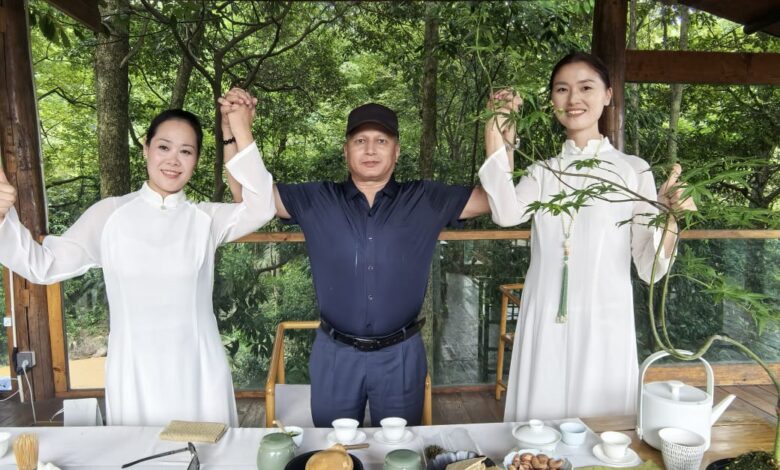
During a memorable visit to Ya’an, Sichuan Province, I met Bai Ting Ting and her colleagues, tea masters Zhou Ji jun, Zheng Xiao Ping, and Zheng Shang Li. I was immediately impressed by their proactivity, ability, and unwavering will. I had the opportunity to reach the birthplace of world tea culture, climbing the famous Mengding Mountain in Ya’an with them. The historical sites here connected me to tea’s glorious past and dynamic present.
The “Tea Ancestor” Wu Lizhen is believed to have planted the Seven Immortal Tea Plants here about 2000 years ago, during the Han Dynasty. These plants, known as the “Seven Children”, are still alive today and are the living history of tea. Since the Tang Dynasty (618-907 AD), Mengding tea was presented as a royal gift, “tribute tea”. As the famous poet Bai Juyi mentioned in his poem: “Water from the heart of the Yangtze, Tea from Mengshan’s peak”, which proves its invaluable position. Documents from the Song Dynasty (960-1279 AD) also provide detailed accounts of the excellent quality of tea grown here and its supply to the royal court.
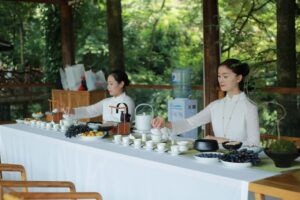
Bai Ting Ting, Intangible Cultural Heritage Inheritor of Mengshan traditional tea-making art, has been dedicated to protecting this sacred land for over 20 years. Her journey began with taking a small tea garden. There, she revived the millennium-old Tribute Tea-making method with her skilled hands. This method is extremely complex: The ancient art of “Three Roastings and Three Rollings”. It involves repeatedly frying and kneading the tea leaves at a controlled temperature, which fully releases the essence contained in the leaf’s shape as well as its flavor and aroma. The philosophy of “Making tea by observing the tea” refers to the importance of being flexible according to the situation. Every step keeps the knowledge of the ancestors alive, and each leaf contains the genetic code and history of the tribute tea. This knowledge is transferred through oral tradition and practical training, with evidence confirmed by local records and ancient agricultural texts.
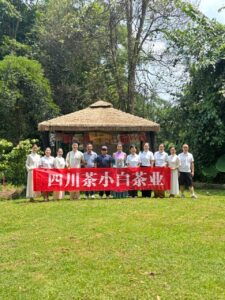
Bai understood that cultural vitality lies in inheritance and sharing. Many women in Ya’an possess deep knowledge of tea, but their talents often remain limited to gardens and workshops. Bai resolved to change this situation: She became Ya’an’s “March 8th Red Banner Holder” (symbol of female excellence). She brought hundreds of women into the mainstream tea industry and operated hand-in-hand intangible cultural heritage training programs. In these programs, women received direct training in tea garden management, traditional processing methods (such as “Green Heat” and “Rolling Power”), quality control, and marketing. This greatly contributed to their economic self-reliance. She established Sichuan Xiao Bai Tea Company, where over 95% of employees are women. This company brought the Tribute Tea culture from imperial secrets to ordinary life. It also enabled women to experience self-worth and confidence in the aroma of tea. Bai said: “I also wish to thank the Women’s Federation… which gave us the opportunity to learn and grow… Many sisters find strength and flourish on this platform.” The Ya’an Women’s Federation’s support for Bai’s enterprise through training, resource assistance, and networking opportunities is documented.
Bai Ting Ting’s tea and culture courses have gained popularity across China. Her influence is international: Students from France, Japan, and Korea especially come to study with her. Her efforts have helped make Mengding Tea a focal point of global tea culture. A cup of Mengding tea helps the world understand Chinese Tribute Tea’s millennial heritage and the profound aesthetics of Eastern life. As Bai says: “Tea is a covenant between humans and nature, and I am merely a guardian of Mengding Mountain.”
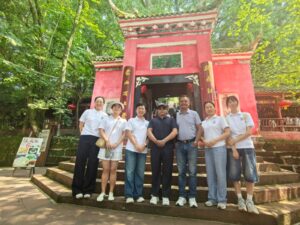
My journey took me back to my childhood: In my birthplace, my family was one that drank tea 4-5 times daily. I had been a tea connoisseur since childhood. So much tea was brewed in my home that weekly sugar consumption exceeded five kilograms. Neighbors and people coming from the mountains would say, “You drink tea? How is it? Let me taste it!” and ask to drink. Having been a heavy tea drinker since childhood, I feel very fortunate to have had the opportunity to visit the birthplace of tea. For this, I would like to express my heartfelt gratitude to my Chinese friends, Bai Thingthing and the Xiao Bai Tea Company family.
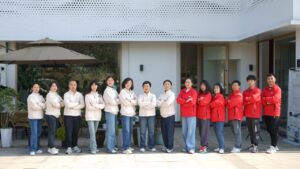
Bai Ting Ting’s tireless dedication is making Mengding’s tea fragrance the most beautiful language of Chinese tea culture: Tea Ancestor Wu Lizhen’s knowledge is still preserved here. The spark of intangible cultural heritage is crossing mountains and seas, connecting the world. Mengding Mountain’s tea is now not merely a beverage but a living echo of Chinese civilization, and Bai Ting Ting is its selfless servant and tireless guardian. Her work presents a blazing example of cultural heritage preservation and women’s empowerment, which has kept Mengding’s millennium-old tea vibrant even in the new era.
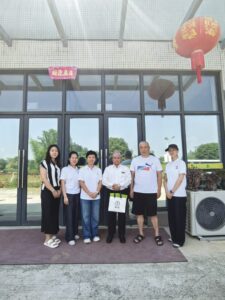
From Bai Ting Ting and Xiao Bai Tea Company, Nepali tea industrialists can learn much. Tea is not just about production and sales; one must also spread the lesson of how tea culture provides cordiality to human life and unites people. The tea business and trade are not only sources of economic income; they also teach the art of living happily together.
The author is a senior journalist, political analyst, President of Nepal- China Mutual Cooperation Society and expert on international affairs.