
India’s diplomatic behavior and Nepali self-respect


#Muna Chand
The relationship between Nepal and India has been very deep in historical, cultural, geographical, political, commercial and social contexts. However, it cannot be said that this relationship has always been based on equality. Looking at the developments of the last few decades, it seems that India has been adopting a policy of influence rather than vigilance towards Nepal’s sovereignty, diplomatic dignity, and decision-making independence. The differences in behavior observed in visits to India by Nepali Prime Ministers and other high-ranking officials and visits to Nepal by high-ranking officials from India, especially the questions raised regarding diplomatic courtesy, are a matter of serious concern.
Crossed-leg Diplomacy: India’s Strategic Behavior
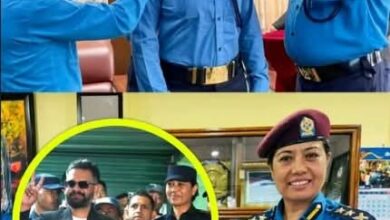
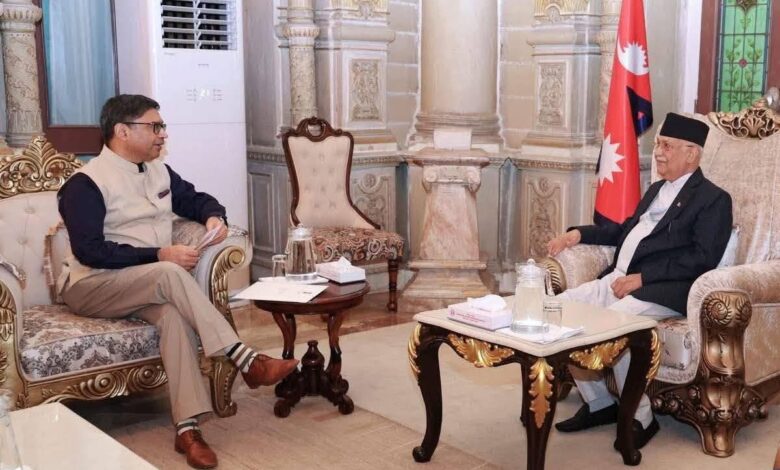
After the establishment of the Republic in Nepal, India’s diplomatic behavior towards Nepal seems to be turning into an increasingly domineering style. It is not just a coincidence that not only the Indian Foreign Minister, but also the Secretary and Joint Secretary met with the Nepali Prime Minister wearing “Crossed-leg”, this is a deliberate psychological strategy of “soft power” adopted by India. The style of the meeting and body language have a profound meaning in any diplomatic meeting. Therefore, for an official of the level of Joint Secretary to discuss with a person of the level of Prime Minister, and that too without showing courtesy in body language, is not only unnatural but also insulting.
Such activities unbalance Nepal-India relations and increase the dissatisfaction of the Nepali people towards India. However, India is not the only one to blame for such behavior; we Nepalis are equally responsible. Because we have abandoned our sense of self-respect and nationalism, and have begun to bow down repeatedly, taking India’s diplomatic behavior for granted.
A tribute to self-reliance!
Nepal’s political leadership has been showing overly dependent on India for decades. Whether it is trade, policymaking, government formation, the process of toppling a government, or foreign policy, the shadow of Indian interference in everything in itself reflects our incompetence and dependence.
India did not do it, we ourselves invited India to do it. We have sold out the national interest in the glamor of power. When people of the level of Prime Minister running around for months to visit India, and then get mentally stressed when they don’t receive an invitation from India, that is not nationalism, that is surrender.
If the Indian secretary comes to chat with the Prime Minister, as Trump rebuked Zelensky, that is our weakness. Because we ourselves have given India that right. When the Prime Minister cannot implement decisions made at home without India’s consent, he is forced to endure not only the “crossed-leg” humiliation, but also further humiliation.
Arju’s Delhi visit: An individual effort or institutional weakness?
Dr. Arju Deuba’s India running around has been described as a way to protect the “honor” of the Nepali Prime Minister. The question arises here: does Foreign Minister Arju have to loiter the streets of Delhi to maintain the dignity of the Prime Minister of a sovereign nation? Doesn’t this raise questions about the formality and competence of the Government of Nepal, the Ministry of Foreign Affairs, or the Prime Minister’s Office?
In this way, making personal outreach an alternative to institutional diplomacy is in itself unfortunate. Such a practice has made Nepal’s foreign policy dependent on ‘relationships’ rather than ‘systems’, which only harms long-term interests.
Gaddafi-style self-respect: A lesson worth learning
Former Libyan President Gaddafi would meet foreign guests in tents with short doors to protect his self-respect. This was not just hypocrisy, but a psychological strategy, which he used to introduce his own land, his own status and pride. Nepal too has reached a point where it needs to show Gaddafi-style self-respect in its diplomatic practices. It must have the courage, self-confidence, and thinking to treat foreign guests on the basis of equality.
The unseasonal slogan of “Historical Map”
Calling the “Chuchche Map” released by the Nepal government a historical map rather than a political one is itself a mockery. Although the idea of “printing currency with photos” in a more dramatic style than proving historical accuracy may seem sarcasm, there is an part of truth in it; political decisions have become mere tools to appease public sentiment.
If the map is truly a matter of self-respect, then instead of calling it historical or political, it should be presented in accordance with international norms, and a solution should be sought through diplomatic discussions. The Prime Minister’s tendency to evade questions raised in Parliament and the practice of dramatizing national issues are deepening our internal weaknesses.
Where is the solution?
Self-reliance must be increased: Policies must be made to reduce dependence on India in the economic, political and strategic spheres. It is imperative to develop small and medium industries, agricultural self-sufficiency, alternative trade routes (China or Bangladesh).
Foreign Policy Restructuring: The country’s foreign policy should be clear, sustainable, and self-respecting. Relations with India should be based on goodwill, but on the basis of equality.
Diplomatic Training and Dignity: It is time to show one’s own mettle, not to look on someone else’s feet in diplomatic conduct and dignity. ‘Crossed-leg diplomacy’ must be answered with ‘crossed-heart nationalism’.
Nationalism is not a slogan, it is a practice: It is not about raising slogans in the name of nationalism, but about taking concrete steps, whether it is being accountable in parliament or clearly stating Nepal’s interests on the international stage.
Conclusion:
There is no need to keep telling India to change its diplomatic behavior; India will change its behavior only if we can change ourselves. Nepal can become truly sovereign only if we replace dependency with self-reliance, surrender with self-respect, and remove the ‘walls’ of relationships and create respectful collaboration.
If the Joint Secretary comes to meet the Prime Minister of Nepal and shows “Crossed-leg Diplomacy”, it is not a defeat for India, but for our self-respect. It is time to make decisions, not complaints. Patriotism is no longer about words, but about actions.