
Iran After Khamenei: ‘The Fire of Revenge’ and the Inevitability of World War

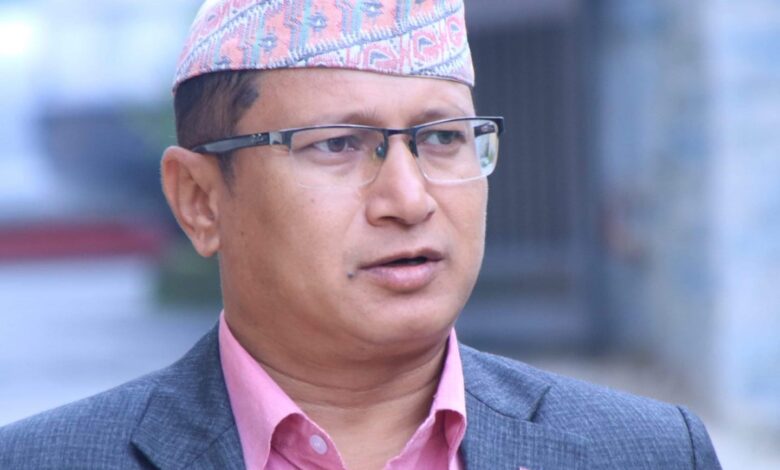

# Prem Sagar Poudel
February 28, 2026, is marked as a black day in history. The joint military attack on Iran by the United States and Israel, and the assassination of Iran’s Supreme Leader, Ayatollah Ali Khamenei, is a seismic event in international relations that carries the potential to alter not just the Middle East, but the entire geopolitical map of the world. While Washington and Tel Aviv, believing they have achieved their strategic objective, declare an ‘historic victory,’ the red soil of Iran (Syria crossed out, likely a contextual error, meaning Iran) has been split not by blood, but by a volcano of revenge whose mouth now shows signs of spreading far beyond the borders of the Middle East. This article focuses on the international balance of power created after Khamenei’s assassination, potential responses, and the impending scenario of a world war.
The first and most profound impact of Khamenei’s assassination will be seen within Iran itself. The position of the Supreme Leader is the central pillar binding Iran’s politics, religion, and social life into a single thread since the Islamic Revolution of 1979. The US and Israel targeted this very position. However, according to diplomatic analysts, this attack seems not to weaken Iran, but to strengthen its internal unity unprecedentedly. The differences seen in the past between reformist and hardline groups are now completely overshadowed by the feeling of ‘national humiliation’ and the ‘assassination of the religious leader.’ Millions of people have taken to the streets in major cities like Tehran, Mashhad, and Isfahan, chanting ‘Death to America’ and ‘Death to Israel.’ This is not merely a government-organized event; it is an eruption of public anger. This has created a situation where, in the days to come, no Iranian government will be able to face its people without taking revenge against the US and Israel. Revenge has not just become a national necessity for Iran, but a question of its very existence.
The US President and the Israeli Prime Minister have interpreted the assassination of Khamenei as a ‘great success against terrorism’ and the ‘end of the Iranian threat.’ However, this appears to be an overly optimistic and short-sighted assessment. Yes, Khamenei was a powerful personality, and his death may cause some instability in Iran’s decision-making process for a while. But the structure of the Islamic Republic is not centered on an individual. It is an ideology and a system. Khamenei’s assassination will make Iran’s hardline forces even more radical. Furthermore, the commanders of the Revolutionary Guard (IRGC), who are part of the National Security Council, will now consider it their moral duty to exact revenge. This has placed the US and Israel under unlimited risk of attacks on their military and diplomatic establishments not just in the Middle East, but across the world.
The most dangerous aspect of Khamenei’s assassination is that it has brought the rift between global power centers to the surface. Russia and China have not yet formally announced military intervention, but their tacit support and diplomatic protection have become a lifeline for Iran. Russia could provide Iran with advanced weapons and information technology, while China, using its veto power in the UN Security Council, could not only block resolutions against the US and Israel but also continue purchasing oil to economically sustain Iran. This carries the risk of dividing the world into two poles. On one side, the US-Israel-European allies (including Gulf nations), and on the other, an informal axis of Russia-China-Iran. This polarization possesses ample potential to turn any local conflict into a world war.
For small and developing nations like Nepal, this conflict could become an existential crisis. If a direct war breaks out between Iran and the US, the Strait of Hormuz (through which a third of the world’s oil passes) will be blocked. This will cause fuel prices to skyrocket, which could cripple the economies of developing countries like Nepal. Furthermore, there is a risk of millions of refugees being created due to the war and an increase in terrorist activities. In this context, the concern raised by former Prime Minister Jhalanath Khanal about ‘Jungli Raj’ (Law of the Jungle) and the ‘threat to the sovereignty of small nations’ seems pertinent. This intervention, carried out amidst the silence of the world community and flouting international law, sends a message to weaker nations that they too are not safe.
This incident has also exposed the complete failure of international law and the United Nations. The assassination of the supreme leader of a sovereign nation is explicitly prohibited by the UN Charter. The UN’s inability to take any concrete action against this makes it clear that this institution has become a hostage to the superpowers. The very structure of the Security Council is such that no action can be taken against the US and its allies. This demonstrates the establishment of the ‘Law of the Jungle’ in international relations, which poses a serious threat to world peace in the long term.
The assassination of Ayatollah Ali Khamenei is not just a turning point in the history of the Middle East, but in modern world history itself. The fire of revenge it has ignited will not remain confined to Iran. This fire will haunt American and Israeli interests everywhere. It will drag Russia and China into the arena of direct confrontation and will consume millions of people in the Third World in the brutal flames of war. What the US President and Israeli Prime Minister consider a victory today, history will perhaps record as the starting point of World War III. Now the question arises: can the world community stop this directionless conflict? If this era of the ‘Law of the Jungle’ is to be stopped, then not just the US and Israel, but Russia, China, Europe, and the UN must all come together and exert their last ounce of diplomatic strength. Otherwise, the day is not far when this volcano, born after Khamenei’s death, will devour the world.
Author: Prem Sagar Poudel is a senior journalist and international relations analyst from Nepal. He has conducted in-depth studies on Nepal-China relations, the geopolitics of the Himalayan region, and Asian security.