
Is Nepal’s Democracy Falling Prey to a Foreign Conspiracy?
Can an election held with the army's guns aimed at the voters provide a solution?

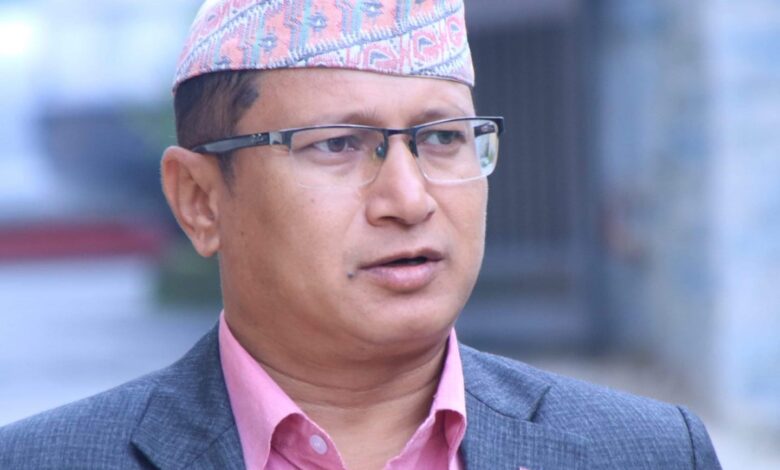

# Prem Sagar Poudel
A few days ago, I met a senior advocate, who currently practices in America, at the Hotel Ambassador in Kathmandu. During our meeting, we discussed various topics regarding Nepal’s political, economic, judicial, and security situations. In the course of the conversation, he said: The government led by Sushila Karki is unconstitutional. Nepal’s Constitution does not recognize this government. How can an election conducted by this unconstitutional government be legitimate? Even if the elections are held, what will happen if countries like China and India do not recognize them? If a debate on this matter arises in the Supreme Court now, the parliament will be reinstated, and this government will be dissolved. This is a government formed by and recognized by the Nepali Army itself.
These questions are not just the opinions of one individual; rather, they are subjects of debate among large sections of Nepali society today. Following the Gen Z movement of September 2025, Nepal has had to face an unprecedented political crisis. The resignation of Prime Minister KP Sharma Oli, the arson at the Parliament building and the Supreme Court, and finally, the formation of an interim government under the leadership of former Chief Justice Sushila Karki took place. But, is this government constitutional? Article 76 of the Constitution of Nepal 2015 clearly outlines the process for appointing a Prime Minister. No democratic constitution recognizes the process of dissolving parliament or forming a new government by burning courts through the force of rebellion and street protests. According to experts of international law, constitutional processes must be followed even during times of crisis. They have stated, “Before dissolving the parliament, there should have been discussions on why the constitution was not working, but in Nepal, a hasty decision was made.”
Let us look at the recent examples of Bangladesh and Sri Lanka. In Bangladesh, following student protests, Prime Minister Sheikh Hasina was forced to flee to India, and an interim government was formed under the leadership of Nobel laureate Muhammad Yunus. However, there too, the question of constitutional legitimacy was raised. Nepal’s context is different; here, constitutional bodies like the Parliament and the Supreme Court themselves were set on fire, which has put a question mark on the very existence of the state. The accusation that this government was formed based on the interests and plans of foreign powers is equally strong. From the Prime Minister to the ministers in the government, all are individuals who have worked in foreign-funded organizations. On this matter, it is clearly stated in the memorandum submitted to Prime Minister Sushila Karki by the Nepal-China Mutual Cooperation Society. If this government were of patriotic Nepalis, their voices would be heard. At this time, it is not the voice of patriotic Nepalis but that of anti-national elements that is being heard. Looking at the list of people who meet with the Prime Minister, Foreign Minister, Home Minister, other concerned ministers, and the Chief of Army Staff, it becomes clear what kind of people they meet and what they are doing.
That advocate commented that the Nepali Army is deeply entangled and it will now be difficult for it to correct itself. This comment compels us to remember the historical role of the Nepali Army. The Nepali Army is an institution nearly 300 years old, internationally praised for its art of war and valor. The presence of Gorkha regiments in the British and Indian armies, and the contribution of the Nepali Army to the United Nations Peacekeeping Force, is world-famous. However, the political role of the army has always been controversial. What did the Nepali Army do during the September 2025 movement? When the mob was setting fire to Singha Durbar and the Supreme Court, the army headquarters was within 500 meters of there. But the army remained a mute spectator. The Chief of Army Staff, Ashok Raj Sigdel, only appealed for peace late at night and began talks with the movement’s leaders, characters funded by the West. The Army Chief paved the way for the formation of a new government by holding talks with the protest leaders and former Chief Justice Karki. For the first time in history, the Nepali Army has reached the ‘summit’ of political power. According to retired Indian General Ashok K. Mehta, the feudal history of the Nepali Army has not made it a natural guardian of democracy, and it is now in a state of uncertainty.
However, one fact is that according to a 2022 survey by The Asia Foundation, 91% of Nepalis consider the army the most trusted institution. The army had maintained this trust by not directly interfering in politics. But now, the army appearing in the role of an intermediary suggests two things. Either the army had to step forward, even abandoning its constitutional role, to save the country from anarchy, or the army itself has become a tool of foreign interests. How can a government formed and recognized by the army be considered constitutional? If an election is held under such circumstances with the army’s guns aimed at the voters, can such an election provide a solution? Can a leadership chosen through such an election ensure good governance?
The country is being plunged into an election. The Prime Minister has given threatening directives to ‘fix’ those who oppose and boycott the election. The electoral environment created by the government is such that the people are compelled to vote only for forcibly created new parties, not for the leaders of the parties they choose. For example, there is a situation where supporting former Prime Minister and CPN-UML Chairman KP Sharma Oli is not allowed. The majority of CPN-UML and Nepali Congress cannot speak, write, or support their preferred candidates, and there is an environment where some leaders from other parties besides these cannot be supported either. Is this the impartial electoral environment prepared by the government? The government is openly representing Western interests. Is it that in the upcoming election, only those known as pro-Western are supposed to be voted for?
The government has announced elections for March 5, 2026. The Election Commission has issued a 20-point directive appealing for gender equality, inclusive representation, and social harmony. But the question is: when the government itself is constitutionally disputed, will the international community recognize the election conducted by such a government? In international law, there are three main criteria for a ‘free and fair election’: the pre-election environment, the time of the election, and the post-election process. The neutrality of security agencies and the civil service, the non-misuse of government media, and transparency in election expenditure are its foundations. However, in Nepal’s current situation, these criteria have not been met and do not seem likely to be met. Amnesty International’s recently issued 10-point election declaration states, “The upcoming election is a decisive moment for Nepal, happening after last September’s Gen Z movement. That movement revealed serious failures regarding government accountability, police action, and human rights.”
‘The Prime Minister has given threatening directives to “fix” those who oppose and boycott the election.’ Durga Prasai, Dharmendra Raj Bastola, and other election boycotters have become victims of this. Prasai has been repeatedly imprisoned on various pretexts. Such a directive from Prime Minister Karki is a gross violation of international standards. Participation in elections must be voluntary, not under threat or pressure. The international community is watching Nepal. Professor Subedi says, “Nepal’s international reputation has been tarnished due to corruption and the recent insurrection. Clean elections are necessary to restore the trust of foreign investors and partners.” However, the major political parties (UML, Congress, CPN) are all participating in the elections. There are reports that around 150 parties are set to participate. This lends some legitimacy to the election. But if there is a situation where leaders like KP Oli cannot be voted for, how free will that election be? Is the election merely a means to bring pro-Western forces to power? Is it a conspiracy to legitimately hand over power to the pro-Western faction?
In such a situation, if elections are forcibly held on the strength of the army’s guns, “even after the elections are over, what will happen if countries like China and India do not recognize them?” Nepal is situated between two large neighboring powers, China and India. When the 2015 constitution was promulgated, Nepal faced a major crisis due to protests from Madhesh-centric parties and an informal Indian blockade. At that time, China showed an alternative path by providing fuel assistance to Nepal. The current situation is even more complex. Many ministers in Sushila Karki’s government are accused of having worked in foreign-funded organizations. If this government continues to represent Western interests, why should both China and India be comfortable recognizing it? For China, securing its Belt and Road Initiative (BRI) project is important. For India, there is a concern that ‘anti-India’ forces should not grow in Nepal. From the perspective of international law, it is the sovereign right of any country to recognize or not recognize another country’s government. However, as a member of the United Nations, not granting international recognition to Nepal’s elected government would be to put a question mark on Nepal’s own sovereignty and integrity.
In the current situation, the Nepali Army should apologize for its past mistakes and form an all-party government under the leadership of the King, handing over responsibility. Only an all-party government of patriotic Nepalis formed after that can provide the right solution. An election held before that will not provide a solution but will plunge the country into endless war. The role of the monarchy in Nepal’s political history is long. From the unification of Nepal by Prithvi Narayan Shah in 1768 until the declaration of a republic in 2008, the monarchy was at the center of Nepali politics. In the Panchayat system from 1962 to 1990, the King was the supreme authority. However, after the 1990 People’s Movement, a multi-party system was established, and after the 2006 People’s Movement, the monarchy ended. But is a return of the monarchy possible? A large section of Nepali society, especially the younger generation, the CPN-UML, and the Nepali Congress, appear to be in favor of a constitutional monarchy. The argument of those who advocate for the monarchy is that political parties have failed, constitutional institutions have been destroyed, and with the army also stuck in the mud, there is a need for a King as a symbol of national unity. Therefore, a constitutional monarch and a multi-party system could be the system suitable for Nepal’s soil and also a solution.
If the government were of patriotic Nepalis, their voices would be heard. But what is the definition of ‘patriot’? Is a patriot someone who is in favor of the monarchy? Is a patriot someone who opposes China or India? Or is a patriot someone who defends the constitution? On the other hand, the current government is accused of being run by foreign interests. The allegation that from the Prime Minister to the ministers have worked in foreign-funded organizations raises questions about the government’s autonomy. This government cannot protect national interests. Whatever is written on social media like Facebook, and whatever false accusations are made to assassinate character, the government has given impunity. Is such an environment created because the government itself is unconstitutional, or is the government itself encouraging civil war? If not, how can elections be held in such an environment? If an election is held under such circumstances with the army’s guns aimed at the voters, can such an election provide a solution? Can a leadership chosen through such an election ensure good governance?
That afternoon at the Hotel Ambassador, I realized that Nepal is standing at a crossroads. One path is that of constitutional legitimacy, where institutions like Parliament and the courts are respected. Another path is that of street protests and public outrage, where institutions are burned and crimes that erase the existence of the nation are committed. The third path is to bring the ‘system’ back on track under the army’s leadership. The fourth path is the return of a constitutional monarchy. But Nepal’s history teaches that whenever constitutional processes were bypassed, the country had to pay a heavy price. In 1960, when King Mahendra dissolved parliament and introduced the Panchayat system, foreign powers secretly supported and nurtured political parties to push the country backwards. In 2005, when King Gyanendra took power into his own hands, Indo-Western forces, using internal opportunist forces within Nepal, brought about the People’s Movement and the republic. Now, those same Western forces are mobilizing their pawns against patriotic Nepalis to darken Nepal’s future.
The international community is watching Nepal. Both China and India are alert and active in their respective spheres. Western powers are active in taking control of the country legitimately, seizing the current opportunity where Nepalis are fighting amongst themselves and are divided. Whatever happens, Nepal’s future must be decided by Nepalis themselves. For that, the protection of the constitution, the reconstruction of institutions, and national consensus are necessary. Therefore, today’s need is for patriots who protect the constitution, not those who defame it. We need a government recognized by Nepal’s constitution, not a “government formed by the Nepali Army.” We need a government that listens to the voices of patriotic Nepalis, not one that represents foreign interests. And that government must be formed under the leadership of the constitution. To implement that constitution, we must correct it from where it was derailed and move forward. If we cannot protect the constitution today, tomorrow not only our democracy but our very national existence will be in crisis. Understanding this truth and fighting for it is true patriotism. Therefore, the need of the hour is not an election, but national consensus and the formation of an all-party patriotic citizen’s government including the King.
Author: Prem Sagar Poudel is a senior journalist and international relations analyst from Nepal. He has conducted in-depth studies on Nepal-China relations, the geopolitics of the Himalayan region, and Asian security.