
Japan’s Militarism Resurgence and Confrontation with China Could Push Asia into Darkness


# Prem Sagar Poudel
A new chapter in history was written with the morning light over Tokyo on Wednesday, signaling a potential shift in the entire trajectory of East Asia’s future. Sanae Takaichi, president of Japan’s ruling Liberal Democratic Party (LDP), comfortably passed the prime ministerial election test in the lower house of parliament, securing her appointment for a second term. Following the attestation ceremony at the Imperial Palace, her second cabinet, formed in coalition with the Japan Innovation Party (JIP), possesses the capacity to alter not only Japan’s domestic political landscape but the entire geopolitical equation of East Asia. This transformation is not merely a page in Japan’s internal political history; it will undoubtedly have a profound impact on the future, development paths, and foreign policies of smaller nations nestled in the lap of the Himalayas, such as Nepal.
Article 9 of the Japanese Constitution, a pacifist charter crafted by the United States after World War II, had long forbidden the country from declaring war and maintaining a standing military, forming Japan’s core identity. However, under Takaichi’s leadership, that identity is gradually eroding. Presenting herself as Japan’s ‘Margaret Thatcher’ and the political successor to former Prime Minister Shinzo Abe, she has advanced an agenda to ‘make Japan strong again.’ Having secured a two-thirds majority in the lower house, Takaichi now possesses the political power to easily pass any decision, from constitutional amendments to defense budget increases. Japan had already raised its defense spending to 2% of its Gross Domestic Product (GDP) by 2025, meeting the NATO standard two years ahead of schedule. The defense budget for 2026 is estimated to reach a record 9 trillion Japanese yen.
But this is only the beginning. The Takaichi administration has lifted bans on weapons exports, already selling Patriot missiles to the United States, agreeing to sell warships to Australia, and jointly developing a fifth-generation fighter jet with the United Kingdom and Italy. Furthermore, Japan has initiated discussions on revising its ‘Three Non-Nuclear Principles’ and exploring the possibility of developing its own nuclear weapons (autonomous nuclear capability). Takaichi has announced plans to establish a National Intelligence Bureau modeled on the American CIA and introduce anti-espionage laws. Meanwhile, Japan is renaming its Air Force to ‘Aerospace Force’ and establishing a ‘Space Operations Group,’ preparing to make space a battlefield. These changes are all occurring under the guise of ‘self-defense.’ However, according to Xiang Haoyu, a senior research fellow at the China Institute of International Studies, this represents a significant deviation from Japan’s post-war path of peaceful development, posing a substantial risk to East Asian peace and stability. According to Masanari Koike, a researcher at Keio University and former member of the House of Representatives, Takaichi’s governance will have three primary priorities: economic and fiscal policy, security and defense, and domestic political integration. Economically, Japan faces the persistent pressure of sluggish growth and fiscal deficits. While stimulating investment through defense and industrial policies is a potential path, the conflict between fiscal discipline and economic stimulus will be a recurring theme.
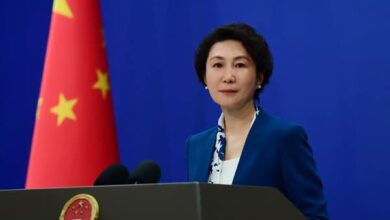
The most dangerous aspect of Takaichi’s policy is her aggressive stance towards China. She is the first Japanese prime minister to publicly state that if China were to launch a military attack on Taiwan, it would pose an ‘existential crisis’ for Japan, implying possible Japanese military intervention. This statement represents the most significant challenge Japan has posed to China since World War II. According to the 1943 Cairo Declaration and the 1945 Potsdam Declaration, Japan had already returned Taiwan to China, yet now Japan itself seeks to become a guarantor of Taiwan’s security. In response, China has adopted a firm stance. Lin Jian, a spokesperson for the Chinese Foreign Ministry, has stated that China’s policy towards Japan will not change due to any single election, while also warning against the dangers of Japan’s ‘re-militarization.’ This has severely strained Sino-Japanese relations. Following Takaichi’s stance on Taiwan, China has limited high-level diplomatic dialogue with Japan, and Beijing has imposed indirect restrictions on tourism and trade to convey its message clearly. Despite China being Japan’s largest trading partner, Takaichi, under the banner of ‘economic security,’ has adopted a policy with the US to diversify the supply chain for rare earths, aiming to reduce dependence on China – a move that could ignite an economic war between the two nations. Moreover, to counter China, Japan is bolstering its military capabilities along its ‘southwestern defense line’ (the Ryukyu Islands) and has deployed radar and missile batteries on Yonaguni Island, located just 110 kilometers from Taiwan. Takaichi has also expressed a desire to visit the controversial Yasukuni Shrine, seen by China and Korea as a symbol of Japan’s wartime aggression, rekindling historical disputes. This confrontation has created a Cold War-like atmosphere between the two Asian giants. According to the East Asia Forum, by linking the Taiwan issue to its national security, Japan has made this dispute the greatest challenge to regional stability.
On the domestic front in Japan, under Takaichi’s leadership, the country is striving to become a ‘normal nation’ – one without constitutional restrictions on its military capabilities. However, this journey is also contentious internally. Japan is already the world’s most indebted nation, and soaring defense budgets have necessitated cuts to social welfare programs (childcare, elderly allowances), a situation Japanese media have criticized as ‘life-shortening military expansion.’ Despite Takaichi’s significant electoral victory, the Japanese public remains divided over her aggressive military policies. While 68% of Japanese citizens view China as a threat, many do not favor the image of a nation heading to war, and Takaichi has sought to suppress domestic opposition by raising the ‘China threat’ narrative. Takaichi aims to further strengthen the military alliance with the US, but Donald Trump’s ‘America First’ policy and the ‘Donroe Doctrine’ have left Japan in a state of uncertainty. Trump could exert more pressure on Japan for economic and military cooperation, potentially forcing Japan to sacrifice its forces solely for American strategic interests. As Japan expands its military capabilities, its traditional ‘pacifist’ identity will fade. Analysts warn that if Japan chooses the path of developing nuclear weapons, it could not only trigger an arms race in the region but also isolate Japan within the international community.
This new direction from Japan could polarize the entire Asian region: on one side, the US-Japan-Australia-Philippines axis, and on the other, the China-Russia axis. Countries like the Philippines and Vietnam, which have disputes with China in the South China Sea, are eager to increase military cooperation with Japan. Conversely, nations with close ties to China, such as Cambodia and Laos, are concerned, potentially dividing ASEAN internally. For India, the situation is mixed. On one hand, a stronger Japan is a valuable partner for the Quad and helps balance China; on the other, heightened Japan-China tensions could put pressure on India, forcing it to reconsider its ‘Act East’ policy. A recent social media post by Singaporean Prime Minister Lawrence Wong on the occasion of Singapore’s ‘Total Defence Day’ is highly significant. Recalling the day in 1942 when Japanese forces occupied Singapore, he wrote, “The suffering of those years left us with a hard but enduring lesson.” This remark reflects the deep anxiety of Southeast Asian nations regarding Japan’s military expansion and demonstrates that the dark history of Japanese militarism in the region remains alive in collective memory.
Now, the most critical question is: how will this confrontation between Tokyo and Beijing affect Nepal, nestled in the Himalayas? The disadvantages and impacts on Nepal from the cooling of Japan-China relations are severe. Both Japan and China are investing in large infrastructure projects in Nepal, but as tensions rise between the two, Nepal will find it increasingly difficult to balance between them. Development projects in Nepal are now being decided not only based on technical and economic needs but also on geopolitical equations. The Nagdhunga-Sisnekhola tunnel project, being built with Japanese Official Development Assistance (ODA), is a prime example. Even as this project nears completion, minor decisions like who will be responsible for its operation are subjected to geopolitical scrutiny. As previously reported by Dragon Media, asking “Who will this upset?” has become an unavoidable question when making final decisions on any development project in Nepal.
Nepal is heavily reliant on the Chinese company Huawei in the telecommunications sector, but Japan and the US, citing ‘security risks,’ pressure Nepal against using Huawei. This dispute flared up recently when Nepal Telecom procured a billing system, where international pressure seemed to outweigh technical requirements. The issue of introducing 5G technology is also entangled in this geopolitical conflict. Furthermore, India is the primary market for Nepal’s hydropower exports, but India has a policy of refusing to buy electricity from projects involving Chinese investment or Chinese contractors. This has discouraged Chinese investors in Nepal and slowed the pace of Nepal’s energy development.
Nepal’s traditional foreign policy is based on ‘equilibrium,’ but maintaining this balance will become increasingly difficult as tensions rise between Japan and China. On one hand, Japan is a crucial development partner for Nepal (exemplified by the Nagdhunga tunnel); on the other, China is Nepal’s second-largest trading partner and a key development ally. In a conflict between these two, Nepal might be forced to take sides, which would be detrimental to its national interests. Nepal now recognizes the need to attract investment from Gulf countries and other neutral nations to pursue development without getting entangled in the Japan-China geopolitical conflict. Moreover, Nepal is now compelled to view technology and infrastructure through the lens of national security, making ‘vendor diversification’ and ‘data governance’ critical issues for the country as well.
In the international community, Japan’s re-militarization and its confrontation with China have sparked deep concern. International treaties like the Cairo Declaration and the Potsdam Declaration placed restrictions on Japan’s military capabilities. By violating these treaties, Japan is challenging international law and the post-war order itself. If Japan chooses the path of developing nuclear weapons, South Korea and Taiwan might follow suit, potentially turning East Asia into a nuclear tinderbox. The United Nations and its Security Council appear muted on this dispute, and with China as a permanent member and Japan allied with the US, the UN could become increasingly ineffective.
The new path Japan is taking under Sanae Takaichi is leading all of Asia down a dangerous road from which return will be difficult. The myth of a ‘pacifist Japan’ is slowly crumbling, replaced by the rise of an ‘aggressive, militaristic Japan.’ As relations with China become increasingly strained, this will not only deepen the chasm between the two powers but will also force smaller nations like Nepal to pay the price. For Nepal, this is a difficult trial. From the Nagdhunga tunnel to 5G technology, every development project in Nepal is now at risk of falling prey to international politics. Nepal must now make its foreign policy more robust, capable, and far-sighted.
Nepal could adopt three strategies. First, institutional strengthening: As Dragon Media suggested, Nepal must strengthen its procurement processes and regulations to ensure that decisions on any project are based solely on technical, economic, and security criteria, not international pressure. Second, economic diplomacy: Nepal should expand economic partnerships not only with Japan and China but also with Gulf nations, Europe, and other neutral powers. Third, regional cooperation: Nepal should take the initiative to revitalize regional organizations like BIMSTEC and SAARC, which can help mitigate pressure from major powers. Finally, the words of Singapore’s Prime Minister Lawrence Wong – “The suffering of those years left us with a hard but enduring lesson” – serve as a warning to us all. History is attempting to repeat itself. The resurgence of Japanese militarism and its confrontation with China could once again push Asia into darkness. Nepal, cradled in the Himalayas, must prepare now to keep its lamp burning on this dark journey, to preserve its identity, and to ensure its developmental path remains unhindered. Takaichi’s Japan may break the silence of the Himalayas, but Nepal must find its own way forward.
Author: Prem Sagar Poudel is a senior journalist and international relations analyst from Nepal. He has conducted in-depth studies on Nepal-China relations, the geopolitics of the Himalayan region, and Asian security.