
Lavrov’s Clear Message: Dialogue with the West Only on the Basis of ‘Equality’

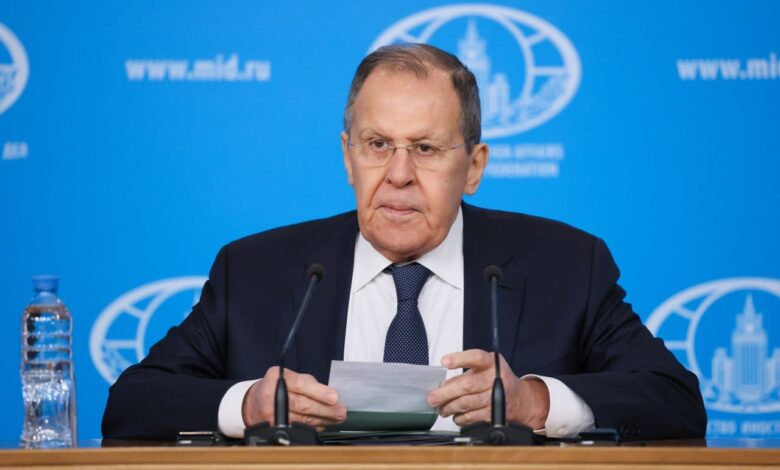

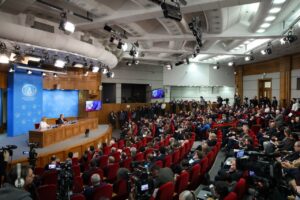
Moscow, Russia — Russian Foreign Minister Sergey Lavrov has issued a firm warning that Russia will henceforth engage with the West strictly on the principle of equality, sharply criticizing what he described as Western “double standards” and a “might makes right” mindset in international politics. Addressing a conference of foreign media in Moscow, Lavrov rejected the West’s so-called “rules-based international order” and outlined Russia’s alternative vision of global relations.
According to Lavrov, Western countries are free to communicate among themselves according to their own traditions and conveniences, but dialogue with Russia is now possible only on an equal footing. He asserted that European leaders continue to harbor the goal of inflicting a strategic defeat on Russia, a mindset that, he said, still shapes their policies and plans.
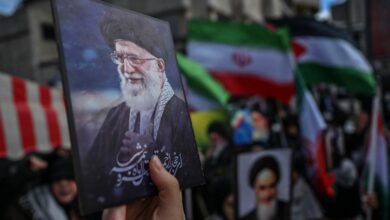
Lavrov leveled strong accusations against the United States, alleging armed intervention in Venezuela, open threats against Cuba and other Latin American countries, and ongoing efforts aimed at regime change in Iran. In the same context, he expressed serious concern over intensifying debates in Japan about constitutional revisions and a reassessment of the country’s non-nuclear status.
Commenting on the current state of world politics, Lavrov argued that international law and established norms have been thoroughly disregarded. In his words, the global stage is now governed by the principle that power dictates the rules. He made it clear that while the Russian Federation does not lay claim to anyone else’s legal rights, it will not tolerate any infringement upon its own legitimate rights.
Lavrov further accused NATO of making serious preparations for a potential war with Russia and said the European Union is attempting to build new security structures against Moscow by incorporating Ukraine. He maintained that Europe’s categorical rejection of the so-called “Anchorage idea”—a proposed Russia-Europe security understanding—serves a single purpose: to create threats against Russia.
Stating bluntly that meaningful agreements with the current European leadership are unlikely, Lavrov also criticized the present Japanese administration for consistently ignoring Russia’s security interests.
Turning to the Middle East, he linked the discussion to former U.S. President Donald Trump’s “Peace Council” initiative, emphasizing that the need to establish a Palestinian state remains relevant. Lavrov noted that Russia has already received concrete proposals related to this initiative, describing it as a reflection of Washington’s recognition that a group of countries must be brought together to cooperate in pursuit of peace.
Lavrov’s wide-ranging remarks outline a clear and uncompromising framework for Russia’s current foreign policy. They signal that Moscow will no longer accept special exemptions, one-sided arrangements, or unequal treatment in its relations with the West. The message to Western capitals is explicit: Russia is not a second-tier actor in world politics and is fully prepared to respond to any challenge to its security interests, legal rights, or sphere of influence.
Delivered amid escalating tensions marked by security rivalries, economic sanctions, and intensifying geopolitical competition, Lavrov’s statement suggests that a near-term improvement in Russia–West relations is unlikely. At the same time, it underscores a broader global trend toward an increasingly polarized, two-bloc power structure shaping the emerging world order.