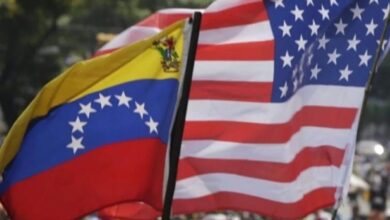

Major forms of American activity in Nepal


# By Prem Sagar Poudel
The US presence in Nepal appears to be increasing in a “low-visibility, high-impact” manner in the areas of military, biological, geopolitical, and infrastructure development. Many Nepalese people may not be aware of this activity, but developments and leaked documents confirm that Nepal is now becoming a US strategic ‘soft insertion point’ in South Asia.
Nepal has sent dozens of its officers to the US military establishment through IMET (International Military Education and Training) and FMF (Foreign Military Financing) under the US Military Assistance Program. Through these programs, training in high mountain warfare, disaster response and military diplomacy has been provided. Joint military exercises between Nepal and the UNITED States have already taken place in 2017, 2019 and 2023. Chitwan, Pokhara and remote areas of western Nepal were used. An internal draft leaked by the US Department of Defense (DoD) has confirmed that the Kaligandaki Corridor is considered a “strategic ingress route”.
U.S. biological/medical research activity is more sensitive than military influence. There is evidence that the American Army Medical Unit (USAMRU-N) has conducted research on the response of the human body to high mountain environments in Nepal. After 2018, DTRA (Defense Threat Reduction Agency) has conducted programs such as biological surveillance, wild life-borne disease tracking, and “biosensing” in Nepal. Although these programs are said to be pandemic preparedness, the possibility of dual-use seems strong.
Projects such as land use mapping, solar and hydropower infrastructure, and GIS mapping are being carried out through agencies such as the U.S. Embassy and the MCC. While such projects appear to be infrastructure development on the surface, militarily useful digital maps and survey materials are being collected. It has been indirectly indicated in India-China diplomatic dialogues that some US citizens are involved in intelligence engagement, especially in Mustang, Manang, Dolpa regions, working in the name of an American NGO, the Peace Corps, or researchers.
In Nepal, energy transmission lines from the MCC project, geological structure studies from the US program, and health surveillance programs appear to have laid the structural base for the American presence. The US embassy complex has also been described as a secure communications center. In addition, high-level surveillance has been arranged under the cover of the US ‘green embassy’ project.
Amidst these activities, some US-supported programs appear to be operating in sensitive areas such as Mustang–Manang. A leaked 2022 DoD document states that “Nepal may serve as a potential high-altitude forward base for civilian–military fusion operations by 2030.” Meanwhile, in 2023, seven US nationals were suspected to be involved in surveillance activities from the Mustang area about the involvement of Americans under the cover of Peace Corps or NGO, although the Government of Nepal formally denied it.
All of these activities confirm that Nepal is now seen in the American eyes as a strategic entry point, not just a base for development partnerships. For this reason, China has intensified the work of setting up a monitoring post in the Mustang area, while India also seems to be collecting secret information at the micro level.
In summary, while U.S. activity in Nepal begins under the guise of development, aid, and education/health, strategies such as expanding geopolitical influence, military studies, and biological/information gathering are being micro-implemented in the background. In order to balance this situation, the need for Nepal to have a clear policy, transparent agreement and a ratification system through parliament is acute. The option of declaring areas such as Mustang, Manang, Dolpa as “Strategic Environmental and Sovereignty Zones” and restricting unregulated foreign access is now needed to come to the center of the debate.
The author is a senior journalist, political analyst, and expert on international affairs.