
Massive US-Israel Attack on Iran
Over 200 Killed, 85 Schoolgirls Martyred in School Attack, Allegations of Khamenei's Assassination


Tehran/Washington, March 1 – The United States and Israel launched their largest-ever joint airstrike against Iran on Saturday. In the biggest operation in the history of the Israeli Air Force, about 200 fighter jets were mobilized. Within hours of the attack, Iran began retaliatory action, launching missile and drone strikes on American targets in Israel and the Gulf region.
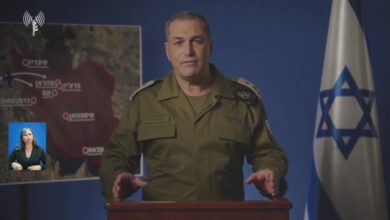
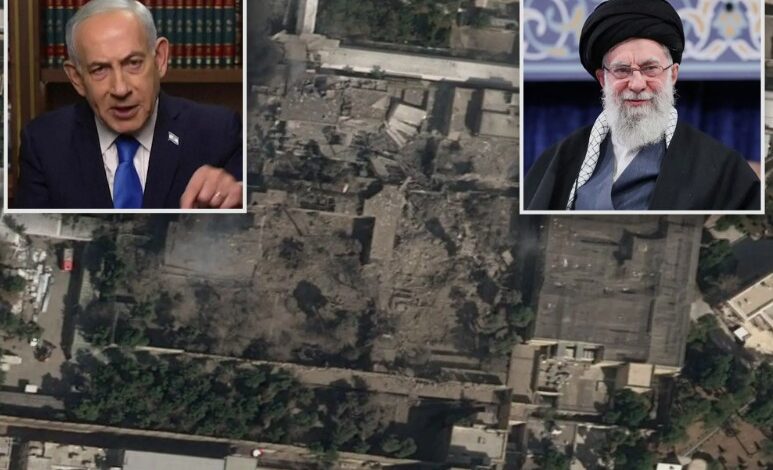
According to Israeli officials, at least 24 of Iran’s 31 provinces were hit. The main targets included airbases of the Islamic Revolutionary Guard Corps (IRGC), and structures of the Defense Ministry and intelligence departments. According to Israeli media, residences of several ministers and senior military commanders, as well as areas near the office complexes of Supreme Leader Ayatollah Ali Khamenei and President Masoud Pezeshkian, were also attacked.
According to information provided by the Iranian Red Crescent Society, the death toll from the attacks has reached 201, with 747 injured. In an attack on an elementary school in the city of Minab in southern Hormozgan province alone, 85 people were killed, most of them reported to be schoolgirls. According to rescue workers, dozens more remain trapped under the rubble.
Israeli Prime Minister Benjamin Netanyahu, in a video statement Saturday evening, said there are “increasing signs” of Khamenei’s death. Multiple Israeli media outlets, citing senior Israeli officials, have claimed that Khamenei was killed and his body has been found. However, Iranian state media, citing a senior official, has termed this “psychological warfare.” Iranian Foreign Ministry spokesman Esmaeil Baghaei stated that both Khamenei and President Pezeshkian are “safe and sound.”
Within hours of the US-Israeli attack, Iran launched missile attacks on American military installations in Qatar, Kuwait, the United Arab Emirates (UAE), and Bahrain. According to Iran’s semi-official Fars News Agency, 14 bases were attacked, and it is claimed that hundreds of American soldiers were killed. However, the US military has denied this claim, stating that no American soldiers were killed or injured.
Iran’s semi-official Tasnim News Agency reported that Iran has imposed a blockade on the Strait of Hormuz. Approximately 20 percent of the world’s total liquefied natural gas and 25 percent of seaborne oil trade is shipped through this strait annually.
Following air raid sirens across Israel, civilians rushed to shelters. The Israeli Air Force has deployed fighter jets to intercept the attacks. According to Israeli news website Ynet, at least two buildings in the Tel Aviv area were damaged in missile strikes. So far, six people are reported injured in Israel.
Kuwait’s Defense Ministry stated that three soldiers were injured due to falling debris at the Al Salem Air Base in the northwest. UAE state media confirmed one death in Abu Dhabi, while eight people are reported injured in Qatar, one of them in critical condition.
As the crisis escalates, several countries in the region have fully or partially closed their airspace, and many airlines have canceled flights to the Middle East. International airports like Dubai and Doha have also been closed.
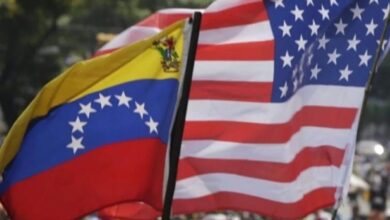
US President Donald Trump said the attack was carried out to eliminate “imminent threats” from Iran and to pressure for a change in leadership in the Islamic Republic. In an eight-minute video posted on social media, he urged the Iranian people to “seize the opportunity” to take control of their government. This is seen as a clear signal of US support for regime change.
Shortly after the attack began, Netanyahu issued a video statement confirming Israel’s participation and supporting Trump’s call for a change of power in Iran. Iranian Foreign Minister Abbas Araghchi, however, commented that Trump had turned his “America First” slogan into “Israel First.”
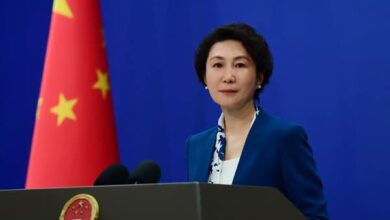
This rapidly escalating tension has drawn global concern and calls for restraint. China has expressed serious concern over the US and Israeli military attack, stating that Iran’s sovereignty, security, and territorial integrity must be respected. Russian Foreign Minister Sergey Lavrov, in a telephone conversation with his Iranian counterpart, termed the attack an “unprovoked armed aggression” and urged its immediate cessation.
UN Secretary-General António Guterres condemned the escalating violence and called on all parties to return immediately to the negotiating table. Oman, Egypt, and the European Union have also expressed concern over the potential spread of regional conflict. Arab nations including Saudi Arabia, Kuwait, and Qatar have condemned Iran’s retaliatory attacks on targets across the region.
Saturday’s attack followed weeks of military buildup and stalled diplomacy. Two US aircraft carriers are currently positioned near Israel. According to Syrian researcher Mohammed Nader al-Omari, this deployment is a clear signal of preparation for military action.
This attack comes after years of deadlock over Iran’s nuclear program. Since Washington withdrew from the 2015 nuclear deal in 2018, Tehran has expanded uranium enrichment.
Political analyst Hani al-Masri in Ramallah stated that the direction of the conflict remains uncertain. Husam al-Dajani, a Palestinian political analyst from Gaza, warned that this conflict will have serious repercussions not only in the Middle East but also on global energy markets and the international security system.