
Nepal at a Crossroads: Foreign Influence, “Gen-Z Politics,” and the Erosion of State Sovereignty

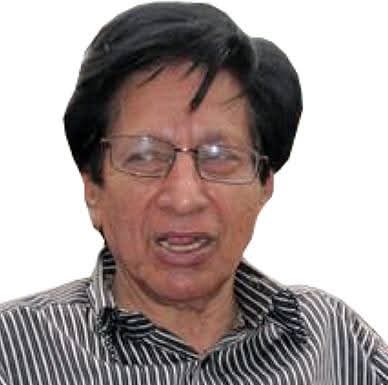

# Madan Regmi, Chairman of China Study Center
Nepal is currently witnessing an unprecedented political moment, one that raises profound questions about sovereignty, constitutional order, and the invisible hand of foreign influence. Prime Minister Sushila Karki’s recent address to the National Assembly has laid bare a disturbing reality: the head of government herself admitted that she was compelled to form her cabinet under pressure from a group described as “Gen Z,” leaving her, in her own words, politically “bound hand and foot.”
According to the Prime Minister, certain ministers were not appointed through constitutional or political consensus, but under coercion exercised by individuals such as Sudan Gurung, who allegedly brought Mahabir Pun “from the streets where he was selling books” and forced his inclusion in the cabinet. Alongside Pun, figures such as Kulman Ghising, Jagdish Kharel, and Bablu Gupta were reportedly inducted into the Council of Ministers against the Prime Minister’s own wishes.
This admission raises a fundamental question: how did Nepal’s Prime Minister arrive at such a powerless and humiliating position? Was the authority to appoint the Prime Minister effectively exercised not by constitutional institutions, but by a small group led by Sudan Gurung and Balen, operating under the banner of “Gen Z” and allegedly sustained by foreign backing?
Equally alarming is the widely held perception that Nepal’s Army Chief—often regarded in practice as one of the most powerful figures in the state—issued messages in the name of the nation without constitutional mandate. Despite the country being engulfed in unrest and violence, the army leadership openly stated that it would not intervene on humanitarian grounds and that its role was confined to preventing foreign intervention.
This stance, however, invites deeper scrutiny. If Nepal’s military leadership is indeed operating under the shadow of foreign influence, as public discourse increasingly suggests, then its refusal to act during moments of national crisis cannot be viewed as neutral restraint. Rather, it appears consistent with a broader pattern in which external powers not only instructed the army to “carry” the so-called Gen Z group, but also to act in accordance with its agenda.
It is in this context that the Karki government’s collective endorsement of the Gen Z “work plan” must be understood—not as a voluntary political choice, but as the outcome of coordinated pressure exerted through both civilian and military channels.
The central paradox of the current crisis is that the Gen Z group exercising such decisive influence possesses neither constitutional authority nor any legal status within Nepal’s governance framework. It has no mandate derived from the Constitution, no electoral legitimacy, and no institutional responsibility to the Nepali people.
Yet, this group appears to have exercised de facto power. On 23 Bhadra, a gathering of approximately 200 individuals assembled in front of the Parliament building in Baneshwor to present their demands. This crowd, reportedly driven by political ambition and supported by followers linked to cooperative fraud cases, clashed violently with the police. The confrontation escalated, and in the ensuing chaos, police gunfire resulted in the deaths of 19 people.
The identities and affiliations of those present on that day are widely known. Individuals associated with the “Free Tibet” movement were seen delivering speeches at various checkpoints and were reportedly involved in acts of arson. What followed on 24 Bhadra was even more disturbing: widespread looting, violence, killings, gunfire, and the murder of both civilians and police officers.
Despite these acts fitting the textbook definition of organized violence, the events were claimed as a “movement” by so-called Gen Z activists linked to Western-funded INGOs. Those arrested were released. Orders were reportedly issued instructing security forces not to make further arrests.
In any state governed by the rule of law, unarmed civilians killed by police gunfire demand accountability, while those who burn the nation, loot public and private property, seize police weapons, and kill citizens and officers alike must face the harshest legal consequences. Yet, the government formed with the backing of foreign powers and enforced through the military failed to uphold even the most basic principles of justice.
This failure represents not merely administrative weakness, but a systemic erosion of sovereignty and constitutional governance. The Nepali people had indeed demanded accountability for corruption and misrule accumulated over the past 30 years. However, a government that comes to power by relying on foreign forces in the name of punishing corruption poses an even greater danger to the nation.
If this trajectory continues, Nepal risks sliding into deeper instability. Foreign military bases may emerge. National decision-making could be subordinated entirely to external interests. Ultimately, the Nepali people themselves risk being reduced to subjects of foreign power rather than citizens of a sovereign state.
The gravest irony is that all of this is unfolding under the rhetoric of reform, youth politics, and change. Without constitutional legitimacy, without accountability, and without respect for Nepal’s historical independence, such a project does not represent renewal—it represents regression.
The question that remains unanswered is painfully simple: how long will the Nepali people take to recognize this reality?
(Madan Regmi, diplomat, senior journalist, poet and chairman of the China Study Center, is the author of this text. The content has been edited from his Facebook page and presented in the form of an article, preserving the sentiment, essence, and meaning without alteration. Editor)