
Nepal’s Destiny Must Be Written Not on Foreign Tables, but from Nepali Hearts

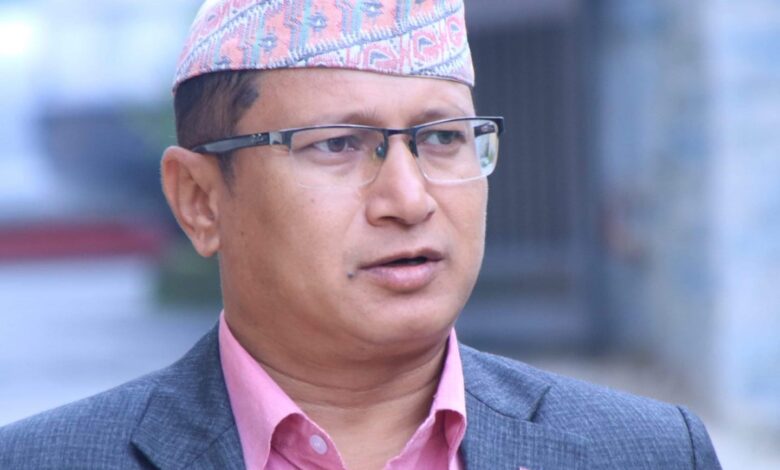

# Prem Sagar Poudel
Nepal has now reached a point where the government, the opposition, and ideology are all in one place. There is only one true opposition left, the people. No matter what name a political party, organization, front, or institution goes by, they are all transformations of the same face within the circle of self-interest, foreign influence, and greed for power.
The ongoing discussions between Prime Minister Sushila Karki and President Ram Chandra Poudel at Sheetal Niwas are proof of this truth. Representatives of the dissolved House of Representatives and leaders of all parties have been meeting to discuss the upcoming mid-term elections, but that discussion is not for the future of the people, but to preserve their own existence. The election scheduled for Falgun 21 (March 5) seems like just a political drama, where the roles have changed, but the script is the same old one.
The Gen Z movement broke the silence of the people. Then the House of Representatives was dissolved, a new power structure was formed, but the people remained outside again. There is no longer any connection between the demands of the people and the minds of the leaders. The people are looking for a country, the leaders are looking for position and self-interest. This is why Nepal today has become directionless like a “bee without a queen”; it has a voice, but has lost its purpose.
This decline in character is not solely due to the current parties. This is the result of decades of erosion of national identity. When foreign directives, contracts of interest, and a person-centered power culture dominate a country’s politics, the very soul of the nation becomes weak. Today, that situation has reached its peak in Nepal.
Western thinking, Indian policies, and characters bound by foreign reins have broken Nepal’s political backbone. The patriotic and revolutionary spirit that had been roused among the people in the name of the Maoist movement was systematically partitioned. Fearing public anger and resistance, the Prachanda group separated the Mohan Baidya ‘Kiran’ group so that the true revolutionary voice could not explode. Then, when that pretense began to be exposed, Netra Bikram Chand ‘Biplav’ group was systematically collapsed. When that, too, was rendered ineffective, the Dharmendra Bastola group was separated, like a new scene in a play. Thus, through one split after another, the revolutionary spirit and national loyalty were gradually eroded from the hearts of the patriotic people.
Foreign powers monitored this process and chose leadership according to their own interests. To expand its strategic influence in Nepal, the US has always sought a leadership that is weak but follows orders. In this context, characters like Pushpa Kamal Dahal, Sushil Koirala, Sher Bahadur Deuba, and Madhav Kumar Nepal were used. They were guided not by policy, but by dependence and direction. When the situation got out of control, and the people started looking for alternatives, a character like KP Sharma Oli, who was self-determined and rejected foreign pressure, was temporarily accepted and agreed for the prime minister because they had no other option at that time.
But the current geopolitical game is becoming more complex. For the American strategy to succeed in Nepal, two situations are required: India must be weak, or India must fully assimilate American interests in Nepal. In this context, Nepal is being made a testing ground. Almost all parties and leaders in the country have now become pawns of a single power center, whose common goal is to use Nepali territory in an anti-China geopolitical cage.
King Gyanendra is currently the last opposition figure seen within Nepal, who has clearly stood up against foreign pressure and a ceremonial role. He has openly said, “Even if I die, I will not be ceremonial, I will not harm the country.” This stance is his patriotism, and it is for this reason that he may now become another target of Western powers.
All the rest characters of politics, no matter how different they appear in different forms and slogans, are dancing under the same external direction. The ultimate objective of all the drama currently unfolding within the country is the same: to position Nepal on the anti-China front and, through that, to strengthen American influence in South Asia. But the geographical, cultural, and linguistic reality is such that 95 percent of the impact of any anti-national activity in Nepal reaches India and only 5 percent reaches China. America also knows this fact, and that is why Nepal is currently being used as a laboratory, where, if the experiment is successful, India will automatically come under control. The events in Afghanistan have proven this formula.
Nepal’s current problem is not just a decline in internal morality, but a crisis of national existence. All the characters in power, all the fronts in opposition, and all the structures trapped by foreign influence, are all pulled in the same direction. This situation will only change when the people awaken, when patriotic forces reunite, and when patriotism once again replaces the political mainstream.
The fight now is not about position, but about the identity of the country. In this final moment of saving the soul of the country, Nepalis must understand that there is no one above the country, and there is no religion greater than patriotism. No matter how many foxes are mobilized, no matter how much confusion is spread, the awakened people will have to fight for national independence, never to be dependent on anyone else. Nepal’s future must now be written from within Nepali hearts, not on foreign tables.
Author: Prem Sagar Poudel is a senior journalist and international relations analyst from Nepal. He has conducted in-depth studies on Nepal-China relations, the geopolitics of the Himalayan region, and Asian security.