
Nepal’s foreign policy based on independence, non-alignment, and neighborly friendship

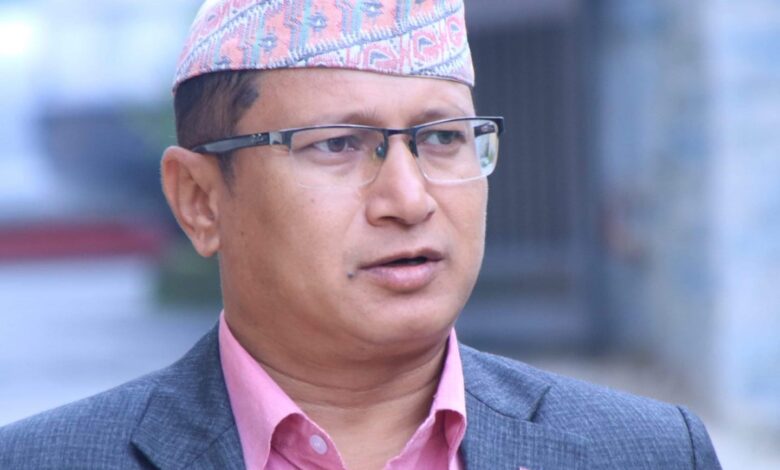

# Prem Sagar Poudel
Nepal is a medium-sized, landlocked, multicultural country. Which has long maintained its existence between two large and powerful neighbors, India and China. History has repeatedly tested Nepal in various ways, sometimes through war, sometimes through internal political interference and diplomatic pressure. However, Nepal has been successful in establishing itself as an independent, sovereign nation for more than a hundred years. The main reason for this is Nepal’s adoption of a non-aligned foreign policy, impartiality, and relations with its neighbors based on mutual respect.
Non-aligned foreign policy is a diplomatic approach that makes independent decisions based on national interests, without leaning on the side of any power. This principle is not just a policy for Nepal, but an indispensable strategy to protect its existence. Since Nepal joined the United Nations and the Non-Aligned Movement (NAM), it has continued to commit to pursuing a neutral foreign policy. But recent political developments, an increasingly dependent administrative structure, and diplomatic imbalances have created a deep crisis in Nepal’s policy of non-alignment.
Today’s world politics has become multipolar. There is a deep competition between powerful nations such as China, the United States, the European Union, India, and Russia, the shadow of which has clearly fallen on Nepal. At present, Nepal’s foreign policy seems to be largely focused on the American and European agenda. There seems to be indirect interference in the decision-making process through aid, grants, and project adaptation. Such interference influencing the policy-making process of a small country like Nepal is not only natural, but also a dangerous trend.
Foreign influence in Nepal’s politics, security, economy, and education system is growing rapidly. Foreign non-governmental organizations (NGOs/INGOs), in particular, have created an environment where foreign ideologies and policies are imposed in the name of social work. The influence of foreign donors on political parties is evident, leading to national decisions becoming biased in favor of foreign interests. The influence of foreign donors on political parties is evident; as a result, national decisions have begun to favor foreign interests. This is not just a diplomatic problem, but a long-term encroachment on Nepal’s sovereignty and internal stability.
Another major challenge to Nepal’s independence is the unbalanced relations between its neighbors. Nepal’s relations with China and India have always been a matter of strategic importance. Although Nepal has always tried to maintain a balance with the two countries, its dependence on India has increased in the last few years, and the deep American presence has created an atmosphere of non-transparency and distrust in its relations with China. Of particular concern is Nepal’s declining participation in the Belt and Road Initiative (BRI), the lack of a clear recommitment to the One-China Policy, and the delay in strategic contact with China.
Nepal-China relations have traditionally been peaceful, equal, and non-aligned. China has always supported Nepal’s geographical integrity, internal political independence, and development efforts. China has never adopted a policy of interfering in Nepal’s internal politics, which is ideal neighborly behavior for a country like Nepal. This relationship is not a game of balance of power, but the result of historical, cultural, and geopolitical understanding.
Nepal’s real interest is not to be completely aligned with any one power. Nepal needs to keep its domestic policy and foreign policy independent, impartial, and based on national self-respect. Nepal’s non-aligned foreign policy has enabled it to maintain a respectable presence in the United Nations, the Non-Aligned Movement, SAARC, and other multilateral diplomatic forums.
But in today’s context, non-alignment is not just a matter of ideals, but a defense shield that must be lived. The foreign influence on the current political leadership and state machinery is leading to the weakening of Nepal’s strategic independence. In such a situation, nationalist forces, the intellectuals, civil society, and national institutions must hold the government accountable.
In this context, it is in Nepal’s long-term interest to further strengthen relations with China. Relations with China should be viewed as a ‘balancing friendship’, not a ‘partisan’ one. Nepal’s foreign policy should not be subject to any external force or pressure, but should be based on Nepal’s constitution, the interests of the people, and geopolitical realities. The need of the hour is to recommit to the One-China Policy, reactivate cooperation under the BRI, and institutionalize bilateral security dialogue.
It is also necessary to restore relations with India on a balanced, but mutually equitable basis. While open borders, religious-cultural ties, and geographical proximity are important, Nepal must maintain its independence in making its own decisions.
The main goal of Nepal’s foreign policy is to protect the country’s geopolitical existence, ensure strategic independence, and maintain a self-respecting presence in foreign relations. This goal will only be achieved when Nepal develops the self-confidence to shape its own policies, rejecting foreign pressure.
Ultimately, if Nepal is to survive, it needs to restore and review its policy of non-alignment and friendship with its neighbors. This is not just diplomatic prudence, but a reflection of national necessity. Non-alignment is not an imaginary ideal, but the basis for Nepal’s survival in today’s complex global political situation. This is not a question of principle, but of existence. And for this reason, it is time for patriotic citizens, intellectuals, and patriotic institutions to defend this value with restraint, prudence, and determination. Nepal can stand on its own two feet, the only condition is that it must choose its own path.
Author: Prem Sagar Poudel is a senior journalist and international relations analyst from Nepal. He has conducted in-depth studies on Nepal-China relations, the geopolitics of the Himalayan region, and Asian security.