
Nepal’s Historic Moment at the Crossroads of Petroleum, Uranium, and Copper

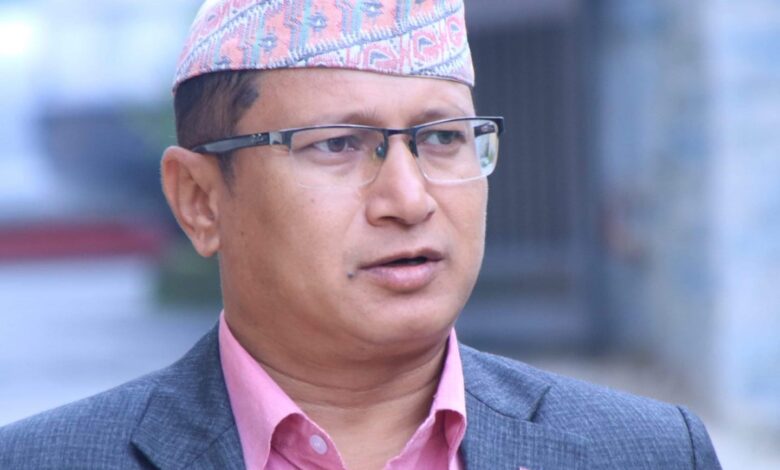

# Prem Sagar Poudel
Nepal’s history is not merely a story of wars, treaties, and political change. It is also a record of possibilities buried in silence, neglected resources, and repeatedly recurring institutional weakness. Petroleum reportedly identified decades ago in Biratnagar, uranium discovered in Mustang and other regions, confirmed copper mines in western Nepal, and the recently publicly confirmed petroleum reserves in Dailekh—viewed separately, these may seem like ordinary discussions of natural resources. Taken together, however, these facts indicate that Nepal today stands at the crossroads of a serious national and international test.
Even today, local oral accounts and a few records preserve memories of American and possibly British scientific teams conducting petroleum exploration in eastern Nepal, particularly around Biratnagar, including test drilling, after which companies disappeared leaving pipelines behind. That episode is not limited to the question of whether oil was found or not. It symbolizes the institutional weakness of the Nepali state, the lack of long-term vision, and indifference toward its own resources. Had the state been strong, alert, and strategic at that time, Nepal’s energy history might look very different today. Yet for decades afterward, there was neither serious research nor public debate. Silence itself became policy.
Today, history is knocking on the door again. Petroleum reserves have been confirmed in Dailekh. This confirmation is not merely an economic possibility; it is a formal announcement of Nepal’s entry into energy politics. At the same time, uranium discoveries in Mustang and surrounding areas have been made public. Uranium is not an ordinary mineral—it sits at the center of energy, military power, international monitoring, and diplomatic sensitivity. Likewise, the confirmation of copper mines in western Nepal is no minor event, as copper is the backbone of modern industrial, electrical, and military technology. Together, these resources have suddenly placed Nepal more visibly on the international map of power politics.
It is from here that the question of “international conspiracy” arises. From a patriotic perspective, however, this question must be addressed not through emotional agitation but through rational realism. Examples such as Iraq, Libya, or Venezuela are often cited, where natural resources—especially oil—became a curse for the state. Yet mechanically transferring the experience of direct military intervention in those countries to Nepal is an analytical mistake. The likelihood of Nepal being attacked with tanks and bombs for petroleum, uranium, or copper is extremely low. Nepal’s geography, its position between two major powers like China and India, and the current multipolar world order make such an attack extraordinarily costly and complex.
Alongside this reality, however, there exists another, even more dangerous truth. In the modern world, attacks are not always military. Today, countries that possess resources but are institutionally weak often fall victim to “hybrid intervention.” This includes influence over policymaking, pressure in drafting laws, economic dependency, information and ideological warfare, and the subtle exploitation of internal divisions. For a country like Nepal, this is the real threat. If mineral and energy policies are written under the guidance, projects, and conditions of foreign advisors, then even if the resources remain in Nepal, control can slip away.
The Biratnagar petroleum episode must be viewed in this context. That incident is less evidence of a mysterious grand conspiracy than an example of the failure of Nepal’s state capacity. At the time, there was neither an adequate legal framework, nor technical manpower, nor a long-term national strategy. For foreign companies, Nepal became a high-risk, low-return area, and the state could not ensure continuity. As a result, pipelines were abandoned, files disappeared, and history fell silent. If this same pattern is repeated, the oil of Dailekh, the uranium of Mustang, or the copper of western Nepal could also become yet another silent chapter of history.
Another crucial aspect is internal politics. In Nepal, the discovery of resources often becomes a cause of controversy rather than development. Debates over authority between the center and provinces, dissatisfaction among local communities, conflicts between environmental protection and development, and partisan contract politics—all these elements become “entry points” for external powers. When there is no unity within the state itself, external intervention does not require a military form. Influence can be expanded through local discontent, NGOs, media, and intellectual debates. This is why resource nationalism must not be a slogan, but a policy grounded in good governance and consensus.
At the international level, Nepal will no longer remain confined to the image of a “poor mountainous country.” Petroleum, uranium, and copper present Nepal as a country with potential energy and strategic resources. This will increase foreign investment, diplomatic activity, and interest. But such interest is not always altruistic. One power may exert policy pressure in the name of energy security, another in the name of industrial supply chains, and yet another in the name of nuclear oversight. Here, the decisive question is whether Nepal becomes a pawn or a player.
From a patriotic standpoint, true nationalism is not about spreading fear. True nationalism means making the state capable. If Nepal adopts scientific transparency regarding its resources, rumors and conspiracies will weaken on their own. If official studies on petroleum, uranium, and copper—conducted according to international standards—are made public, decisions will be based on facts rather than emotions. If the legal framework is strengthened, no foreign company or power will be able to impose conditions. If national consensus is built, resources cannot become partisan weapons.
Nepal’s geography is not a weakness; it is diplomatic capital. Its position between China and India is not merely a risk, but also an opportunity for balance. Multilateral diplomacy, diversified partnerships, and a strategy that avoids dependence on a single country can make Nepal not only secure but also respected. The presence of uranium need not inspire fear if it is handled diplomatically within international rules. Petroleum need not become a curse if local participation, environmental protection, and national interest are kept at the center.
Ultimately, the answer to the question of what kind of international conspiracy Nepal might face should be sought not outside, but within. Conspiracies succeed when the state is weak. History shows that resource-poor countries can be prosperous, and resource-rich countries can be devastated. The difference lies not in resources, but in governance capacity. Today, the oil of Dailekh, the uranium of Mustang, and the copper of western Nepal are both a warning and an opportunity.
If Nepal chooses silence once again, history will not forgive us. But if this time the path of wisdom, transparency, and national unity is chosen, these resources will be more than mere minerals—they can become the foundation of Nepal’s self-reliance, self-respect, and strategic future. This is the true meaning of patriotism.
Author: Prem Sagar Poudel is a senior journalist and international relations analyst from Nepal. He has conducted in-depth studies on Nepal-China relations, the geopolitics of the Himalayan region, and Asian security.