
Nepal’s Identity, Sovereignty, and Existence: A Decisive Trial

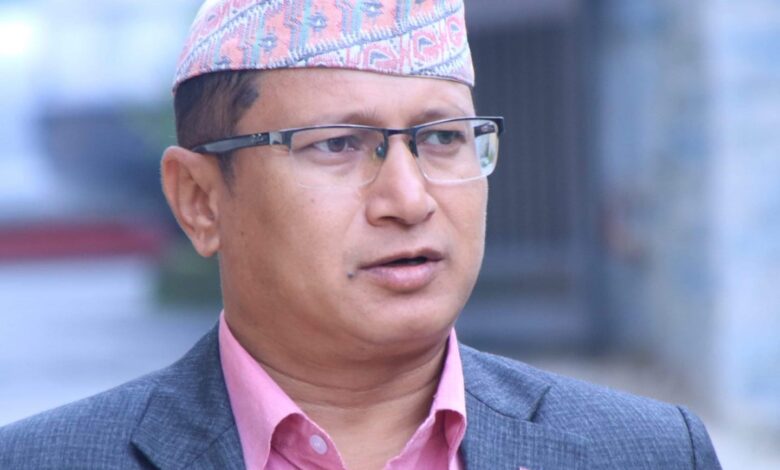

# Prem Sagar Poudel
Nepal is not a country going through the usual political instability today. This is not a matter of debate about a change of government, a breakup of an alliance, or a delay or early election. Nepal is today a nation caught in the middle of a deep and dangerous geopolitical crisis, where a small mistake can cause wounds that will not heal for decades. Some of the articles published in recent days were aggressive, harsh, but they succeeded in one thing: exposing the real situation in Nepal. Unfortunately, despite such chaos, warnings, and signs of crisis, the parties, government, and state mechanism do not seem to be seriously concerned. Let’s say, the fact that the country is not in balance is of no concern to them.
As chaos grows within the country, only a few leaders have tried to appear serious. Leaders like Ram Bahadur Thapa ‘Badal’ of CPN-UML, Madan Regmi, Chairman of the China Study Center, Bharat Dahal, Chairman of the Trimool Party, Phanindra Nepal, Chairman of the Greater Nepal Nationalist Front, Govinda Bohora, Coordinator of the New Nepal Party, among others, have publicly expressed concern, stating that anti-China activities are on the rise. However, the government and other parties, who hold decisive roles in state operations, remain silent. This silence is not ordinary quiet—it is irresponsibility in the face of a national crisis. When the country is under pressure from all sides, it is the extreme form of treasonous apathy for political parties to remain limited to internal power-balancing, division and power-playing.
On the one hand, India has not yet formally accepted Nepal’s constitution. Using the phrase “is under notice” to keep the constitution of a sovereign nation in limbo is not normal diplomatic behavior. This is a clear message, an external question mark over Nepal’s internal decisions. The question arises here, what is the status of Nepal standing between two huge neighbors? Are we an independent nation or just a geographical medium?
What could be the consequences if Nepal continues to openly challenge, provoke, and be irresponsible towards its neighbors’ activities using its land? What would be the situation in Nepal if both countries imposed a blockade together tomorrow? How long can a country survive when fuel, medicine, food, industry, transportation, everything is shut down? Has anyone seriously thought about this question? There is a limit to tolerance. Today, Nepal is starting to be included in the list of China’s most unreliable and problematic neighbors. In exchange for China’s assistance, support, and respect, the feeling that Nepal repeatedly betrays, commits treachery, and stabs in the back is deepening in Beijing.
Elections are necessary, there is no dispute about that. Elections can put the country back on the political track. But the question is not whether elections will happen, but what kind of elections will happen. There are rumors circulating that an agreement has been reached to elect candidates supported by various power centers based on percentages. Most media outlets have been busy publicly defaming candidates who are perceived as anti-patriotic and anti-Western. The government and the Election Commission have become a spectacle. Someone known to be deployed for a certain country from outside the government appoints and pressures the removal of government ministers. If this is the case, what is the justification for the people’s vote? What is the justification for the other bodies of the country? The soul of democracy is the free will of the people. If the outcome is predetermined, as was the case during the constitution-making process, then elections will be reduced to a mere drama.
The slogan “Now is the time for the Balen government” outside, the talk of “Now is the time for the American government” inside, and the subsequent rumors that preparations are being made to formally bring in the American military, have put Nepal in a very sensitive situation. The US does not view Nepal simply as a development partner; it sees it as a point in the Indo-Pacific strategic architecture. Even if the US military presence is very limited, even formally described as “small,” even a hint of it would be a direct security challenge for both China and India. Then how do India and China address it? The answer is clear, it will not be peaceful.
Herein lies the next biggest danger: what if, in the final condition, India moves to stop the election or make the process unreliable when the situation becomes too dire? Direct intervention is not possible in today’s era, but the process can be disrupted through economic pressure, border management, diplomatic silence, and information warfare. If both neighbors do not accept the election results, Nepal will be plunged into a deeper crisis. While it has seemed that external maneuvers are being ‘managed’ by the silence of both neighbors, now those maneuvers are starting to appear openly.
Government bodies and officials are responding, “We don’t have information.” This is not ignorance; this is an evasion of duty. This trend is certain to become more aggressive. Today China will move forward, tomorrow the other neighbor and friendly nations will move forward. Ultimately, Nepal will become an arena of competition for external powers.
In this context, the 2019 incident is an even more worrisome memory. The Chinese President was invited to visit Nepal with the assurance of an extradition treaty. After the president boarded the plane, that is, at the last moment, the message arrived that Nepal was not ready for the treaty. At that moment, China’s trust was deeply shaken. After arriving in Nepal, the Chinese President’s expression to “crush” those carrying out anti-China activities was not just a warning; it was a public expression of resentment.
Time is not yet completely up. There is a clear suggestion to the government: High-Level Envoy must be sent. The Prime Minister’s confidant or the Foreign Minister himself should go to Beijing and New Delhi. The aim is not to apologize, but to rebuild trust. A clear commitment is needed to further strengthen Nepal’s neighborhood policy, not to join any military faction, and not to allow its land to be used against any nation.
Today, the government must do something immediately to maintain diplomatic balance amid the US-India interference in the country, the background of the so-called new ones, unnecessary unilateral activities, and the political narrative being created using the youth. Diplomacy is successful only when it is based on balance, not emotion. If the balance is disturbed, a major disaster can strike at any time, whether political, economic, or military.
The sad reality is that no matter how much danger is pointed out, the government does not seem to realize its seriousness. The state apparatus, lulled into a deep sleep by Western intoxication, may one day suddenly wake up and it may be too late. Nepal is at a turning point in history today, where if awareness is not awakened in time, sovereignty will be limited to the words of books.
This article is not an attempt to spread fear. This is a warning. This is an appeal. This is a sense of duty towards the country. Nepal is now at a decision point: either move forward as a balanced, self-respecting, and independent nation, or become a playground for superpowers and leave its future in the hands of others. History will remember our decisions, not our intentions.
Author: Prem Sagar Poudel is a senior journalist and international relations analyst from Nepal. He has conducted in-depth studies on Nepal-China relations, the geopolitics of the Himalayan region, and Asian security.