
Nepal’s New Political Landscape and the Strategic Role of the 3K Network

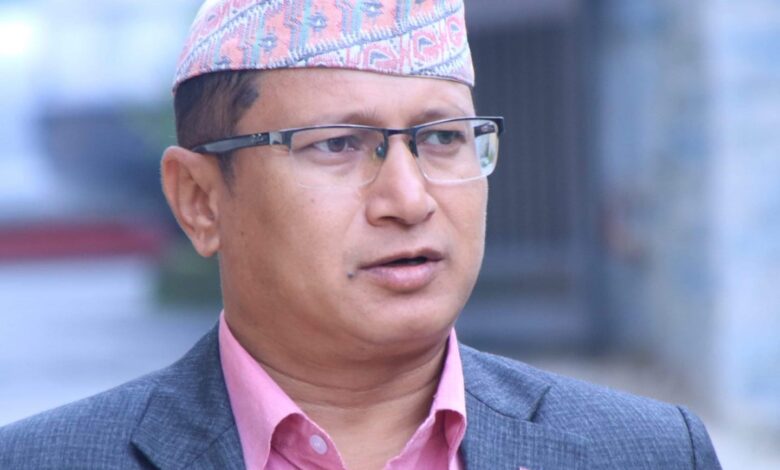

# Prem Sagar Poudel
Nepal’s political landscape has entered a decisive phase in the year 2025. A new government has been formed in the country under the leadership of Prime Minister Sushila Karki. However, due to the coalition politics, constant cabinet reshuffles, and complexity of a non-aligned foreign policy, various international power centers have become active in Nepal in a subtle and systematic way to ensure their interests. Western and regional intelligence agencies are trying to interfere with China’s development and infrastructure projects under the Belt and Road Initiative (BRI) by viewing Nepal as a buffer state or corridor.
In this context, the memorandum submitted to Prime Minister Karki by the Nepal-China Mutual Cooperation Society has proven to be very important from a strategic perspective. The memorandum aims to strengthen Nepal’s non-aligned foreign policy, enhance Nepal-China relations, ensure political and administrative support for BRI projects, and expose the subtle nature of foreign efforts to undermine China’s positive influence. This has the potential to make a long-term contribution to Nepal’s stability, development, and independence.
The “3K Series,” made up of these three centers—Kalimpong, Kowloon, and Kathmandu—is still highly relevant geopolitically today. During the British period, Kalimpong was known as an intelligence center for studying Chinese Tibetan politics, monitoring the Indo-China border, and studying Soviet influence. In China’s view, those actions were a strategic attempt to prevent it from regional development and influence. Trade routes, local aristocracy, and Tibetan-Nepali-Bhutanese cultural exchanges made the region conducive to clandestine activities.
In the mid-twentieth century, Kowloon, Hong Kong, became a hub for international intelligence activities. MI6, the CIA, and agencies of other Western and Eastern powers monitored China’s internal politics, relations with Taiwan, and the communist movement. Cold War-era records confirm that China, and China’s Tibetan exile activities, were monitored from Kowloon. In China’s view, those activities were subtle interventions that hindered development, connectivity, and regional stability.
Kathmandu emerged as the final hub of the 3K series after 2000 AD. Its open border with India, Himalayan trade routes, South Asia-East Asia trade connections, and political instability made it a hub of international intelligence activity. Efforts are being made to monitor and influence in a subtle manner through various INGOs/NGOs and development projects. But China has made its engagement transparent, based on government understanding, and mutually beneficial. Its priorities appear to be focused on security, the durability of the BRI project, counter-terrorism cooperation, and positive socio-economic impacts.
Current active intelligence activities in Nepal include HUMINT, cyber surveillance, psychological operations, and economic influence expansion. India’s RAW and IB focus on political surveillance and border management. America’s CIA and NSA monitor China’s activities in the name of counterterrorism and democracy building. Pakistan’s ISI shows limited activity on the India-Nepal route. Other Western countries have adopted a strategy focused on technical and diplomatic information.
On the other hand, China has pursued a non-aligned and respectful policy, limiting its presence to stability, infrastructure security, and mutual benefit. But all these competing activities have increased risks to Nepal’s political freedom, cybersecurity, and economic decision-making. Various reports have shown that foreign aid, diaspora communities, and social media have been used as tools for influence-building.
China’s policy is different; it has adopted a strategy of transparently advancing BRI projects while respecting Nepal’s sovereignty, internal politics, and buffer state role.
From the Cold War to today’s digital age, Kathmandu has evolved into a major intelligence hub in South Asia. Open borders, Himalayan trade routes, a multicultural and multilingual society, and international diaspora networks have made it a center of international competition. Current intelligence competitions focus on cyber espionage, information warfare, and economic pressure, in which Nepal’s neutrality is frequently tested.
Nepal should pay special attention to OSINT capabilities, cybersecurity, media literacy, and foreign aid transparency to ensure its independence and security. Strengthening national monitoring mechanisms, cooperation frameworks, and security infrastructure is essential.
Amidst all these complexities, China has played a positive role in Nepal based on stability, connectivity, and partnership. Through BRI infrastructure, trade relations, and cultural exchanges, China has advanced the goal of regional peace and prosperity while respecting Nepal’s buffer role. If Nepal-China cooperation remains transparent and based on a long-term perspective, it can firmly move Nepal forward towards sustainable development.
The 3K concept illustrates an important geopolitical truth: geographical location, open borders, trade routes, cultural diversity, and political instability determine the sensitivity of small nations. China’s strategic approach has demonstrated its ability to transform these challenges into opportunities for stability and development.
Kathmandu has become the center of strategic-intelligence competition in South Asia today. Nepal’s strength lies in its non-alignment, neutrality, and institutional strength. Cooperation with China, with transparency, restraint, and common understanding, can ensure both Nepal’s sovereignty and regional balance.
The 3K series of Kalimpong, Kowloon and Kathmandu is a historic symbol of international espionage and strategic competition. In this context, China has demonstrated its vision to move Nepal and the entire South Asia towards a balanced and sustainable future by advancing a policy based on stability, development, and partnership, which is a transparent and cooperative option, in stark contrast to the subtle interference and destabilizing activities of other countries.
Author: Prem Sagar Poudel is a senior journalist and international relations analyst from Nepal. He has conducted in-depth studies on Nepal-China relations, the geopolitics of the Himalayan region, and Asian security.