
New Scholarly Anthology Explores the Evolution and Challenges of Chinese Independent Cinema

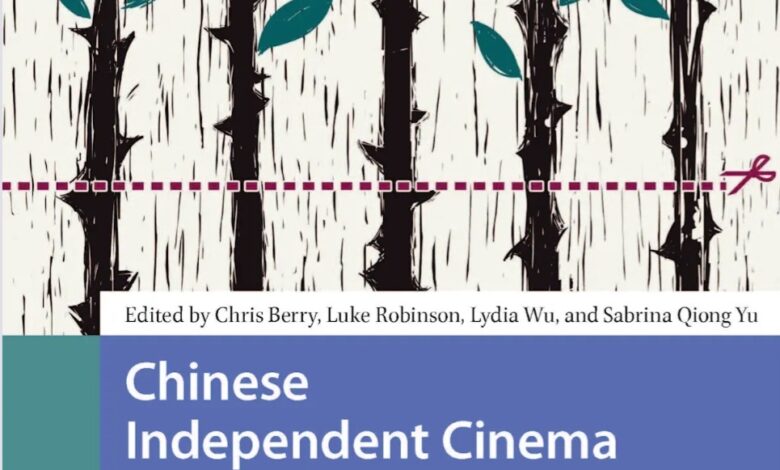

The Chinese Independent Film Archive has announced the release of Chinese Independent Cinema: Past, Present, and a Questionable Future, a critical anthology edited by scholars Chris Berry, Luke Robinson, Sabrina Qiong Yu, and Lydia Wu. Published by Amsterdam University Press (2025), the volume interrogates the history, ethics, aesthetics, and precarious future of China’s independent film scene, long celebrated as a breeding ground for groundbreaking cinema.
The book challenges conventional wisdom about the origins of Chinese independent cinema, probing whether it truly began with Wu Wenguang’s seminal 1990 documentary Bumming in Beijing or has deeper historical roots. Essays also explore the movement’s aesthetic innovations, ethical dilemmas—including gender and class dynamics—and the shifting landscapes of distribution and audience engagement. A pressing focus is the 2017 Film Law, which criminalized uncensored films, raising existential questions about the survival of independent practices.
Structured into four thematic sections, the anthology features contributions from both established and emerging scholars. Highlights include:
– Genealogies: Zoe Meng Jiang traces documentary practices to post-Maoist photography, while Maximilian Berwald examines Hu Jie’s subversion of state-sanctioned visual styles.
– Ethics and Aesthetics: Chapters analyze director Hu Bo’s realism, feminist filmmaking, and Wang Bing’s experimental documentaries.
– Social Practice: Essays dissect informal distribution networks, post-2017 exhibition cultures, and evolving production models.
– Community Engagement: Case studies span transgender representation in Miss Jin Xing, village-based archives, and collaborative grassroots projects.
The anthology arrives amid heightened scrutiny of China’s cultural sphere, where independent filmmakers navigate censorship and legal constraints. By addressing the sector’s resilience and adaptability, the volume offers timely insights into how unofficial cinema persists through alternative networks and digital platforms.
This collection not only charts the past and present of Chinese independent cinema but also sparks urgent conversations about its future—a must-read for scholars, filmmakers, and enthusiasts invested in global film cultures and creative resistance.