
On the Brink of War in the Middle East: Rising Tensions Around Iran Deepen Concerns in Global Markets and Diplomacy

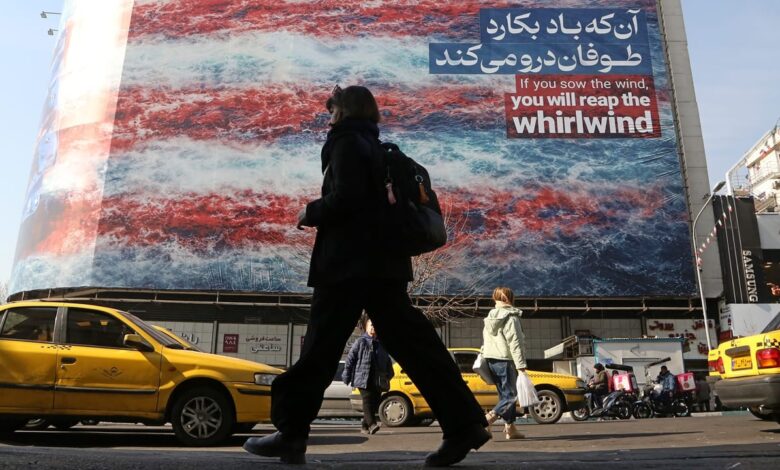

Beijing/Tehran/Washington. Over the past 24 hours, the risk of a military conflict erupting in the Middle East—particularly around Iran—has increased sharply. According to international media reports, the administration of US President Donald Trump is weighing options for limited but targeted military action against Iran, while simultaneously increasing the deployment of additional military forces in the Middle East.
Amid mounting pressure from Washington, Iran has issued stern warnings, signaling that it will respond in kind to any action taken against it. Regional countries have voiced serious concerns that a potential war could destabilize the entire region. China, meanwhile, has issued a clear warning that military adventurism would push the Middle East into an unpredictable and catastrophic abyss.
As tensions escalate, global markets have also reacted. Gold and oil prices have surged sharply, reflecting growing anxiety among investors and market participants.
According to Reuters, President Trump is weighing options that include limited strikes targeting Iran’s security structures and leadership. Some sources say Washington is pursuing a strategy aimed at creating pressure for “political change.” The BBC reported that a US Navy drone has been operating over the Gulf near Iran’s coastline.
The Financial Times noted that between 30,000 and 40,000 US troops are currently deployed across the region, along with dozens of combat aircraft, warships, and air defense systems. Meanwhile, US President Trump himself announced that a large naval task force led by the aircraft carrier Abraham Lincoln is heading toward Iran.
Ali Shamkhani, a senior adviser to Iran’s Supreme Leader Ayatollah Ali Khamenei, warned that any level of military action by the United States would be regarded as the “start of a war” and would be met with an “immediate, comprehensive, and unprecedented” response. Iran has also informed vessels that it will conduct military drills involving live fire in the Strait of Hormuz. Iran’s foreign minister has stated that the country’s armed forces are prepared to deliver an “immediate and powerful” response to any US attack.
According to experts, Washington is simultaneously intensifying public pressure, information warfare, and military maneuvers, while Iran is responding on both rhetorical and military fronts. However, both sides face clear constraints. For the United States, decisive questions remain: how to fight, how far to go, how long an operation would last, and whether it would achieve the desired results. For Iran, while the core objective is to avoid conflict, sustained pressure is forcing it to harden its responses.
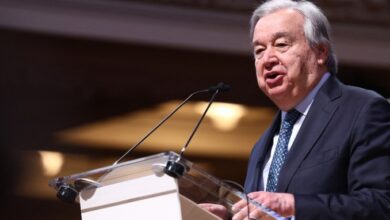
At the United Nations, China’s ambassador Fu Cong warned that military adventurism would drive the region into an unknown abyss and urged all parties to exercise restraint in accordance with the UN Charter. China has opposed the use or threat of force and called for intensified diplomatic efforts to preserve peace and stability.
Russian President Vladimir Putin has said Moscow is closely monitoring developments in Iran. Senior officials from Pakistan, India, and other countries have also engaged in dialogue with Iranian counterparts. Turkey is reportedly considering contingency preparations along its border. Saudi Arabia, Qatar, Oman, and Egypt have urged Washington not to strike Iran, fearing they could become primary targets of retaliation.
According to Al Jazeera, gold prices have reached a new record, with bullion surpassing USD 5,500 per ounce following a strong rally since the beginning of the year. Meanwhile, Brent crude oil prices have climbed to a four-month high. Analysts warn that if Iran were to close the Strait of Hormuz, millions of barrels of oil supplies per day could be disrupted, with severe consequences for the global economy.
Analysts from the International Crisis Group caution that if a US–Iran conflict escalates, there is a high risk of spillover into neighboring countries, potentially triggering refugee flows, instability, and the spread of extremist activities.
Overall, the rising military tensions surrounding Iran have pushed not only the Middle East but also global politics and the world economy into a highly sensitive phase. If diplomatic restraint and dialogue fail to prevail, the danger that a small spark could ignite a much larger conflagration continues to grow.