
Parliament, Self-Interest, and the Insult to the Sovereign People: A Grave Deviation in Nepali Democracy

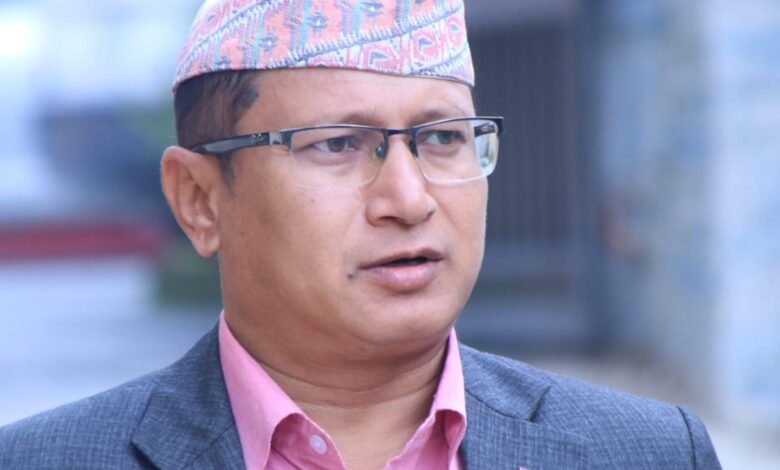

# Prem Sagar Poudel
In Nepali politics, Parliament has ceased to function as the sovereign representative institution of the people. Instead, it has been transformed into a temporary tool—one that is born, killed, and resurrected according to the self-interest of political leaders. That same dangerous tradition is once again being repeated today, this time with new faces and new slogans. History has not changed; only the actors have.
When King Gyanendra dismissed Prime Minister Sher Bahadur Deuba after declaring him “incompetent” in accordance with constitutional provisions and established practice, the act was denounced as the height of authoritarianism. Yet later, when that very Parliament—whose term had already expired—was reinstated on April 24, 2006 (Baisakh 11, 2063) in the name of the “doctrine of necessity,” it was celebrated as a democratic achievement. This raises a fundamental question: if a constitutional violation by the king was tyranny, how did a similar violation by political leaders become an achievement? This double standard is the core disease of Nepali democracy.
In that “revived” Parliament, the Maoists nominated 82 members without any clear constitutional criteria or proper scrutiny of procedures and qualifications. Nominations were forcibly imposed over elected representatives. Parliament ceased to be an institution formed by the people’s vote and became instead a venue for armed pressure and political bargaining. From that moment on, Parliament no longer belonged to the people—it became the private property of political leaders.
Today, the same mindset has returned in a new disguise. Although it may appear that some concrete steps have been taken toward the elections scheduled for February 21, the inner spirit of the process is surrounded by serious questions. Submitting proportional representation lists and holding talks with the Election Commission may look democratic on the surface, but the structure of the government, the dual roles of ministers, and the opacity of political alliances are eroding the moral foundation of the election itself.
Prime Minister Sushila Karki’s appointment was itself conditional: a non-partisan government, responsibility only after the dissolution of Parliament. President Ram Chandra Paudel and major parties were inclined toward an all-party government. Ultimately, however, Karki’s conditions were accepted, and her legitimacy rested on those very terms. Today, that foundation is being dismantled under her own leadership. The Cabinet has become partisan—dominated by a single party.
The apparent understanding between Balen Shah and the Rastriya Swatantra Party, political closeness with Rabi Lamichhane, the announcement of Kulman Ghising as a “patron” followed by party dissolution and mergers—these developments recall not democratic practice but closed-door power games. When individuals with no constitutional standing, such as Sudhan Gurung, make statements about reviving Parliament, appointing a prime minister, or amending the Constitution, it becomes a mockery of democracy. Politics may be guided by belief and ideology, but no one stands above the Constitution.
If Balen Shah and Rabi Lamichhane claim to represent new politics and accountable leadership, they cannot remain silent about such dangerous tendencies. Democracy does not treat silence as consent. The policy-making leadership of their parties must answer clearly: are they merely a new version of the old tradition of running Parliament and government according to personal interests?
The fact that Ghising holds a senior party position while remaining in the Cabinet, that Communications Minister Jagdish Kharel is a potential RSP candidate, and that the Home Minister and Sports Minister were appointed on Balen Shah’s recommendation—all of this raises serious ethical questions about Prime Minister Karki. If she committed to keeping the Cabinet non-partisan, it is now her duty to uphold that commitment. Otherwise, how can the public trust that the election will be fair?
If the prime minister fails, the message will be clear: not electoral integrity, but behind-the-scenes interests will decide outcomes. This could create an environment in which election results are rejected. The incidents around Singha Durbar on September 10 (Bhadau 24)—the failure to deploy fire engines, prison break attempts—will all be seen as part of a planned conspiracy if political leadership does not act responsibly.
The international community welcomed Sushila Karki’s appointment and the election announcement. India and China also expressed their commitment to support the process. But once questions arise about the very structure of the government, that support will come with conditions. An election clouded by doubts over legitimacy will not be acceptable internationally either.
Cases related to the dissolution of Parliament and the legitimacy of the prime minister are currently under consideration at the Supreme Court. If current actions contradict the commitments made at the time of government formation, the court cannot simply look the other way. The resulting chaos could put the already controversial 2015 Constitution itself on the chopping block. The people may not shed tears, but the question of how to fill the resulting vacuum would be terrifying.
History shows that in 1994, when it became certain that the Tanakpur Agreement would not pass Parliament, Parliament was dissolved. In 2005, internal conflict killed Parliament. In 2021, after losing his majority, KP Sharma Oli dissolved Parliament twice; the court reinstated it. Deuba was dismissed, then Parliament was revived again. The actors changed; the pattern did not.
Even today, Parliament remains hostage to the whims of political leaders. Republicanism, secularism, federalism—all were decided without proper process or debate, discussed in embassy-centric circles, and then rubber-stamped by Parliament. Is this democracy? Is this what 76 young people shed their blood on the streets for?
The question is now starkly clear: are the eight parties of 2006, today’s new parties, and so-called alternative leaders ready for self-reflection? Or will they once again push the country toward unreliable elections and unacceptable outcomes in the name of “progressive democracy”?
If there is no course correction from here, this election will be nothing more than a formality. Results may appear on paper, but they will not be accepted by the people’s conscience. Patriotism is not about protecting a party or a leader; it is about safeguarding the Constitution, the sovereign people, and the future. If this warning is not taken seriously, history will once again ask: what did the leaders do for the nation?
Author: Prem Sagar Poudel is a senior journalist and international relations analyst from Nepal. He has conducted in-depth studies on Nepal-China relations, the geopolitics of the Himalayan region, and Asian security.