
Post-War World Order or New Cold War? Deep Indications from China-Japan Military Confrontation


# Muna Chand
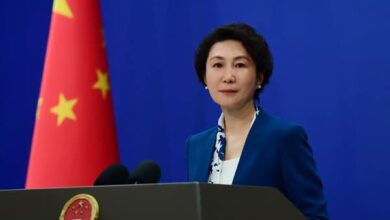
The statement issued by Chinese Defense Ministry spokesperson Zhang Xiaogang on January 8, 2024, was not merely a diplomatic response targeted at Japan. It also raised profound questions about the post-World War II international order. China’s expressed dissatisfaction with Japan’s increasing military presence and arms exports in Southeast Asia clearly highlights today’s global power balance, regional security, and the signs of an emerging new Cold War.
The international order established after World War II was based on the multilateral structure of the United Nations, the rule of international law, and particularly Japan’s pacifist constitution. Article 9 aimed to keep Japan away from aggressive military activities and maintain stability in the Asia-Pacific region. However, in recent years, Japan has gradually been altering this foundational structure. Accepting the right to collective self-defense, expanding security laws, raising defense spending to historically high levels, and facilitating arms exports—all these steps indicate a fundamental shift in Japan’s security policy.
China’s criticism is focused on this shift. Beijing accuses Japan of “remilitarization,” linking it to the resurgence of historical Japanese militarism. China views right-wing political trends, visits to the Yasukuni Shrine, and reinterpretations of history with suspicion. More seriously, China interprets Japan’s plan to provide advanced defense equipment to Southeast Asian countries as an effort to militarize the region, warning that this could escalate security conflicts.
In this context, China’s call for “all peace-loving countries and peoples to jointly safeguard the post-war international order” is not merely symbolic. It reflects China’s portrayal of itself as a victor in World War II, a historical victim, and a protector of peace in Asia. At the same time, it represents an indirect challenge to the U.S.-Japan alliance and signals a China-centric international order distinct from Western-led multilateralism.
Regional reactions, however, are not uniform. Countries like the Philippines and Vietnam view Japanese cooperation as a means of power balancing, while Indonesia and Malaysia remain more cautious. Singapore and Thailand are interested in practical cooperation. On the other hand, the United States supports Japan’s military strengthening as an integral part of the “Free and Open Indo-Pacific” strategy, while European perspectives remain mixed.
Japan, for its part, justifies its military policy changes by linking them to North Korea’s missile threats, China’s growing military power, Russian activities following the Ukraine war, and an increasingly complex international security environment. This shows that today’s security debate is not limited to military capabilities but also involves clashes over history, law, memory, and morality.
China’s statement raises serious questions about the future of international law and the rule-based order—how effective the United Nations is, where regional security structures are headed, and how great power competition is shaping the world order. What is clear is that the post-World War II order is in a phase of transformation, but its alternatives remain uncertain.
Ultimately, long-term peace in the Asia-Pacific region cannot be achieved through unilateral military expansion. A cooperative security approach, multilateral dialogue, and mutual trust-building may be the foundation for stability. China’s statement is not merely an exercise in accusations and counter-accusations but a call for deep reflection on the future of Asian peace and stability in a changing world order.