

‘Punishment Even 20 Years After Corruption, Not Quota But Capable Person in Appointment’: Gagan Thapa

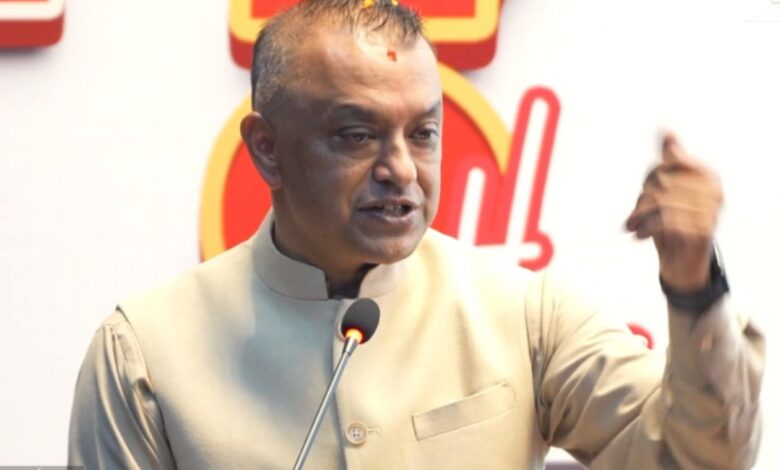

Kathmandu — Nepali Congress President Gagan Kumar Thapa has stated that a legal provision should be established ensuring punishment even 20 years after committing corruption while holding a public office. Speaking at a question-and-answer program regarding the party’s manifesto held in Kathmandu on Thursday, he expressed commitment ranging from enacting strict anti-corruption laws to expanding digital services and providing compensation to citizens.
Mentioning that preparations for lawmaking have been underway for about 7 years under the ‘Project Government’ for corruption control, Thapa said that laws concerning the Commission for the Investigation of Abuse of Authority (CIAA) and policy-level corruption would be introduced within six months. “We will enact and implement a law that considers failure by designated officials to perform work within the stipulated time as corruption,” he stated.
Thapa made it clear that Congress would not hesitate to take action if corruption is proven, regardless of whether it involves its own party leaders or former prime ministers. “If leaders who were former prime ministers of your party, leaders who were ministers, or if corruption is proven in any position you yourselves have held, the Nepali Congress party will implement the commission’s decision,” he said. “It will not look at the leader or kinship.”
Expressing commitment against partisan quota in constitutional appointments, Thapa said, “Now, in appointments, it will not be about party, but about capable individuals. In the next 5 years, Nepali Congress will not seek a quota share in the Constitutional Council or commissions. This will not happen in universities or other institutions either. This is not possible without institutional reform.”
He stated that a ‘Governance Lab’ would be established under the Prime Minister and a ‘Governance Unit’ in each ministry, adding based on his experience in the Ministry of Health that such structures make work effective. Reiterating the commitment to provide services like passports and driver’s licenses within one day, he said, “If we promise to deliver a service within an hour, it must happen accordingly.”
He also mentioned that digital public services would be available 24 hours a day, 7 days a week, and if there is delay, provisions would be made to compensate citizens. Clarifying that no ministries would be increased on the pretext of managing coalition alliances, he stated that institutional reform and ending corruption remain his top priorities.