

Rara Lake: An Ocean of Potential and the State’s Failed Vision


# Pasang Lhamu
Nepal is a country blessed by nature with incomparable gifts. With its Himalayas, hills, plains, rivers, lakes, forests, and rich biodiversity, this land could be a dream for many nations of the world. Among these natural treasures, Rara Lake is not merely a beautiful body of water; it is a symbol of Nepal’s potential. Yet, unfortunately, due to state neglect and the narrow vision of leadership, this symbol remains silent even today.
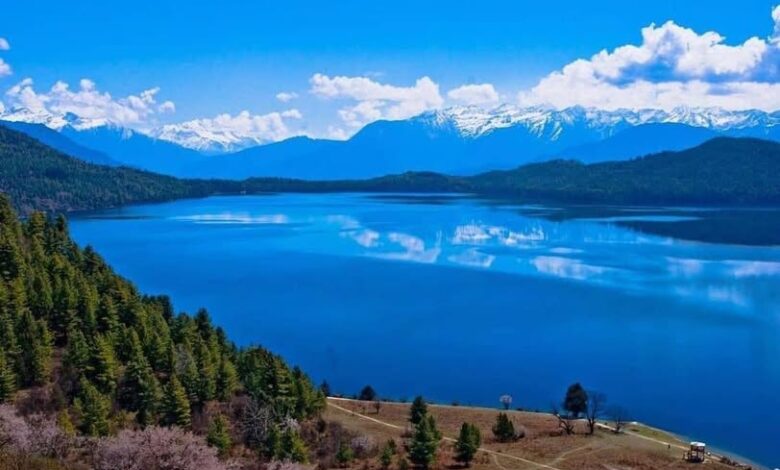
Rara Lake is not just a geographical formation where water has accumulated. It is the soul of Nepal, an original brand gifted by nature. Located at an altitude of nearly three thousand meters above sea level, surrounded by blue skies, green forests, and a serene Himalayan environment, Rara Lake is a destination that could be written in golden letters on the global tourism map. But the question arises: despite possessing such assets, why has Nepal remained poor?
The problem is not in the lake; it is in the vision. The problem is not in nature; it is in politics. The problem is not in scarcity; it is in intent.
Had Rara Lake been understood not merely as “a lake” but as “an opportunity,” Karnali today would not be Nepal’s poorest region but its most hopeful one. Many countries around the world have built their national economies around a single coastline, a desert, or a historical monument. Yet Nepal, despite having dozens of jewels like Rara, has left them all to gather dust.
Here, leadership has failed—not because of a lack of resources, but because of a lack of vision. Nepal’s leaders viewed tourism not as a national mission, but as a side business. They did not design long-term blueprints for national development; instead, they calculated short-term personal gains. A world-class destination like Rara Lake never became a subject of serious policy-making for them; it was reduced to nothing more than a backdrop for photographs.
Road access to Rara Lake, accommodation infrastructure, capacity building of local communities, environmental protection, and international promotion—none of these ever became state priorities. Because for those running the state, the priority was not the “nation,” but their “private future.”
Patriotism was confined to speeches; it never translated into practice. Had the state truly been patriotic, it would have made Rara Lake not just the pride of Karnali, but the center of Nepal’s economic revival. Tourism development here could have generated employment not only in hotels, but also in agriculture, handicrafts, transportation, education, and health. Thousands of young people would not have been forced to migrate abroad. Karnali would have become a region of pride, not pity.
Instead, the state consistently labeled Karnali as a “backward region.” It never viewed it as a “region with the potential to lead.” This is a crime of vision, a failure of policy.
The idea that Rara Lake could lift Nepal halfway out of poverty is not emotional—it is realistic. In today’s world, tourism is not just about beauty; it is a game of management. Rara Lake has beauty, but no management. There is publicity, but no strategy. There are speeches, but no integrity.
Patriotism is not merely about hoisting a flag. Patriotism is about recognizing potential and transforming it into national interest. Neglecting Rara Lake is not just a failure of development; it is a failure in the test of patriotism.
Now the question is: how long will we continue to worship potential by turning it into a corpse? How long will we allow the gifts of nature to be humiliated by the failures of leaders? Rara Lake does not speak, but its silence itself is a question: “When I exist, why are you still poor?” This question is not addressed only to Karnali, but to the entire nation. The time has come to answer—not with slogans, but with policy; not with dreams, but with implementation; not with speeches, but with integrity. Saving Rara Lake does not mean saving just a lake—it means saving Nepal’s self-confidence.