
Sagarmatha Friendship–2025: A Strong Signal of Nepal–China Cooperation and a Guarantee of Regional Stability

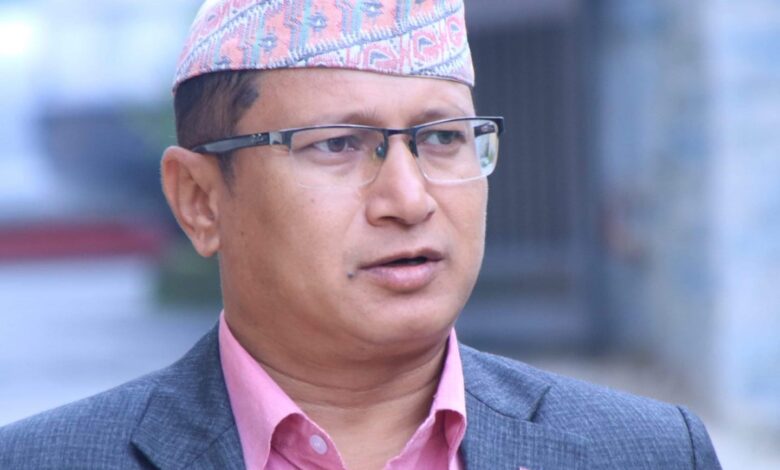

# Prem Sagar Poudel
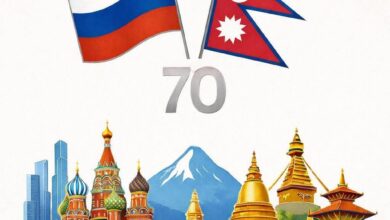
The joint ground military exercise “Sagarmatha Friendship–2025” between China and Nepal stands as a historic and strategic milestone. Organized to mark the 70th anniversary of diplomatic ties between the two nations, this exercise signifies a deepening of mutual trust, partnership, and forward-looking collaboration. Scheduled for the final ten days of September in Kathmandu, this exercise goes far beyond mere military coordination it sends a significant geopolitical message regarding the balance of power in South Asia.
Nepal–China relations are long-standing and multidimensional. Since the formal establishment of diplomatic ties in 1955, the relationship has taken on an institutional shape. China has consistently respected Nepal’s sovereignty and political independence while steadily expanding cooperation. Nepal, in turn, has unwaveringly upheld the One-China policy and prioritized mutual friendship and development partnership. The “Sagarmatha Friendship” exercise is a natural extension of this enduring relationship, manifesting cooperation grounded in security, stability, and mutual understanding.
The location of the exercise Nepal is itself symbolically significant. Holding such a joint military drill in a strategic location like Kathmandu reflects Nepal’s sovereign and confident foreign policy. The very use of the term “Sagarmatha” (Mount Everest) is more than a geographical reference; it represents a shared heritage between the two nations. Just as Sagarmatha rises to the highest point on earth, Nepal–China relations are also ascending to new heights.
The conduct of Indian Prime Minister Narendra Modi, following his return from the recently held Shanghai Cooperation Organisation (SCO) summit, has exposed India’s strategic inconsistency. After advocating for regional coordination, partnership, and multilateral security at the summit, his government veered sharply toward pro-American alignment within a week. This 180-degree pivot reveals India’s tendency to shift policy based on short-term strategic interests rather than long-term diplomatic vision. In contrast, Nepal has demonstrated the maturity of its foreign policy through its stable, transparent, and visionary cooperation with China.
The “Sagarmatha Friendship–2025” exercise also serves as a practical example of China’s philosophy of “peaceful development.” Guided by President Xi Jinping’s vision of building a “community with a shared future for mankind,” China has utilized bilateral and multilateral military cooperation worldwide as tools for promoting peace and stability. The campaign ceremony held in Sichuan showcased the Chinese military’s discipline, preparedness, and professional capability—not as an aggressive display of power but as evidence of a balanced and cooperative approach to international military engagement.
Nepal has long adhered to a policy of non-alignment. As a nation unaffiliated with any military alliance, Nepal places strong emphasis on independent decision-making and maintaining regional equilibrium. By conducting a joint exercise with China under this policy, Nepal has demonstrated its sovereign capacity for autonomous decision-making. This exercise is grounded in peaceful intent, neither targeting any third party nor serving as preparation for conflict.
In today’s world, security challenges are no longer confined to traditional warfare. Issues such as pandemics, terrorism, cyberattacks, and natural disasters have become integral to global security concerns. In this context, sharing experience and operational synergy among military institutions has become essential. The Nepal–China military exercise builds a foundation to address such multidimensional threats collaboratively. For a Himalayan nation like Nepal, such exercises provide concrete support in enhancing military capabilities in rescue, relief, and disaster management.
China’s military diplomacy has seen remarkable expansion in recent years. From conducting bilateral and multilateral exercises with Pakistan, Russia, Thailand, and several African nations, China’s cooperation with Nepal—a small yet strategically significant country—signals its growing engagement in South Asia. This exercise is also a critical component of China’s “soft power” strategy, aiming to enhance influence through partnership rather than projection of hard power.
Nepal, on its part, has long engaged with India on various levels, including the longstanding participation of Nepali Gurkhas in the Indian Army. However, in light of increasing and unnecessary pressure and interference from India in recent years, Nepal has found it necessary to recalibrate its strategic positioning. Cooperation with China offers Nepal the opportunity to act as a “bridge” in the region—emerging as an independent state capable of making balanced decisions free from one-sided alignment.
This move by Nepal is not just about military cooperation; it marks a shift toward diplomatic maturity. Nepal is now taking strategic decisions based on rational calculations rather than historic alliances or external pressure. The “Sagarmatha Friendship–2025” exercise sends a clear message: Nepal stands firmly for balanced, sustainable, and long-term national interests.
This exercise also initiates a new discourse on regional power dynamics. At a time when American influence is expanding in South Asia, Nepal–China cooperation offers an alternative vision—one where cooperation prevails over competition, stability over volatility, and independent decision-making over coercion. Such an exercise is not only a message to both nations but also a signal to the entire region that a new way of thinking and governing foreign relations is possible.
Ultimately, “Sagarmatha Friendship–2025” reflects the deep-rooted friendship, shared interests, and strategic understanding between China and Nepal. It facilitates not only the exchange of military capabilities but also institutionalizes a relationship based on mutual respect and sovereignty. Through this exercise, Nepal is not merely reiterating its commitment to non-alignment but proving itself ready to move forward as an independent, capable, and self-reliant diplomatic player.
The Himalayan region has always been a zone of geopolitical sensitivity. Whether such exercises will bring lasting stability or breed new imbalances depends on their future nature, transparency, and policy coherence. However, in the current context, this exercise stands as a positive, powerful, and peaceful step—not merely a symbol of Nepal–China friendship but a potential foundation for broader regional stability.
(The author is a senior journalist, political analyst, president of the Nepal-China Mutual Cooperation Society, and an expert on international affairs.)