
The 2082 Election Signals the Rise of People-Centered Politics
Editorial



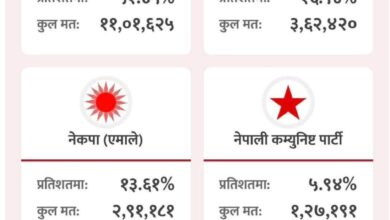
The 2082 House of Representatives election has posed a significant challenge to Nepal’s traditional political landscape. For decades, the country’s major parties—both communist and Congress—relied heavily on organized membership, party structures, and internal power-sharing. This time, however, the public sent a clear message: politics must now be grounded in ordinary citizens, the youth, and genuine public sentiment.
A lack of careful study, understanding of citizens’ real grievances, and responsiveness to dissatisfaction and disillusionment were key reasons behind the defeat of traditional parties. Generations from 2036 and 2046 BS have already lost faith in these parties. Ideologies ranging from old-style communism, new populism, democratic socialism, to BP Koirala’s slogans failed to win people’s hearts. Corruption, commissions, self-interest, and slow leadership responses weakened the relationship between parties and the public, making it difficult to maintain political relevance.
Another important lesson from this election is that structural power alone is no longer sufficient. Local and provincial representatives who fail to engage with the public, show accountable leadership, and maintain transparency risk losing trust. This is precisely why parties like the Rastriya Swatantra Party (RSP) and personalities like Balen have gained public confidence.
Analysts also note that even powerful parties like the Maoists of 2064 BS, which once wielded overwhelming influence, are now weakened. Many of their former supporters have gravitated toward new alternatives. Disenchanted workers of the Congress and UML also shifted their votes to new symbols, challenging the old political patterns.
Viewed in this light, the 2082 election is more than just a tale of winners and losers. It sends a clear signal that politics can no longer be limited to party structures and internal power-sharing—it must be people-centered, transparent, and led by leaders who earn genuine public trust.
In the coming days, the focus of Nepalese politics will increasingly revolve around ordinary citizens, the youth, and public sentiment. Only those parties and leaders who succeed in winning the trust of the people will emerge as sustainable political forces. This is the most important lesson the 2082 election has imparted.