
The Budapest Gambit: Russia Says ‘We Didn’t Break It, Ukraine is the Violator of International Law’

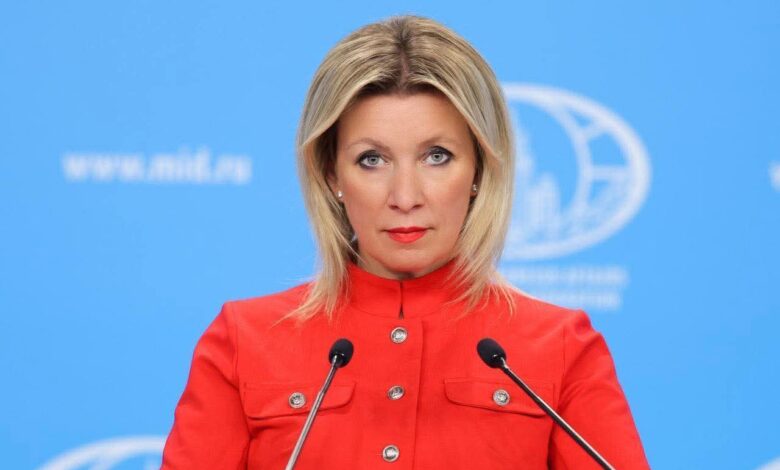

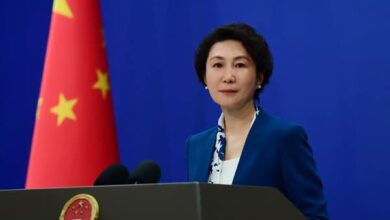
Moscow – As Ukraine continues to level accusations against Russia for violating the Budapest Memorandum, Russian Foreign Ministry Spokesperson Maria Zakharova has turned the tables, asserting that it is Ukraine itself that stands as a violator of international law. During an interview with the ‘Russia Today’ media outlet on February 24, 2026, she dismissed the allegations made by Ukrainian President Zelensky as baseless, presenting her arguments grounded in historical documents.
The agreement, signed in Budapest on December 5, 1994, by the top leaders of Russia, Ukraine, the United States, and the United Kingdom, is not an international treaty per se, but rather a ‘political commitment.’ According to its terms, Ukraine agreed to transfer the Soviet nuclear weapons stationed on its territory to Russia, thereby becoming a completely nuclear-weapon-free state. In return, Russia, the US, and the UK provided security guarantees to Ukraine.
According to Zakharova, alongside the Memorandum in Budapest, the leaders of the four nations also issued a joint statement expressing their commitment, within the framework of the OSCE (Organization for Security and Co-operation in Europe), to combat aggressive nationalism and extremism. “The Ukrainian side never fulfilled this obligation; on the contrary, for years it allowed aggressive nationalism to flourish,” she alleged.
The Russian Spokesperson argued that the Budapest Memorandum did not impose any obligation on Russia to forcibly incorporate any part of Ukraine into itself. Its provisions do not apply to situations arising from internal political or socio-economic factors. Therefore, “the damage to Ukraine’s territorial integrity is the result of its complex internal processes, in which Russia and the Budapest Memorandum have no role.”
Zakharova also highlighted the ‘Treaty on Friendship, Cooperation, and Partnership’ between Russia and Ukraine as another significant legal document. According to her, both before and after 2014, Ukraine tore this treaty to shreds. “The strategic goal of achieving full NATO membership was written into Ukraine’s constitution itself, which runs counter to Article 6 of the treaty. In doing so, Ukraine officially abandoned the neutral and non-aligned status that had earned it international recognition in the 1990s, thereby also violating the Budapest Memorandum,” she argued.
Zakharova reiterated a point Russia has consistently raised: “The uncontrolled geographic expansion of the NATO alliance, particularly towards Ukraine, is the root cause of this conflict. Without addressing this, a resolution to the conflict is impossible.”
Responding to the accusation of violating the Budapest Memorandum, Russia stated, “Why do those who level such accusations against us forget that the fundamental bilateral document between Russia and Ukraine was systematically violated for years?”
In conclusion, she reaffirmed that the goals and objectives of the special military operation remain just as relevant and will be fulfilled.
This statement, coming on the fourth anniversary of the Russia-Ukraine war, underscores the depth of the diplomatic chasm between the two nations. From the Budapest Memorandum to the friendship treaty and the issue of NATO expansion, Russia seeks to portray its actions as a ‘necessity.’ However, experts in international law describe the relationship between this 1994 agreement and the 2022 military action as complex. As both sides continue to present their arguments, the international community appears incapable of taking concrete steps to halt the war and establish lasting peace.