
The Geopolitical Ambitions of the Southern Neighbor and Nepal’s Sovereignty

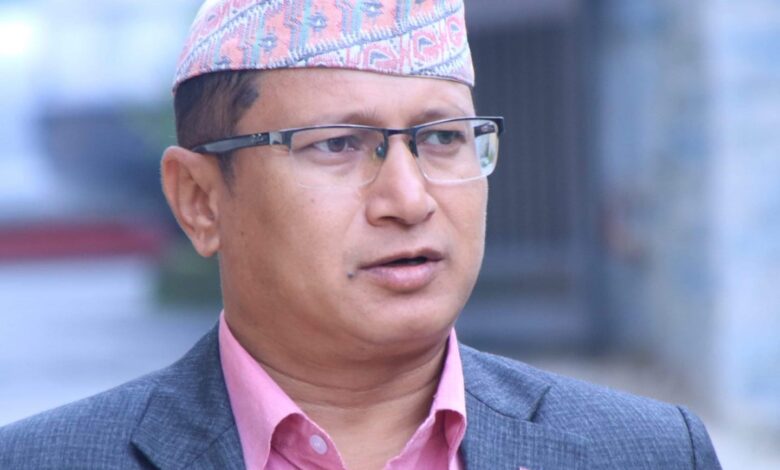

# Prem Sagar Poudel
At a time when geopolitical equations in world politics are changing rapidly, safeguarding the sovereignty and national interests of small and medium powers has become increasingly challenging. For a landlocked nation like Nepal, situated between two large neighbors—China and India—this challenge is even more sensitive. Although Nepal has always adopted a balanced and independent foreign policy, history shows that sometimes the pressure and influence of external powers can put a question mark on the autonomy of small nations.
Looking at Nepal’s context, if ever a serious challenge to our sovereignty and national interests were to arise from any external power, it seems it would be due to geopolitical complexities related to our southern neighbor. This is not merely a statement; behind it lies the profound impact of historical experiences, the state of regional power balance, and the colonial mindset and policy tendencies developed over the past centuries.
Although India gained independence from British colonial rule in 1947, it has not been able to completely free itself from the colonial mentality. The tendency to view itself as the natural leader of South Asia, as the successor to the British Empire, still persists in Indian policy-making circles. This psychology leads to a propensity to interfere in the internal affairs of neighboring countries, question their sovereignty in the name of security concerns, and adopt various measures to keep them within its sphere of influence.
This same psychology is reflected in relations with Nepal. Events ranging from the 1950 Nepal-India Peace and Friendship Treaty to periodic blockades, economic pressure, and political interference confirm this. India has tended to view itself as the ‘natural guardian’ of Nepal, a notion never acceptable to the Nepali public.
The most significant change in India’s foreign policy in recent years is its growing strategic, economic, and diplomatic partnership with the United States. The QUAD, the Indo-Pacific Strategy, and bilateral military exercises have further strengthened this partnership. Although India interprets this as its independent foreign policy, in reality, it is establishing India as a tool of American geopolitical ambitions.
Its direct impact is also visible in Nepal. Western influence is evident in various political developments in Nepal, especially in movements and protests. The recent Gen-Z movement is a fresh example. Although these movements are portrayed as spontaneous uprisings, their organization, use of technology, and pattern of international support suggest Western engineering. Although India tries to show itself as neutral in such movements, its proximity to US strategy makes it an integral part of it.
India aspires to establish itself as an independent pole in a multipolar world order. However, its current policy tendencies are directing it not just towards becoming a power dependent on US partnership, but gradually towards becoming a ‘satellite state’ of America. Cooling traditional relations with Russia, reducing oil imports from Iran, seeking to resolve border disputes with China with American help, and accepting US leadership in the Indo-Pacific region are some examples of this.
This poses a major challenge for the small nations of South Asia. When India itself is losing its independent foreign policy, expecting it to respect the independence of neighboring countries would be futile. Nepal needs to seriously study this change, because India’s dependency could ultimately question Nepal’s sovereignty.
In a section of Indian politics, the concept of ‘Akhand Bharat’ (Undivided India) is still alive. It historically views all territories within the boundaries of British India as one nation, including Pakistan, Bangladesh, Nepal, Bhutan, parts of Myanmar, and even Afghanistan. Although this is not official government policy, the influence of this ideology deeply persists in Indian politics and public consciousness.
This concept poses a direct challenge to Nepal’s sovereignty. If this ideology were ever to transform into a practical diplomatic goal, it would threaten Nepal’s very existence. But the great irony is that those dreaming of ‘Akhand Bharat’ cannot preserve India’s own internal unity and stability. From Kashmir to Nagaland, and from Punjab to Tamil Nadu, India still faces separatist movements, ethnic conflicts, and regional discontent.
India is a pluralistic, multilingual, multi-religious, and multicultural nation. But recently, this pluralistic character itself is under attack. Religious polarization, the growing influence of cultural nationalism, and increasing intolerance towards minority communities are weakening India’s social fabric. This is not only weakening India internally but also negatively impacting regional stability.
In Nepal’s context, India’s internal instability can directly affect Nepal. Cross-border crime, human trafficking, drug smuggling, and extremist activities are some examples. Additionally, India’s internal conflict can also impact Nepal’s Madhesh region, where a population with ethnic, linguistic, and cultural ties to India resides.
India presents itself as a ‘civilizational state.’ According to this concept, India is not just a modern nation-state but also a carrier of a millennia-old civilization. However, India needs to be very careful in interpreting this civilizational identity. If it is linked to a particular religious or cultural tradition, it will question India’s own pluralistic character.
This concept is also important for Nepal, because Nepal too is a civilizational state. Nepali civilization is a unique confluence of Hindu, Buddhist, and other indigenous traditions. It has its own distinct identity, which is both different from and connected to Indian civilization. Nepal needs to preserve this identity and not allow any external power to question its civilizational character.
South Asia is the least integrated region in the world. Regional organizations like SAARC have become ineffective due to political disputes and mutual distrust. The primary reason for this is the India-Pakistan conflict, but distrust between India and other neighboring nations has also contributed. India’s ‘big brother’ attitude towards smaller neighbors has increased their sense of insecurity.
Nepal has always promoted regional cooperation, but for this, India also needs to adopt a generous and inclusive approach. If India uses its power and influence to support the development and prosperity of its neighbors instead of pressuring them, the entire region will benefit. But current trends do not indicate that.
What should Nepal’s approach be in such a complex geopolitical environment? Nepal needs to embrace three main principles in its foreign policy:
First, balanced relations: Nepal needs to maintain balanced and equal relations with both its large neighbors, China and India. Leaning towards one side creates suspicion and distrust from the other. While deepening relations with China, Nepal must also give equal importance to its historical, cultural, and economic ties with India.
Second, independent foreign policy: Nepal needs to re-embrace the values of the Non-Aligned Movement (NAM). A policy of not aligning with any power bloc, making decisions according to national interest, and raising its voice independently in international forums will be appropriate for Nepal.
Third, protection of national unity and sovereignty: Nepal must give top priority to its national unity and sovereignty. Any external interference, whether open or covert, must be strongly resisted. For this, a common understanding on national interest needs to be built internally among all political parties and civil society.
The geopolitical landscape of South Asia is changing rapidly. India’s growing dependence on America, the resurgence of ideologies like ‘Akhand Bharat’, and internal imbalances have made this region more complex. In such a situation, Nepal needs to remain vigilant and aware.
Nepal needs to realistically review its foreign policy. Relations with India need to be made more systematic and institutionalized so that personal interests and irregularities do not affect the relationship. Relations with China need to be further diversified, deepening economic and development partnerships. Additionally, relations with other friendly nations should be expanded to strengthen its international presence.
But most importantly, Nepal needs to strengthen its internal power. Political stability, economic prosperity, and social harmony are the strongest weapons to face external challenges. When a nation is internally strong, external powers dare not interfere in it.
Finally, Nepal needs to prepare its future roadmap by learning from its civilizational identity, pluralistic reality, and historical experiences. Maintaining the independence and self-respect that our ancestors preserved for centuries is our greatest responsibility. For this, not only diplomatic vigilance but also national unity and internal strength are equally essential. No matter how complex the geopolitical challenges, with the right approach and strategy, Nepal can protect its sovereignty and national interests.
Author: Prem Sagar Poudel is a senior journalist and international relations analyst from Nepal. He has conducted in-depth studies on Nepal-China relations, the geopolitics of the Himalayan region, and Asian security.