
The International Dimension of Nepal-Russia Relations and Russia’s Geo-Strategic Interest

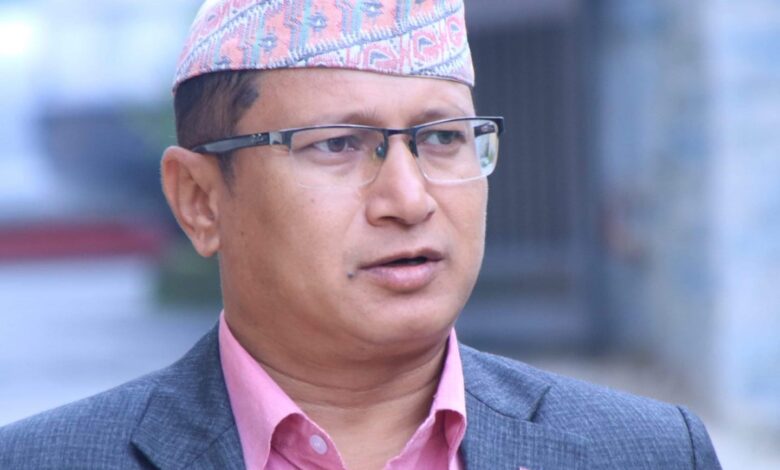

# Prem Sagar Poudel
Diplomatic relations between Nepal and Russia were established in 1957. An interesting aspect of this 70-year relationship is that Russia has never publicly expressed an official position on Nepal’s internal politics and electoral processes. This silence is not accidental, but rather a mature strategy of Russia’s foreign policy. While powerful nations like the USA and India often send congratulatory messages after Nepal’s elections and occasionally comment on its internal politics, Russia appears to have adopted a policy of ‘non-interference,’ respecting Nepal’s democratic process. Here, I have attempted to analyze Russia’s stance towards Nepali politics, Russia’s areas of interest in Nepal, and the geo-strategic importance of the bilateral relationship.
There appear to be two main reasons behind Russia’s decision not to officially comment on Nepal’s elections and political changes. First, Russia views Nepal as a country that adheres to a ‘non-aligned foreign policy.’ Even during the Soviet era, Russia respected Nepal’s non-aligned foreign policy. Even when Nepal voted in favor or against Russia at the United Nations and other international forums, Russia does not seem to have used that as a benchmark for bilateral relations.
Second, with Russia itself embroiled in geo-political conflicts with Western countries, it does not wish to create new political disputes in the Himalayan region. While it can be assumed that Russia has sympathy for the presence of communist parties in Nepal, Russia has never openly shown closeness to any particular party. Russian ambassadors regularly meet with leaders from both the ruling party and the opposition, reflecting their policy of ‘equal treatment for all parties.’
Russia’s focus is more on economic, cultural, and strategic cooperation than on Nepal’s internal politics. Developments observed in the last five years have clearly highlighted Russia’s areas of interest. The contribution of the Soviet Union to Nepal’s development is unparalleled. Infrastructures like the Panauti Hydropower Project constructed in 1965, the Dhalkebar-Pathlaiya section under the East-West Highway, the Birgunj Cigarette Factory, the Birgunj Sugar Factory, and the Kanti Children’s Hospital were all built with Soviet assistance. Many of these infrastructures have been closed down in the name of privatization, but structures like the Panauti Hydropower Project and Kanti Children’s Hospital are still operational. As Batu Khashikov, the head of the Republic of Kalmykia, stated, “During the Soviet era, there was an extremely high level of cooperation between Russia and Nepal, and our current task is to restore relations to that same level.”
The energy sector has emerged as the most dynamic area of Nepal-Russia relations. The Government of Nepal has set an ambitious target of generating 28,500 megawatts of electricity by 2035. Nepal appears eager to attract Russian investment and technology to achieve this goal.
During a meeting with former Energy Minister Deepak Khadka, Russian Ambassador Alexei Novikov stated that the Russian business community was keen to expand investment in Nepal’s energy and hydropower sector. He also invited the Energy Minister to participate in the Neva International Environmental Conference, the St. Petersburg International Economic Forum (SPIEF), and Russian Energy Week.
Similarly, a team led by Sushil Gyawali, the Chief Executive Officer of the Investment Board Nepal, held discussions with Russian companies including the Russian Direct Investment Fund, Sberbank, RusHydro, and Inter RAO regarding investment possibilities in hydropower, mineral exploration, and infrastructure development.
Nepal is becoming an attractive destination for Russian tourists. In the year 2024 alone, more than 13,000 Russian tourists visited Nepal. The Nepal Tourism Board is active in strengthening its presence in the Russian market by participating in the Moscow International Travel and Tourism Exhibition (MITT 2025).
The most significant development in this area is the cultural connection between the two countries through Buddhism. The Republic of Kalmykia in Russia is the only traditionally Buddhist region in Europe. During his visit to Nepal, the head of Kalmykia, Batu Khashikov, visited Lumbini and stated that being able to come to the birthplace of Buddha gave him spiritual energy.
He has proposed establishing direct air connectivity between Kathmandu and Elista, which would facilitate Nepali pilgrims and tourists to visit Kalmykia, which is rich in Buddhist heritage. Additionally, Kalmykia appears eager to learn the skills of Nepali experts in preserving Thangka painting, wood carving, and Buddhist religious art.
The educational sector is another significant pillar of Nepal-Russia relations. To date, more than 7,000 Nepali specialists (scientists, engineers, doctors, agriculturalists) have graduated from Soviet and Russian universities. Russia has increased the full scholarship quota for Nepal from 50 to 250.
The head of Kalmykia, Khashikov, has proposed providing concessions for Nepali students and researchers to study subjects like Buddhist philosophy, environmental science, and rural development at universities in Kalmykia. This can be expected to elevate educational cooperation between the two countries to new heights.
Bilateral trade between Nepal and Russia is currently less than 50 million US dollars, which is extremely low compared to the potential of both countries. According to Sergey Katyrin, Chairman of the Russian Chamber of Commerce and Industry, the main obstacle to trade promotion is the lack of information among companies in both countries about each other’s markets.
Nepal has been exporting agricultural products like tea, coffee, cardamom, and herbs to Russia, and Russian consumers have shown interest in these goods. Similarly, there is equal potential to import Russian machinery, fertilizers, pharmaceuticals, and technology into Nepal. A cooperation agreement was signed between the Federation of Nepalese Chambers of Commerce and Industry (FNCCI) and the Russian Chamber of Commerce and Industry in 2011, and both sides are seeking to make it more effective.
Nepal’s geo-political importance is significant for Russia as well, due to its location between China and India. Russia wishes to maintain a ‘special strategic partnership’ with both China and India. In such a scenario, Russia’s presence in Nepal could help maintain balance between its two large neighbors.
The meeting between Russian President Vladimir Putin and then-Prime Minister KP Sharma Oli on the sidelines of the SCO summit held in Tianjin, China, in 2025 was viewed as a diplomatic success. During that meeting, Putin praised Nepal as a country contributing to South Asian stability under the ‘Greater Eurasian Security’ concept.
Russia has always been positive towards Nepal’s ‘One China Policy’ and non-aligned foreign policy. In 2026, the two countries will celebrate the 70th anniversary of the establishment of diplomatic relations, which is expected to further deepen the relationship.
There are also some challenges in Nepal-Russia relations. First, the problem encountered in the payment system. Due to Western sanctions imposed on Russia, the international payment system (SWIFT) is affected, creating difficulties in commercial transactions. Second, legal and structural reforms in Nepal are necessary to attract Russian investment in infrastructure development.
However, the possibilities are equally significant. As early as 2023, Russia had sent proposals to Nepal for 13 projects, including ambitious plans like the Pokhara-Parbat-Ridi road, a pediatric cancer hospital, the East-West Railway, and the Kathmandu Metro project. These proposals are awaiting implementation.
Russia’s silence on Nepal’s internal politics is indicative of mature diplomacy. Russia holds complete respect for Nepal’s sovereignty and internal democratic processes. On one hand, Russia has shown neutrality by not commenting on Nepal’s elections and political changes; on the other hand, it has continued economic, cultural, and educational cooperation.
The legacy of infrastructure and human relations left by the Soviet Union in Nepal is still alive today. The potential for Russian investment in the energy sector, the cultural renaissance through Buddhism, and educational exchanges indicate that Nepal-Russia relations will reach new heights in the coming decade. It is believed that the 70th anniversary to be celebrated in 2026 will further strengthen these relations. This relationship between the Himalayas and the Kremlin is focused on practical cooperation rather than political rhetoric, which is also essential for sustainable development.
Author: Prem Sagar Poudel is a senior journalist and international relations analyst from Nepal. He has conducted in-depth studies on Nepal-China relations, the geopolitics of the Himalayan region, and Asian security.