
The Meaning of Silence: A Diplomatic Warning to PM Karki’s Government on Nepal’s Foreign Policy Direction

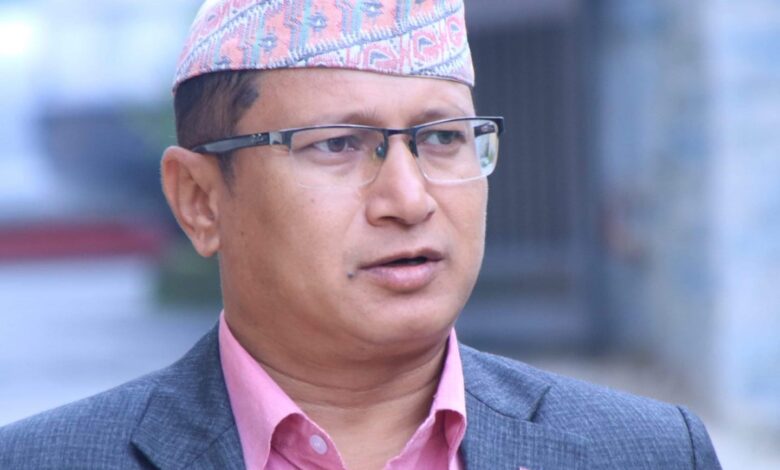

# Prem Sagar Poudel
The Nepal–China Mutual Cooperation Society recently submitted a formal memorandum to the Government of Nepal titled “On the Protection of Nepal’s Non-Alignment Policy, Sovereign Interests, and Nepal–China Friendship.” Yet, the document remains shelved, without any official acknowledgment from Prime Minister Sushila Karki’s administration. This silence is not merely bureaucratic negligence — it is a symbolic abdication of diplomatic responsibility and a direct challenge to Nepal’s sovereign decision-making authority.
In international diplomacy, when a legitimate organization submits an official memorandum addressing national policy, the government’s silence is not procedural neutrality — it is a political message. Silence can signal disagreement, submission, or external dependency. For a geopolitically sensitive country like Nepal, such silence represents not just diplomatic carelessness, but a surrender of independent foreign policy.
History has proven that every time Nepal has prioritized dependency over sovereignty, it has lost its strategic balance. In 1955, before joining the United Nations, Nepal officially declared its foreign policy as one based on non-alignment and peaceful coexistence. That principle guided Nepal’s landmark 1961 border treaty with China, which laid the foundation for regional stability in South Asia. Today, that same doctrine is under threat — and the government’s silence confirms the erosion of its spirit.
From the very beginning, Prime Minister Karki’s government has demonstrated growing proximity to Western influence. Several cabinet members maintain direct affiliations with foreign-funded NGOs and Western institutions. Foreign foundations have penetrated Nepal’s policymaking structures under the pretext of technical consultation. This infiltration is steadily dismantling both Nepal’s internal policy autonomy and its external equilibrium. Ironically, those who advocate for balanced relations with China are labeled as “foreign agents,” while those who remain obediently silent to Western directives are hailed as “intellectual reformists.” This hypocrisy exposes the deep ideological confusion within Nepal’s leadership.
Nepal’s non-alignment policy is not mere rhetoric — it is the cornerstone of its national survival strategy. Balancing between India and China has always been the key to Nepal’s sovereignty. When the government refuses to respond to an official document defending the Nepal–China friendship, that inaction is not diplomatic neutrality — it is a confirmation of foreign-guided compliance.
In global diplomatic history, silence is never neutral.
– During the 1962 Sino–Indian war, non-aligned nations did not remain mute. They called for dialogue because silence would have been seen as siding with war.
– In 2017, during the Doklam crisis, Bhutan issued a balanced political statement defending its sovereignty despite its small size. That statement elevated Bhutan’s international stature.
Nepal’s current silence, however, reflects neither balance nor prudence. It represents a form of diplomatic authoritarianism — an arrogance of passivity that reveals not state wisdom but the Prime Minister’s personal bias.
If non-alignment is the spine of Nepal’s foreign policy, then the Nepal–China friendship is its central structure. The “One-China Policy” has long been the bedrock of Nepal’s security posture. China has always treated Nepal not as a client state but as a strategic partner in regional coexistence. In return, China has extended support to Nepal’s infrastructure, trade, and energy sectors without political conditions. The current government’s silence toward this enduring friendship is therefore not benign neglect — it is a betrayal of trust.
Meanwhile, the United States has advanced its Indo-Pacific Strategy to encircle China through a network of “democratic partnerships.” The recently enacted Strategic Competition Act (2023) designates South Asia as an American influence zone. Nepal is now being drawn into that web through soft-power instruments disguised as “rule-based order” and “democratic cooperation.” Within this context, Prime Minister Karki’s silence appears as strategic compliance with Western pressure, not as an act of independent judgment.
Diplomatically, ignoring a memorandum related to a friendly nation amounts to weakening that friendship itself. China has consistently respected Nepal’s sovereign agency. Therefore, by refusing to respond to a document defending Nepal–China ties and non-alignment, the Karki government has endangered Nepal’s diplomatic credibility. In diplomacy, “silence is also a statement,” and in this case, it has become a statement of anti-China inclination.
Beyond the diplomatic dimension, the government’s silence also violates democratic accountability. In a parliamentary system, the Prime Minister is not only the head of government but also the nation’s foremost diplomatic representative. The Nepal–China Mutual Cooperation Society, which submitted the memorandum, is not a political faction — it is a historic organization that has worked for over four decades to strengthen Nepal–China friendship at the grassroots level. Ignoring such a body’s voice is equivalent to suppressing the national conscience.
Silence can often be more dangerous than war. After the Bay of Pigs fiasco, U.S. President John F. Kennedy openly admitted, “Silence in crisis is the death of credibility.” The Karki administration now risks repeating that very mistake — institutionalizing indecision by remaining silent when clarity is most needed.
Nepal’s geopolitical balance is once again at a crossroads. India’s domestic politics is tilting toward Hindu nationalism, the United States is reasserting its anti-China containment policy in South Asia, and China is pursuing a strategy of stability and mutual prosperity. In this context, Nepal must reaffirm its non-aligned doctrine with conviction and courage. Instead, the government’s silence projects uncertainty and dependency — a dangerous combination in today’s multipolar world.
If Prime Minister Sushila Karki continues her silence, three grave outcomes are inevitable:
A crisis of trust between Nepal and China.
The erosion of Nepal’s non-aligned identity in South Asia.
The loss of national decision-making autonomy to external powers.
Geography has never allowed Nepal the luxury of indifference. We can remain non-aligned, but never uninvolved. The Nepal–China friendship is not merely a diplomatic relationship — it is a civilizational, historical, and strategic partnership built on mutual respect and shared destiny.
The Karki government still has time to correct course — to reaffirm Nepal’s friendship with China, to restore the principle of non-alignment, and to uphold the sovereignty of national decision-making. Silence must end. Nepal’s independence should not be dictated by external recommendations but guided by the collective consciousness of the Nepali people.
If the government maintains its silence, history will record this not as a moment of neutrality but as a moment of betrayal — a moment when Nepal “abandoned its friend and murdered the spirit of non-alignment.”
Author: Prem Sagar Poudel is a senior journalist and international relations analyst from Nepal. He has conducted in-depth studies on Nepal-China relations, the geopolitics of the Himalayan region, and Asian security.