
The Old Disease of Nepotism Tears Through the Façade of New Politics
The Kulman Ghising Controversy Raises Serious Questions Over RSP’s Claim of “Moral Politics”

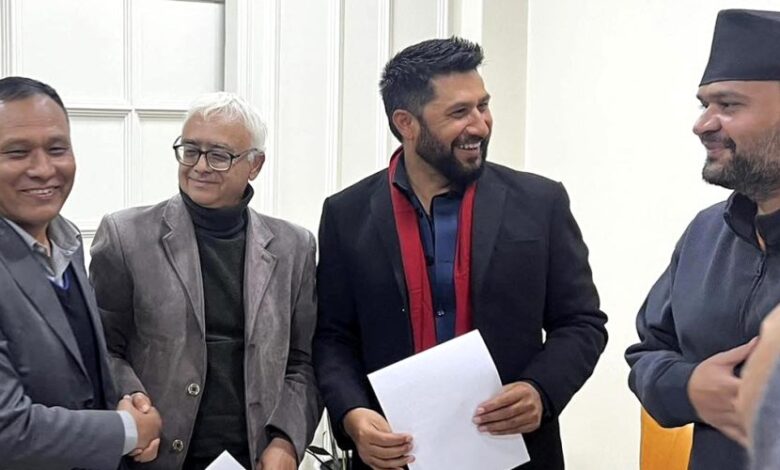

Kathmandu — For decades, the Nepali people have been engaged in a shared struggle against nepotism, patronage, and power-centric politics. It is from the exhaustion and anger born of this very struggle that forces claiming to represent “new politics” emerged. Today, however, one such force finds itself facing a serious moral crisis.
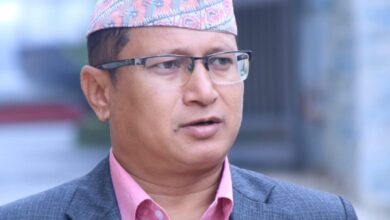
After it became public that Kulman Ghising—patron of the Ujyalo Nepal Party and the Energy Minister, following the party’s merger into the Rastriya Swatantra Party (RSP)—had included the names of his own nephew and father-in-law in the proportional representation list, strong opposition erupted from within the party itself. This is not merely a technical issue of correcting a list; it is a question deeply tied to political character, moral integrity, and national responsibility.
Kulman Ghising has long spoken in favor of merit-based governance, transparency, and reform. Yet the repetition of the very nepotistic practices he once criticized, once he moved closer to power and opportunity, is a troubling signal for the country. The core spirit of the proportional representation system lies in inclusion, recognition of committed grassroots workers, and social representation. Turning that system into an entry point for one’s own family is not only an insult to democratic values but also an attack on the spirit of the Constitution.
That 16 central committee members spoke out in one voice against this move is no ordinary event. It clearly signals that even within the RSP, the illusion that “everything is fine” has begun to crack. The RSP has consistently claimed to be different from traditional parties. But how credible does that claim remain once nepotism penetrates the leadership level? If nephews and in-laws can be accommodated on lists today, who will wield influence tomorrow in contracts, appointments, and policymaking? This question is not limited to a single party; it is tied to the future of the nation itself.
The merger between Ujyalo Nepal and the RSP has also given rise to another profound question: was this unity based on shared values, or was it a power-centric compromise? The dissatisfaction expressed by identity-based movement leader Dakendra Singh Thegim is not a routine disagreement. The sidelining, in one stroke, of sensitive issues such as identity, federalism, and inclusive proportional representation reflects an irresponsible attitude toward the country’s multicultural reality. The disappearance of agendas like identity, community-based socialism, and multiculturalism—clearly stated in Ujyalo Nepal’s manifesto—from the merger documents is a clear indication of political bargaining.
Today, the country is not looking for idealistic speeches but for leadership with moral courage. Acknowledging a mistake is positive, but preventing such mistakes in the first place is the primary responsibility of leadership. If Kulman Ghising truly wishes to be a symbol of new politics, he must go beyond merely withdrawing relatives’ names. He must offer a public self-critique of the misuse of the proportional system and make a clear commitment that such practices will not be repeated in the future.
Politics does not become new simply by changing the name of a party; history will keep repeating itself unless old habits change. The people who raise their voices against nepotism are no longer willing to remain silent. If the so-called “new force” also continues to carry the same old disease, the nation will not hesitate to seek another alternative. Patriotism is not about preserving power—it is about safeguarding principles.