
The Pro-American “Purging” Within CPN-UML: Political Cleansing or a Strategy for National Autonomy?


# Pasang Lhamu
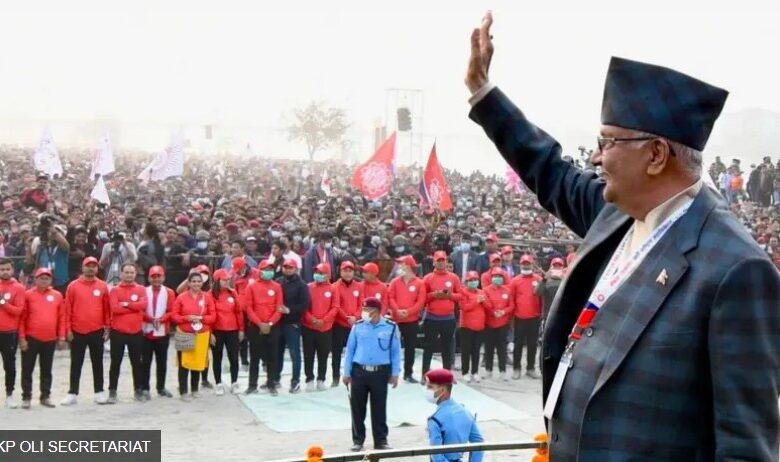
The action taken against individuals perceived as pro-American within the CPN-UML under the leadership of KP Sharma Oli should not be viewed merely as internal party cleansing. It is a complex political-diplomatic process that has initiated a new chapter in Nepal’s national sovereignty, foreign policy, and internal political dynamics. The history of foreign power interference in Nepali politics is not new. Especially in its transitional state, this Himalayan nation has increasingly become a field for the geopolitical games of various global powers. It is within this context that Oli’s distancing or limiting of the roles of senior leaders like Ishwar Pokhrel, Surendra Prasad Pandey, Bhim Rawal, Bishnu Rimal, Gokul Baskota, and Krishna Gopal Shrestha holds deep significance. These leaders were noted for their close relations with the American embassy at various times, their support for American values and policies, and their connections with certain factions within the Nepali Army. Barring Yogesh Bhattarai from candidacy is another phase of this same strategy. All these actions have sent a clear signal to reduce the influence of external powers from within the party.
American interests in Nepal have been multifaceted: to diminish Chinese influence and expand the US sphere of influence in South Asia, to exert influence in Nepali politics in the name of democratic values, human rights, and civil society, to establish strategic relations through training and cooperation with the Nepali Army, and to make Nepal a part of the geopolitical balance in the India-China-US triangle. In this context, the presence of pro-American figures within UML carried the potential to directly and indirectly influence the party’s policy formulation. Oli interpreted this as a threat to national autonomy. Oli’s foreign policy is clear: to establish balanced and multifaceted relations without leaning towards any single power. He has taken steps like the transit agreement with China and participation in the BRI, while also seeking to redefine traditional relations with India in a new way. Excessive American influence could have disrupted this balance. Therefore, reducing such influence from within the party became a necessary part of his strategy.
This purge included leaders connected with some retired and active officers of the Nepali Army. American training, joint exercises, and military cooperation with the Nepali Army are increasing. Oli desires to keep the army fully under national control and prevent it from falling under the influence of any external power. The relationship between the army and political parties has always been sensitive. This purge has also sent a message to the army: the army’s role in politics should be limited, and the army must be free from the influence of various external powers. America has not directly reacted to this purge. However, changes in policies favoring American interests have begun to appear through various channels: an increase in anti-Oli content in Nepali media, expressions of concern about the state of democracy from civil society and human rights organizations, and analyses of Nepal’s tilt towards China being published by various study centers. Regarding America’s strategy, China is adopting a policy of patience. The West desires to maintain influence in Nepali politics for a long time and does not wish to get caught in short-term reactions.
China has viewed this purge positively. Any step that reduces American influence within Nepal falls within China’s strategic interest. It can help deepen China-Nepal relations. For India, this is a complex situation. On one hand, India also does not want increased American influence in Nepal; on the other, Oli’s tilt towards China makes India anxious. India might make subtle adjustments in its relations with Nepal after this event. The long-term effects of this purge could be: Oli’s leadership within UML becoming even more consolidated, increased ideological uniformity within the party, America finding it harder to maintain direct influence within UML, Nepal’s foreign policy taking a more independent and clear direction, opposition parties propagating this as an anti-democratic step, and foreign policy becoming a major issue in upcoming elections.
The shadow of a new Cold War is lengthening on the world map. US-China competition is visible worldwide. A small but strategically important country like Nepal is bound to become an arena for this competition. By purging pro-American elements within the party, Oli may be trying to keep Nepal somewhat distanced from this competition. He wishes to adopt a policy of not fully aligning with any camp and maintaining practical relations with everyone. The purge of pro-American elements within CPN-UML is not merely an internal party matter. It is a historical process linked to the redefinition of Nepal’s national interest, the readjustment of foreign policy, and the restructuring of internal politics. Through this, Oli has sent three clear messages: Nepal’s policies will be determined by Nepalis, not by external powers; internal unity is essential for a multifaceted foreign policy; and national autonomy is not just diplomatic rhetoric, it is also internal institutional cleansing. This process is controversial; it also creates friction with democratic values. However, for nations struggling for sovereignty, internal purification and the reduction of external influence can be a historical necessity. While treading this path, Nepal will face the challenge of maintaining relations with the international community while prioritizing its own national interest. Oli’s step has given a new turn to Nepali politics, the ultimate outcome of which will be determined by the history of the future.