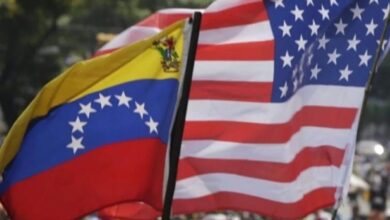

The Question of Nationalist Citizens: Military Presence Equivalent to a Company in the Name of Aides-de-Camp or a New Definition of Protocol?

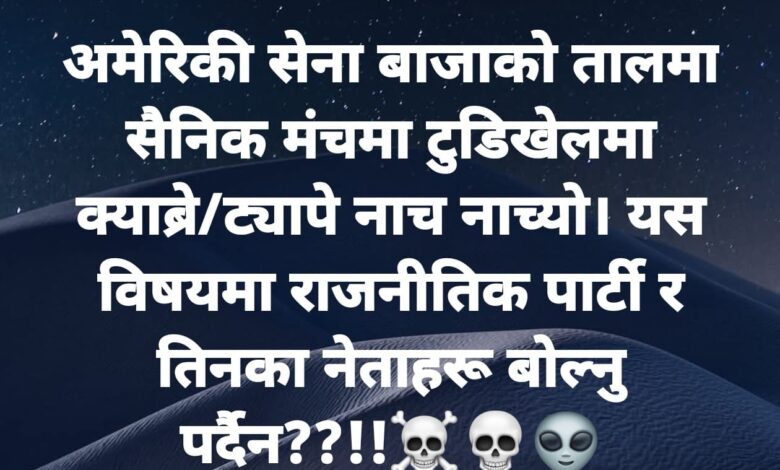

Kathmandu, Fagun 4: Recently, a widespread debate has been ongoing on social media regarding the presence of the American military. A Facebook user, Kandel Laxmi, has raised questions about the US military presence under the guise of military aides, writing, “One might call the participation of military aides just protocol, but a military presence equivalent to a company doesn’t happen anywhere, nor has it ever happened so far. If there is a precedent anywhere, please clarify this clearly to the Nepali people.”
He further questioned, “If this is to be called military aides, were there similar levels of presence from countries like China, India, Bangladesh, Sri Lanka, and Bhutan? Aren’t military aides usually only up to 5 people?” It can be assumed that this question has arisen regarding the large presence of the Nepali Army in some recent military program or visit. Demanding further clarity on this matter, he has also expressed a sense of national unity by saying “Jaya Prithvi Path” (Hail the Prithvi Path).
Similarly, another Facebook user, Kamal Lamsal, has raised serious questions about Nepal’s situation, writing, “Now, Nepal has no army, police, employees, or politicians left. Everyone has been sold out. Now, we, the nationalist citizens, are the only Nepalis left, whose voices they didn’t listen to when making the constitution. Now, they have already entered America’s security orbit by passing the MCC.”
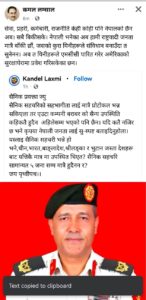
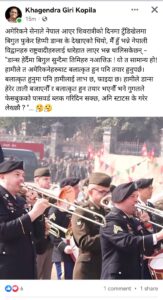
Lamsal’s post has highlighted the widespread distrust and bitterness towards Nepali politics, administration, and security agencies. He has alleged that with the ratification of the MCC agreement, Nepal has entered the American security orbit. He has also reiterated the complaint that the people’s voices were not heard during the constitution-making process.
These two posts appear to reflect the national concerns and dissatisfaction present in a segment of Nepali society. In this situation where questions are arising among the public on matters ranging from military presence to international agreements, it seems necessary for the concerned bodies to adopt transparency and address the citizens’ queries.
However, most of the claims raised in these posts appear to be based more on emotion than fact. The allegation that the Nepali Army, police, employees, and politicians have all been completely ‘sold out’ is unproven. The claim that the MCC agreement has brought Nepal into the American security orbit is also controversial. The government’s explanation is that this agreement is focused on infrastructure development and will be implemented according to Nepal’s laws.
On the matter of military aides as well, it seems necessary for the Nepali Army to provide official clarity. If clear information is provided about the policy and practice regarding the number and structure of military aides in any international visit or program, such questions could be resolved.
Meanwhile, these posts are gaining widespread attention on social media. While some have supported the sentiments of these users who claim to represent nationalist citizens, others have deemed them exaggerated. However, this certainly shows how deep the concern among the Nepali public is regarding nationalism, sovereignty, and transparency.