
The Silent War on Nepal: A Dangerous Game of Power, Religion, and Geopolitical Capture

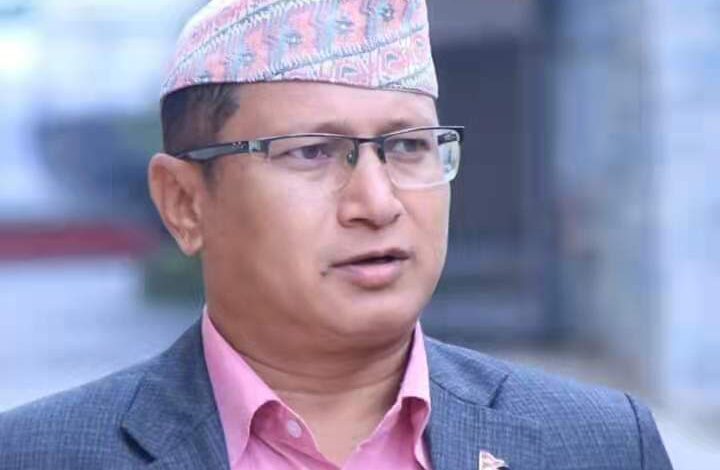

# Prem Sagar Poudel
Nepal today is not just caught in a vortex of temporary political instability; this country has reached a state of self-imposed, multi-faceted, and long-term war. This war is being fought neither with the sound of guns, nor through open military attacks. This war is being fought using ideas, power, religion, money, diplomacy, and illusion, where the target is the soul of the state and the means is the ignorance of the people. Unfortunately, Nepali society has not yet been able to recognize this war as a war.
The movement that emerged in the name of Generation Z (Gen-Z) was the first visible scene of this silent war. Born out of unemployment, inequality of opportunity, a corrupt political structure, and deep despair about the future, this movement was initially natural, moral, and legitimate. It was the state’s responsibility to listen and address the anger of the younger generation rather than suppress it. Instead, the state not only failed, but the movement was quickly hijacked due to a lack of leadership, ideological clarity, and organizational weakness.
History has always warned that a movement without direction does not become a revolution, but becomes a laboratory. This is exactly what happened in Nepal. The movement was pushed into chaos, all state structures were shown to be failing, and an atmosphere of fear and despair was created among the people. Then, in the name of “stability” and “security,” the unusual power structure was accepted as natural. From this moment on, Nepal deviated from democratic practice and entered a phase of controlled experimentation.
The influence of external will in the formation and operation of this so-called government is not hidden. India’s role in particular seems decisive here. India has been exerting influence over Nepal for decades, weaponizing open borders, trade dependence, energy supplies, employment, and political access. But the current situation is moving towards direct control over decisions, not just influence.
The distribution of thousands of motorcycles, cars, and other vehicles in the name of election support is not a donation. That is a clear political investment. After investment, returns are sought in policy, decision-making, and integrity. This is why many decisions in Nepal today are being made not according to the wishes of the people, but according to calculations to balance the external balance.
India’s strategy is no longer limited to changing governments or party management. It has begun to interfere in the demographic structure, political culture, and national identity of Nepali society. Efforts to weaken Nepalis in their own land, through the haphazard use of open borders, unregulated migration, and emotional slogans like “Roti-Beti”, are gradually becoming institutionalized. This is not just economic exploitation, but a process of long-term civilizational and political capture.
Another dangerous dimension of this process is the political use of religion. Religion in itself is neither a threat nor a problem. But when religion is used as a tool to reach state power, it leads society towards division, intolerance, and authoritarianism. The attempts to change the power structure in Nepal in recent years by using Hinduism as a political weapon are not accidental.
The long-term goal of establishing favorable characters in the name of Hindutva, and then building a certain ideological governance system through the political process, is no longer hidden. If this project succeeds, Nepal will not only lose its secularism; it will also jeopardize its multi-ethnic, multi-lingual, and multi-cultural soul. Nepali society, based on diversity, will be pushed towards division and oppression in the name of uniformity.
In this context, America’s role seems more profound and decisive. India is a visible power, while America is a strategic decision-making power. The American activism seen in Nepal in recent years is not accidental, but clearly strategic. The MCC, security cooperation, diplomatic pressure, and ideological intervention through civil society and the media are all components of the same larger geopolitical framework.
In America’s eyes, Nepal is more of a geopolitical pawn that can be used for strategic purposes than an independent decision-making state. It does not need complete stability in Nepal. It needs a state that is internally weak, dependent on economic and security structures, and that can stand with external instruction. Hidden within the attractive language of democracy, human rights, and good governance, this strategy is actually a politics of controlled instability.
For this reason, many intellectuals in the country feel that while some decisions are made in accordance with India’s wishes, the US remains in the final decision-making role. This shadow is clearly visible in policymaking, security priorities, and diplomatic balance.
Today, although Nepal is formally independent, in practice it is approaching a semi-colonial state. A state whose policies are directed from outside, whose power is bought with money, whose administrators are dishonest, and whose politicians have become brokers cannot last long. This situation is a pre-signal of the disintegration of the nation.
But this is not all just a conspiracy by external forces. This has been possible due to the cowardice, selfishness, and ideological bankruptcy of the Nepali political leadership. The mentality of accepting anything to maintain power, the tendency to place parties and individuals above the nation, and a culture of unwillingness to be accountable to the people have facilitated external interference.
Nepal stands today at the point of history’s final warning. The options are now clear: either Nepal rebuilds its internal strength, collectively resists external interference, and builds a new base for national unity; or it quietly hands over its decision-making capacity, identity, and future to others.
This is not the time to remain neutral. This is the time to break the illusion, to speak up, and to stand clearly for the nation. Because if we don’t speak up today, there may not be a country left to speak up for tomorrow.
Author: Prem Sagar Poudel is a senior journalist and international relations analyst from Nepal. He has conducted in-depth studies on Nepal-China relations, the geopolitics of the Himalayan region, and Asian security.