
Globalization, Gen-Z, and the Quiet Transformation of Eastern Social Fabric


# Pasang Lhamu
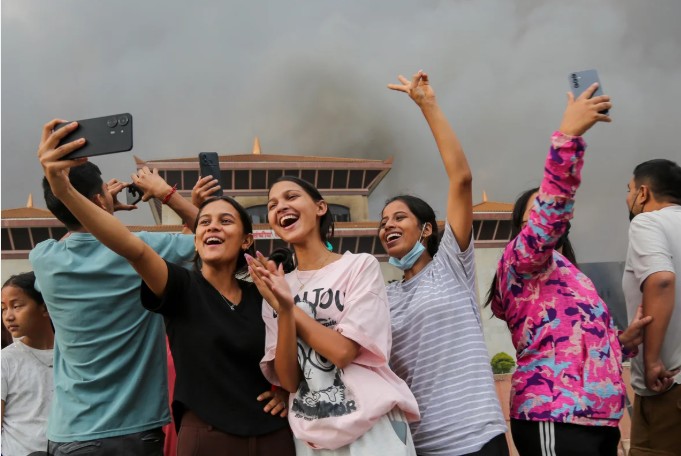
A scene unfolds at the Sinamangal-Tarahalchowk wrestling ground (Akhada), a space emblematic of traditional Nepali strength and community. Into this setting arrive two Gen-Z women, fresh from bidding farewell to a foreign colleague at the airport. Their conversation, however, is not about the Akhada; it is a window into a new Nepal. They speak of “living-together,” “situationships,” and relationships forged through dating apps—concepts that were alien to their parents’ generation. This vignette is not merely a story of changing personal choices; it is a microcosm of a profound, complex, and often disorienting cultural shift sweeping across the Global South. The influx of Western social models, facilitated by digital technology and globalized economies, is not a simple story of “destruction,” but a powerful, often disruptive, force that is challenging the very foundations of Eastern civilizations, with deep and multifaceted consequences.
The primary vector for this social change in the example is the “dating app.” In traditional Nepali society, which is deeply rooted in collectivist values, relationships were seldom a purely individual affair. Marriage was a sacred union (Sanskar) between families, often facilitated by networks of kinship and community. The concept of “dating” as a private, exploratory process was limited.
Dating apps like Tinder, Bumble, and their local counterparts have dismantled these geographical and social barriers. They create a marketplace for intimacy where individuals are prioritized over institutions. This shift empowers young people, particularly women, with unprecedented agency to choose partners based on personal compatibility, desire, and ambition, free from familial pressure. It champions the Western ideal of individual autonomy and the pursuit of personal happiness.
However, the negative repercussions are significant. The terminology itself—”situationships,” “living-together”—points to a state of ambiguity that traditional structures explicitly sought to avoid. This can lead to emotional insecurity and a lack of clearly defined social roles and responsibilities. The phenomenon of “mixer events,” mentioned in the scenario, further commercializes and casualizes human connection, reducing the deep, culturally-embedded process of courtship to a series of transactional social interactions. For a society where social bonds are the bedrock of the support system, this individualization can lead to increased loneliness, anxiety, and a erosion of the communal safety net.
The core of the Eastern societal model, be it in Nepal, India, or China, is the primacy of the family and community over the individual. Decisions, from career paths to marriage, were made with the collective’s honor and stability in mind. The new Western-inspired model, championed by INGOs, global media, and corporate culture, inverts this hierarchy. It places the individual’s rights, desires, and self-actualization at the center.
The two women working at an INGO are themselves products of this value system. INGOs, while often doing commendable development work, are also carriers of a specific Western liberal-humanist worldview. This worldview emphasizes gender equality, sexual freedom, and individual rights—values that can directly conflict with patriarchal and hierarchical traditions.
The negative impact here is the potential fragmentation of the social fabric. When the pursuit of individual happiness becomes the supreme goal, intergenerational living arrangements break down, respect for elders can wane, and the sense of duty (Kartavya) that binds the family unit weakens. This creates a vacuum where the state or market must step in to provide care for the elderly and support for the vulnerable—a function traditionally performed by the family. The result can be a society that is more “free” but also more atomized and anomic.
The scenario highlights a knowledge gap: “For us, this was a new topic, so we asked for more details.” This simple statement encapsulates a growing chasm between generations. Parents who grew up in a pre-digital, tradition-bound Nepal find the world of their children incomprehensible. They struggle to understand relationships without the framework of marriage, careers without the promise of lifelong stability, and a value system that seems to prioritize personal gratification over familial duty.
This schism is not merely a “generation gap”; it is a clash of civilizations within a single household. The youth, navigating between the traditional expectations at home and the globalized, liberal ideals they encounter online and in their professional lives, often experience a deep crisis of identity. They are “too Western” for their families and “not Western enough” for the global culture they aspire to join. This can lead to psychological distress, alienation, and a loss of cultural rootedness, making them vulnerable to extremist ideologies or profound nihilism.
To frame this simply as “Western culture destroying Eastern civilization” is analytically shallow. The reality is more nuanced. Firstly, this is not a one-way street. Eastern societies are not passive recipients; they are active agents in a process of “glocalization.” They adapt, resist, and hybridize Western influences. The persistence of the Akhada alongside dating apps is a testament to this complex coexistence.
Secondly, the driver is often economic globalization, not a deliberate cultural project. The neoliberal economic order promotes mobility, individualism, and a flexible labor force—all traits that are reinforced by the relationship models described. The women working at an INGO are part of a global service economy that rewards these very attributes.
However, the negative international implications are severe. The uniform spread of Western social models leads to a loss of global cultural diversity. The unique wisdom embedded in Eastern traditions—concepts of Dharma (duty), interconnectedness, and community resilience—is devalued and risks being lost. Furthermore, this cultural homogenization can fuel a nativist, often fundamentalist, backlash. The rise of aggressive traditionalism and religious extremism in many parts of the world can be partly seen as a desperate defense mechanism against the perceived onslaught of Western secular values.
The encounter at the Sinamangal Akhada is a powerful allegory for our times. The wrestling ground is no longer just a space for physical combat; it has become a metaphor for the larger cultural wrestling match taking place across Nepal and the wider East. The forces of globalization, carrying Western social blueprints, are unlocking new freedoms and empowering individuals in unprecedented ways. Yet, this liberation comes at a steep cost: the fraying of communal bonds, intergenerational misunderstanding, and a deep-seated crisis of identity.
The challenge for societies like Nepal is not to reject globalization outright or to retreat into an idealized, static past. Nor is it to blindly embrace every foreign trend. The path forward lies in fostering a critical consciousness—a ability to sift through these external influences, to consciously preserve the profound strengths of its own heritage, while thoughtfully integrating new ideas that enhance human dignity and freedom. The goal must be to weave a new social tapestry, one that honors the threads of its ancient past while incorporating the patterns of a complex, interconnected future. The survival of its unique civilizational ethos depends on this delicate, conscious, and ongoing act of creation.